
Gurtaran Johal is a student at Harvard Law School.
In today’s news and commentary, Block, Nanda, and Nayak argue that the NLRA is under attack, resulting in negative implications for democracy; the EEOC files a motion to dismiss a lawsuit brought by Jocelyn Samuels, the former EEOC Commissioner; and SEIU Local 1000, California’s largest union, reaches an agreement to exempt nearly all state workers from the state’s return-to-office executive order for the next year.
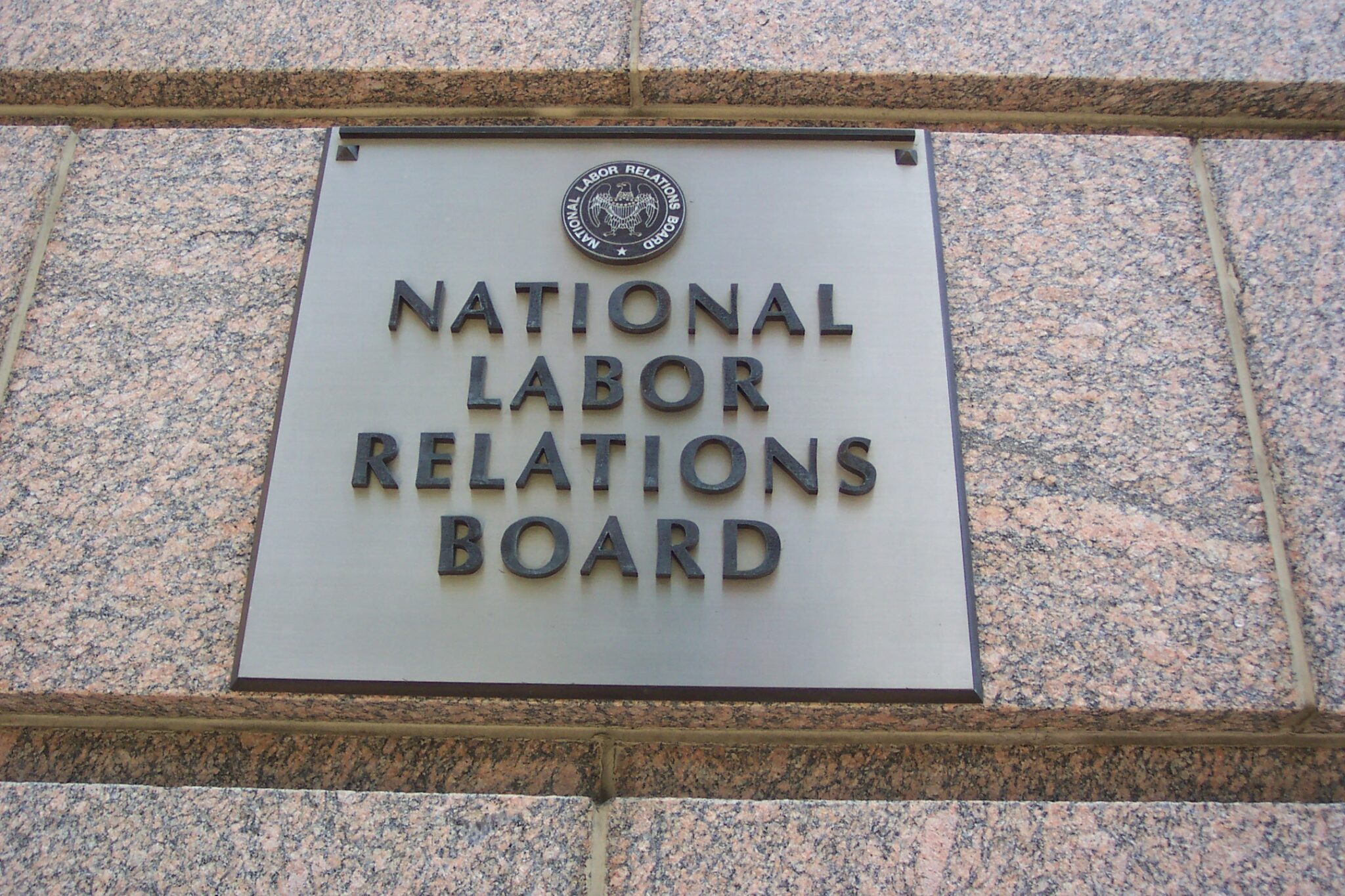
In an article for Democracy, Sharon Block, Seema Nanda, and Raj Nayak argue that the National Labor Relations Act (NLRA) is “fundamental to a functioning democracy” and requires serious attention in a political landscape where it is under attack. The authors first note that the NLRA is the cardinal federal law protecting private sector workers’ ability to form labor unions, bargain collectively through representatives, and engage in concerted activity. With this backdrop, they argue that the NLRA has faced substantial attacks on multiple fronts, ranging from arguments by large companies such as SpaceX and Amazon that the NLRA itself is unconstitutional to a potential claim that the use of agency judges violates a defendant’s Seventh Amendment right to a jury trial in federal court to arguments regarding the unconstitutionality of two layers of for-cause protection for the National Labor Relations Board’s (NLRB) administrative law judges. They specifically note the unprecedented firing of Gwynne Wilcox, a Biden-appointed member of the board. Although the D.C. District Court reinstated Wilcox, the Supreme Court issued a stay, preventing her from being reinstated. This leaves the board without a quorum, which means that the board will be unable to issue decisions, hold votes, or answer requests for review. Ultimately, these attacks have considerable effects on workers, as a “lack of federal NLRA enforcement” leaves workers without the ability to bring a private right of action. Despite this, they conclude by discussing how support for unions is at an “all-time high,” arguing that it is important to mobilize this institution to protect our democracy against the rise in authoritarianism.
Meanwhile, the Equal Employment Opportunity Commission (EEOC) filed a motion to dismiss a lawsuit filed by Jocelyn Samuels, the former EEOC Commissioner. In their motion, the EEOC provides two reasons for dismissing the complaint: (1) Title VII of the 1964 Civil Rights Act provides the president with removal power; and (2) even if Title VII protects EEOC commissioners from removal, EEOC commissioners who “exercise considerable executive power” are not protected under the “narrow exceptions” to the president’s ability to remove executive officers without cause. The motion also notes that Title VII’s lack of language regarding removal preserves the presumption that the president “may remove anyone he appoints.” Trump originally fired Samuels in January, following her public criticism of the administration’s executive orders scaling back protections for the transgender community.
Lastly, California’s largest union, Service Employees International Union (SEIU) Local 1000, reached an agreement with the state to exempt “nearly all” state workers from Governor Gavin Newson’s return-to-office (RTO) executive order, which would have required state employees to be in the office at least four days per week. The agreement delays the RTO mandate by a year, pausing it for state employees until July 1st, 2026. The agreement also protects a 3% salary increase negotiated in a 2023 contract, which went into effect on July 1st, 2025. This agreement comes after California’s Public Employment Relations Board (PERB) filed a complaint against the State of California on behalf of SEIU Local 1000 for failing to meet and confer with the union prior to issuing the executive order. SEIU Local 1000 secured an important victory for state workers, writing that the agreement “protects our raise, pauses the return to office order, and gives us a path to bargain again in 2026.”


Daily News & Commentary
Start your day with our roundup of the latest labor developments. See all
October 23
Employers increasingly shift health care costs onto workers and NYC proposes placing restrictions on fully automated customer service.
October 22
SCOTUS declines Wilcox appeal; Penn State research assistants win bargaining rights; SEIU sued over military leave firing.
October 21
DOL withdraws tipped-worker rule; Instacart settles hiring-bias claims; Phillips 66 locks out New Jersey refinery workers.
October 20
Korean unions oppose labor exemption bill; Portland city workers prepare for strike; UPenn grad student union looks to dismiss university filing
October 19
FDA reverses course on policy prohibiting off-duty union activity; FAA and NATCA reach deal to secure pay increase for air traffic controllers.
October 18
Federal judge again halts cancellation of the Bureau of Prisons’ CBA; tabletop gaming workers face roadblocks in union recognition.