
Allie Reed is a student at Harvard Law School and a member of the Labor and Employment Lab.
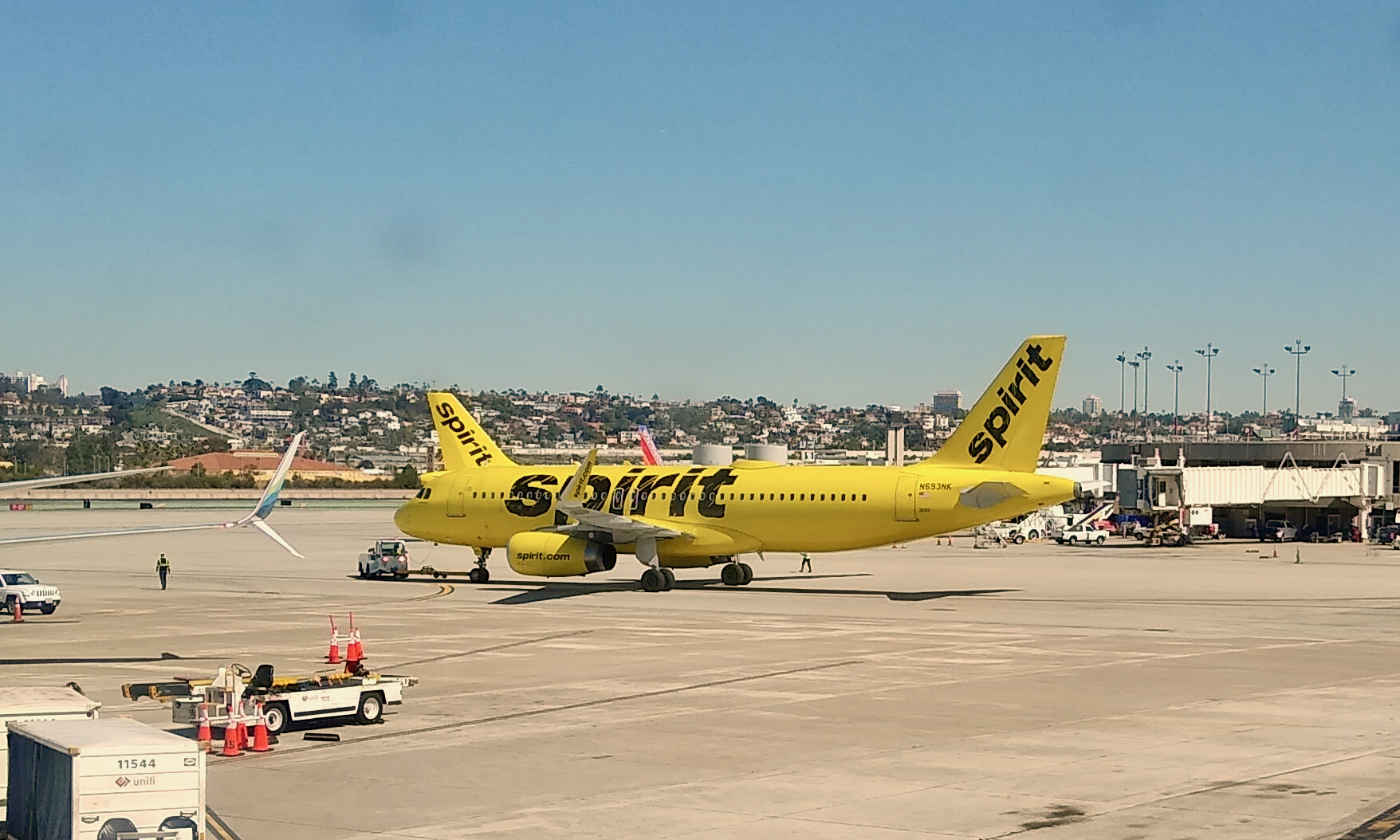
When Spirit Aviation Holdings Inc. collapsed this spring, 17,000 flight attendants, pilots, and workers lost their jobs. The decades of emails, Teams chats, grievances, and safety reports left behind are now up for sale. Google has agreed to pay $10 million for Spirit’s internal records, saying it wants to use the data to improve its AI models. As the deal stands, the workers who produced the records have no right to opt out and have no say in how the records will be used. More than 120 members of Congress have objected.
The deal is a new wrinkle in a familiar fact pattern. As the public data that AI models were first trained on runs low, developers are thirsty for more data. We’ve already seen companies capturing their employees’ keystrokes in real time to train AI, with limited opportunities for employees to object due to at-will employment. The Spirit sale shows what that dynamic looks like after the company is gone, when the records of decades of labor are sold as raw material in a bankruptcy auction. It raises two concerns for Spirit workers. The first is the sale itself: records that Spirit’s collective bargaining agreements require it to keep confidential will be handed to a buyer that never agreed to those obligations. The second is what happens once the records reach Google. Even if names are removed from the input, AI software could piece together the records to draw sensitive conclusions about the workers who created them.
Hollowed Confidentiality Protections
Spirit’s archive likely contains records like a flight attendant’s email to her supervisor about a scheduling accommodation she needs to make time for mental health treatment, a grievance she filed with her union over a disciplinary proceeding, or a Teams chat describing concerns about short staffing. These records weren’t produced with the expectation that they’d be obtained by anyone outside of the airline.
A collective bargaining agreement covering flight attendants states that information obtained through a company medical exam or supporting a Family and Medical Leave Act request “shall be confidential,” according to one of two objections to the approval of the sale filed by the Association of Flight Attendants-CWA, AFL-CIO in the U.S. Bankruptcy Court for the Southern District of New York. Another collective bargaining agreement covering pilots protects the confidentiality of training records, medical records, and fatigue reports, an Air Line Pilots Association objection said.
The Bankruptcy Code allows a court to approve a debtor’s request to reject a collective bargaining agreement if, after good-faith negotiations, “the balance of the equities clearly favors rejection.” Spirit never sought to reject the collective bargaining agreements, so the flight attendants and pilots argue they remain binding. The problem is that those promises bind Spirit, not Google. The Sale Agreement stipulates that Google will not assume any of Spirit’s prior contracts. And a buyer generally isn’t bound by a union contract it never agreed to assume. The case law in this area stems from situations where buyers take over a business and continue its operations. Courts don’t appear to have addressed what happens to a collective bargaining agreement’s confidentiality promises when a company ends but its records are sold.
Spirit has been somewhat responsive to the flight attendants’ concerns thus far, the Association of Flight Attendants said in a supplemental objection. The company has proposed excluding some of the most invasive categories of data, such as medical records and accommodation requests. But to do so, Spirit would withhold certain records from the software systems where those records typically live, such as an HR platform, rather than excluding data instance-by-instance. If sensitive information appears somewhere outside of its typical home, say a flight attendant’s accommodation request discussed in an email chain, it could end up in the sale.
That leaves Spirit workers’ bargained-for privacy protections behind with a defunct airline, giving them no recourse to stop AI software from training on their intimate data. As more AI developers eye failed companies’ data and bankruptcies continue to rise, workers are left with hollow protections that may chill their comfort reporting a problem to their manager, requesting an accommodation, or filing a grievance.
Feeding the Machine
The second, more ominous concern is what happens once the records reach Google and are fed to AI models. Before the transfer, a third-party agent selected by Google will process the data and remove identifying information. The Sale Agreement excludes customer chat sessions, profiles, and phone numbers, but includes “employee data,” “employee records,” and even “employee tax forms.”
“A pseudonymized dataset can still disclose which crew bases generated grievances, how a small subset of flight attendants performed on recurrent training, which employees were subject to investigation, what compensation adjustments followed which events, and what employees said to one another about management, staffing, or their union,” the Association of Flight Attendants’ objection said.
Pilots worry the sale could undermine flight safety. Pilots report their own mistakes through Federal Aviation Administration programs that assure pilots of their confidentiality, one of which bars disclosure of data to third parties. Even without a pilot’s name attached, a report’s date and flight details could ultimately be matched against crew records to be traced back to a particular pilot.
“Disclosure of confidential flight operations data through the Sale Agreement can be expected to chill voluntary compliance by pilots across the industry as it becomes known that such data can be sold to third parties,” the Air Line Pilots Association’s objection stated.
The Sale Agreement doesn’t say what exactly Google will do with the data, or how it will use it to “improv[e] our products and AI models.” But Google is allowed to transfer the data to third parties, increasing the risk that someone traces records back to a particular person. And workers can be harmed even if no one ever learns their names, the Electronic Privacy Information Center said in a proposed amicus brief. An AI system trained on millions of emails and timecards can learn to predict patterns about certain workers. A former employee’s Teams messages might “reveal a propensity to file HR complaints,” and their timecards might flag someone as “‘likely to take time off around religious holidays.’” Inferences like these could be used for “application screening” and to deny people employment opportunities or “undermine worker interests,” the brief said.
The sale is set for an approval hearing on Nov. 6, 2026. Its outcome could establish a baseline for worker privacy protections in future data sales. Spirit should honor the objections the unions and lawmakers have articulated, excluding sensitive employee records from the deal. But lawmakers should also work to close a gap in the Bankruptcy Code, by requiring an employee privacy ombudsman to protect workers’ privacy interests in the same way the Code requires a consumer privacy ombudsman.
Workers at companies in every industry generate the same kind of data that Google is buying – nurses in a hospital, or engineers at a tech company. As these deals become more common, workers need privacy protections that don’t die when a company dies. Protecting worker privacy through the entire lifetime of a company should not be left up to a buyer’s good will at the negotiating table.






Daily News & Commentary
Start your day with our roundup of the latest labor developments. See all
October 13
Chicago hotel workers remain on strike; a coalition of Democratic states sues the Labor Department over canceled unemployment insurance grants; the Federal Labor Relations Authority establishes a new mediation framework for federal worker disputes.
October 12
Workers at the Obama Foundation begin organizing; MLB submits its latest collective bargaining agreement proposal; Brigham & Women's nurses postpone strike.
October 11
UAW President Shawn Fain succeeds in his reelection bid, and Spanish unions call for a general strike.
October 9
DHS proposes a $100k fee for the foreign grad employment program; Trump suspends tech company access to green card program; and private equity perpetuates poor working conditions for home care workers.
October 8
NLRB judge finds UPS unlawfully restricted union insignia; Harvard graduate workers authorize second strike; OSHA orders Union Pacific to pay $300,000 in damages in whistleblower case.
October 7
DOL scraps plan to remove decades-old wage-and-hour guidance from federal regulations; New York enacts personnel records access law; Starbucks loses bid to dismiss Workers United trademark suit.