

Mia Anastasio is a student at Harvard Law School and a member of the Labor and Employment Lab.
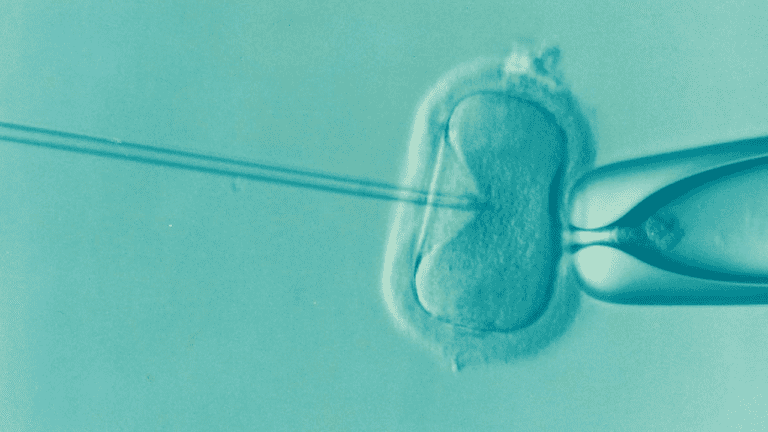
It’s 7:00 a.m., and you’re in a fertility clinic for your third blood draw and ultrasound this week, watching the clock and rescheduling your 9:00 a.m. meeting. You make it to work late, fielding questions from coworkers about where you keep disappearing to. That afternoon, your phone buzzes at your desk: the cycle failed. You close the door, cry for five minutes, and go back to your inbox through the fog and fatigue of the hormones still in your system. For the hundreds of thousands of patients who undergo IVF each year while working, this is routine. The Pregnant Workers Fairness Act (PWFA) may give them a right to something better. But that protection is now in question. The Equal Employment Opportunity Commission (EEOC) is expected to propose changes to its 2024 rule this fall that could remove fertility treatment from its coverage, a notable move from an administration that has made IVF access a signature issue.
The PWFA requires employers with 15 or more employees to reasonably accommodate known limitations related to pregnancy, childbirth, or related medical conditions, provided that the accommodation doesn’t cause the employer an undue hardship. But the statute doesn’t define any of those terms. In its 2024 final rule, the EEOC read “pregnancy” itself to “include potential or intended pregnancy,” and named infertility and fertility treatment as examples. For IVF patients, this reading can mean a later start time or flexible schedule for early-morning monitoring appointments; time off for egg retrieval, embryo transfer, or treatment complications; and lighter duties while recovering. The question now is whether that reading goes beyond what Congress authorized.
Andrea Lucas’ Opposition to the Rule
Andrea Lucas, then a commissioner, and now EEOC Chair, voted against the 2024 rule, arguing that it stretched the statute beyond its text. Specifically, she stated that the rule “fundamentally errs in conflating pregnancy and childbirth accommodation with accommodation of the female sex, that is, female biology and reproduction.”
There are two textual routes to covering IVF. The first runs through “pregnancy.” If the word reaches potential or intended pregnancy, a worker mid-cycle is covered even though she isn’t pregnant yet. The second runs through “related medical conditions.” Infertility is a medical condition, and arguably one related to pregnancy, so limitations from treating it could qualify even if “pregnancy” means only an existing one.
The 2024 rule took the first route. Fertility treatment appears in the rule’s definition of pregnancy, not in its list of related medical conditions. That makes the rule the more aggressive of the two possible readings, since it stretches the core term rather than the catch-all.
Lucas rejects both routes. On “pregnancy,” her position is that the word means an actual pregnancy, and a worker undergoing IVF doesn’t have one. On “related medical conditions,” she reads the phrase in light of the two terms before it: a condition counts only if it relates to a particular pregnancy or childbirth, not to reproduction generally. That is the “conflation” she objected to. In her view, the EEOC turned a statute about pregnancy into a statute about female reproductive biology.
After becoming Acting Chair in January 2025, Lucas made it clear that her statutory interpretation hadn’t changed. In a statement posted to the EEOC’s website, she acknowledged that she couldn’t unilaterally rescind the rule, since the Administrative Procedure Act requires a Commission vote and notice-and-comment. But once the Commission regained a quorum, she said, she “intends for the Commission to reconsider portions of the Final Rule that she believes are unsupported by law.” That quorum returned in October 2025, when the Senate confirmed Commissioner Brittany Panuccio, and with it, Lucas gained the votes to act. Things moved quickly from there. In January 2026, at its first public meeting, the Commission voted 2–1 to rescind its internal voting procedures, handing Lucas control over which issues come to a vote and when, including without a public meeting. In July, the EEOC added the PWFA revision to its regulatory agenda: a proposed rule reinterpreting “pregnancy, childbirth, or related medical conditions,” expected this November, with public comments due by January 2027. The Commission has not yet proposed the change, but the regulatory agenda and Lucas’ longstanding opposition make the future of the fertility-treatment provisions increasingly uncertain.
Congressional Pushback
The planned rollback hasn’t gone unnoticed. In May 2026, fifteen Democratic senators, led by Elizabeth Warren, Tammy Duckworth, and Chuck Schumer, sent Lucas a letter urging her to abandon any plan to remove fertility treatment from the PWFA rule. Duckworth, who had both of her daughters through IVF, has long been one of the Senate’s leading voices on the issue. In 2024, she sponsored the Right to IVF Act, which Senate Republicans blocked twice.
In the letter, the senators walked through what IVF actually demands of a working patient: daily injections, frequent clinic visits for monitoring, egg retrieval under sedation, and embryo transfers scheduled well in advance. Each step, they noted, requires time away from work.
The senators also leaned into the political contrast. They cataloged President Trump’s campaign-trail promises on IVF, including his description of himself as the “father of IVF,” and argued that cutting fertility treatment from the rule would undercut them. Specifically, they wrote, “your plan to remove workers undergoing fertility treatments from the rule reveals that President Trump’s promise to ‘expand access’ to IVF was entirely hollow.” Lower costs mean little to a patient who can’t get time off to attend appointments, they asserted.
Finally, the letter took aim at process. The senators criticized the Commission’s January decision to rescind its voting procedures, which put the timing of meetings and votes in the Chair’s sole discretion, and pressed Lucas on whether any revision would go through full notice-and-comment with a comment period as long as the original rule’s sixty days. They asked for answers by May 13. No public response from Lucas has been reported.
What Comes Next
For now, the 2024 rule remains in effect, including its coverage of fertility treatment. The EEOC’s proposed revision is expected in November 2026, and the public will have until January 2027 to submit comments before the Commission can finalize any changes. Whatever the final rule says, it is likely to face litigation. The 2024 rule has already been challenged in multiple courts, and a federal judge in Louisiana vacated its abortion-related provisions in May 2025. Until a new rule takes effect, workers undergoing IVF remain covered, and employers remain obligated to consider their requests for accommodation.








Daily News & Commentary
Start your day with our roundup of the latest labor developments. See all
November 2
DOL's domestic worker wage rules partially invalidated; Trump Administration restrained from threatening to prosecute election officials; USCIS forced to reinstate minimum notice period for unaccompanied children's asylum interviews.
November 1
Dockworkers strike to protest arms shipments; Weil closes its doors.
October 30
Sectoral bargaining could blunt A.I. job loss; Gen-Z job searchers stare into the void.
October 29
Dolores Huerta, labor leader, feminist, and civil rights icon, dies at 96.
October 28
The Writers Guild of America East provides writers with access to software that protects their work from AI scraping, and city workers in Oregon reach a tentative agreement after a six-day strike.
October 27
Some California union locals defy their statewide leadership to back the state’s billionaire tax proposal; a Brown University technology center releases a map of the hidden global workforce behind AI; the National Women's Soccer League and its players union settle six grievances.