
Allie Reed is a student at Harvard Law School and a member of the Labor and Employment Lab.
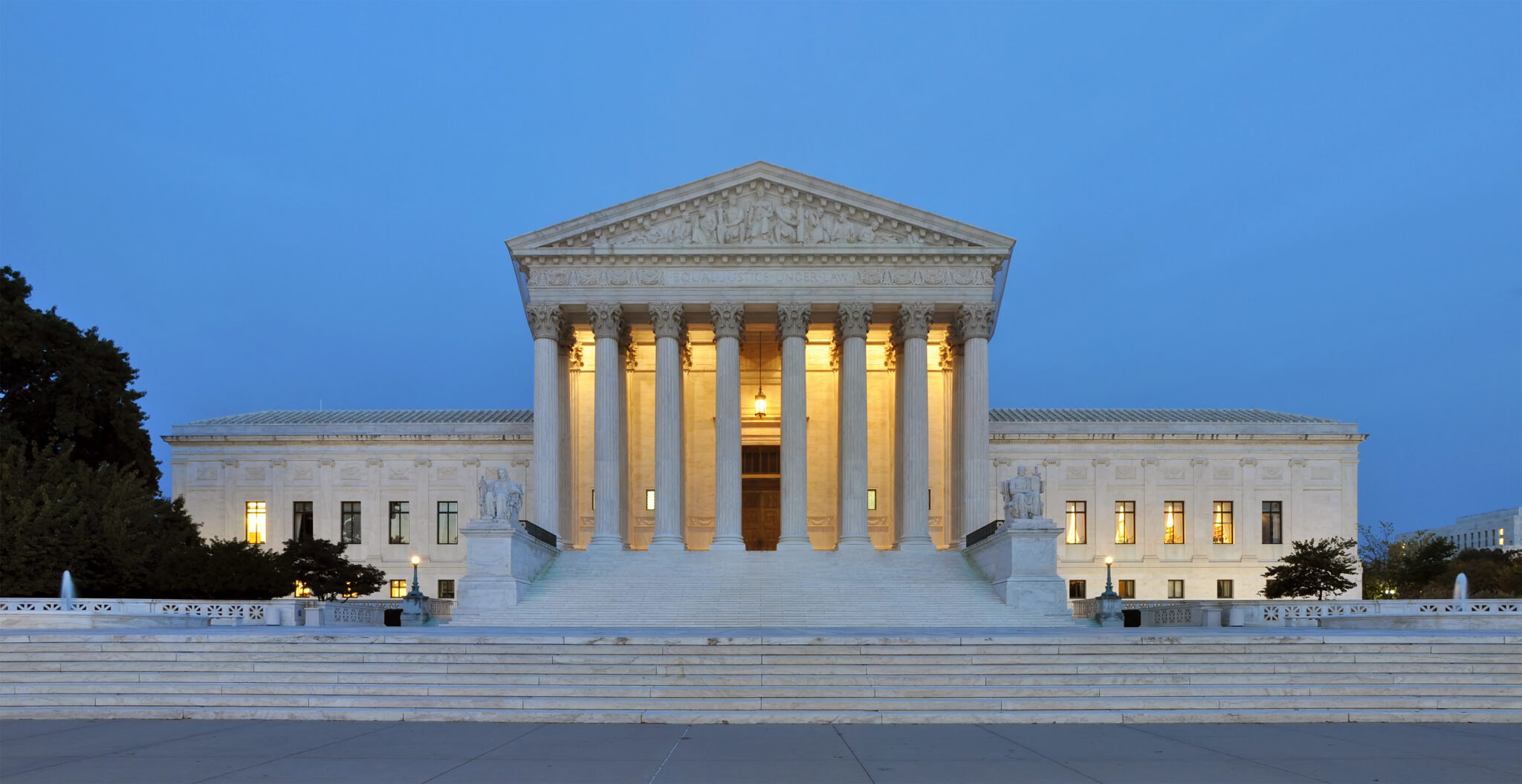
A college professor and a student are both sexually harassed by the same administrator. Title IX prohibits sex discrimination against both of them. In most circuits, the student and professor can both go straight to federal court to sue under Title IX. But the professor may soon lose that option. This term, in Crowther v. Board of Regents of the University System of Georgia, the U.S. Supreme Court will decide whether school employees can sue to enforce their Title IX protections. A ruling against them would leave coaches, professors, and staff with Title VII as their only path to court. That means filing an administrative charge with the Equal Employment Opportunity Commission within 180 days (300 in some states) of the discriminatory act and waiting for permission to sue, and facing a cap on damages.
“Title IX cannot achieve its objective of eradicating sex discrimination in education without a robust remedial scheme” for workers, the employees wrote in their brief.
Title IX promises that “no person” in a federally funded education program shall be “subjected to discrimination” on the basis of sex. In North Haven Board of Education v. Bell (1982), the Supreme Court held that this promise extends to employees, writing that “Congress easily could have substituted ‘student’ or ‘beneficiary’ for the word person” had it wished to restrict the statute’s scope. Title IX does not expressly give anyone a right to sue. But in Cannon v. University of Chicago (1979), the Supreme Court recognized an implied right of action for a prospective student who was denied admission to medical school.
Crowther asks whether that right also belongs to employees. The case was brought by a basketball coach and a professor who say they faced sex discrimination on the job. They rely on Jackson v. Birmingham Board of Education (2005), where the Court let a basketball coach sue for retaliation after he complained that the girls’ team was under-resourced. The “inexorable conclusion” of Jackson and the Court’s Title IX cases is that an employee who suffers sex discrimination “has a private right of action to seek damages under Title IX,” the employees argue.
The university reads Jackson narrowly. The coach could sue because he reported sex discrimination against his students, not himself. Claims an employee was discriminated against as a worker, the university argues, belong to Title VII.
Lopsided Split
Eight circuits – the First, Second, Third, Fourth, Sixth, Eighth, Ninth, and Tenth – let employees sue under Title IX. Under their logic, Cannon gave the “persons” Title IX protects a right to sue, North Haven held that employees are “persons,” and the statute offers no basis for treating students and employees differently.
The Fifth and Seventh Circuits, in decisions pre-Jackson, held that Title VII displaces employees’ Title IX claims. The Fifth Circuit found it unlikely that Congress intended to “create a bypass of Title VII’s administrative procedures.”
The Eleventh Circuit, in the decision under review in Crowther, broke from the consensus with new reasoning. It criticized the other circuits for having “failed to grapple” with the Supreme Court’s Spending Clause precedents. Congress can attach conditions to federal funding, but recipients are bound only by conditions they clearly accept. Neither North Haven nor Jackson put schools on notice that employees could sue for damages over discrimination they experienced personally. With Title VII already giving employees a path to court, the Eleventh Circuit found it “dubious” that schools “knowingly and voluntarily accepted” Title IX liability.
The Supreme Court could be receptive to that point. The Court once readily recognized implied rights of action, the university noted. But more recently, “to safeguard the separation of powers – and police the borders of Congress’s spending authority – the court has imposed restrictions on courts’ ability to find or expand implied private remedies,” the university said.
The employees respond that they’re not asking for a new right. The Supreme Court has confirmed that Title IX “unquestionably” placed the duty not to discriminate on the basis of sex on funding recipients, and schools have had notice that they could be liable for private sex discrimination suits since Cannon.
Remedy or Workaround?
Title IX and Title VII each have advantages. Title IX has fewer administrative hurdles, and its statute of limitations often runs two years or more. It also has no cap on damages, though it bars punitive and emotional distress damages. Title VII, by contrast, allows disparate-impact claims, which Title IX does not. Neither path is distinctly better for workers in all scenarios. What the employees want is the choice to pursue either.
The extra time to file could be especially important for teachers who “may want to wait until term breaks to avoid the disruption to their classrooms that might come from a high-profile complaint,” Judge Robin Rosenbaum wrote dissenting from the Eleventh Circuit’s refusal to rehear the case en banc.
Supporters also argue Title IX reaches conduct Title VII may not. Title IX covers “programmatic resource disparities” including “inequitable allocation of funding, facilities, and institutional support between men’s and women’s programs,” the National Education Association wrote in a brief. A coach given worse facilities because she works for a women’s team, rather than because of her own sex, may have no Title VII claim. If the Supreme Court rules against the employees, she could sue under Title IX only if she complained and the school retaliated, not over the discrimination itself.
Opponents, including the United States and 21 states, argue workers should not be able to skirt Title VII’s intentional administrative hurdles. “While Title IX is a ‘landmark law’ that serves an important role in combatting discrimination … so too is Title VII,” the United States said in a brief. “Respecting Congress’s handiwork means respecting all of it, not expanding the later statute’s implied remedy to end-run the earlier statute’s express one.”
It is also not unusual for a statute to cover several different groups but offer remedies to a subset, the United States argues. For example, in Daily Income Fund v. Fox, the Supreme Court rejected an implied remedy for investment companies under a federal law regarding investment advisers’ fees, even though the companies are “undoubtedly within ‘the class for whose especial benefit” the law was enacted. Shareholders and the SEC were authorized to sue under the statute.
The employees claim the statutes’ overlap was intentional. Congress, which extended Title VII to schools in March 1972 and passed Title IX in June 1972, deliberately chose not to carve out employment discrimination from Title IX’s purview. “Congress has provided a variety of remedies, at times overlapping, to eradicate employment discrimination,” the U.S. Supreme Court said in North Haven.
The Court’s recent turn against implied rights of action may not bode well for the employees. How narrowly or broadly the justices view Jackson at oral argument Nov. 30, 2026, could signal their leanings. A ruling against the employees would not directly implicate students’ right to sue, and the university insists this case is not about students. But an adverse ruling could create a path for opponents to chip away at other implied rights, including the student right recognized in Cannon.






Daily News & Commentary
Start your day with our roundup of the latest labor developments. See all
November 24
Labor Department finalizes a new independent contractor rule; Broadway wardrobe workers authorize a strike; President Trump's EEOC nominee lacks the Senate votes to advance.
November 23
New York City’s teachers’ union announces intent to sue the city’s main pension fund; Teamsters win nearly $100 million arbitration award against Union Pacific Railroad; security workers at two busy California ports reach tentative contract agreement.
November 22
Research from the Rutgers Workplace Justice Lab finds that states are failing to use their wage theft enforcement powers, and global union leaders call for governments to review contracts with Amazon and AWS.
November 19
Harvard academic workers end strike without contract; Reuters journalists authorize a strike; Spirit Airlines’ sale of employee data to Google for AI training approved.
November 18
Judge vacates foreign-student visa limits; DOL proposes QPAM relief; Supreme Court declines Nexstar appeal.
November 17
Amazon workers in Canada win company's first union contract in North America; NY law gives employees access to personnel records; D.C. Circuit looks to overturn Trump joint employer rule