
Joel Heller is an Assistant Professor of Law at the University of Kentucky Rosenberg College of Law.
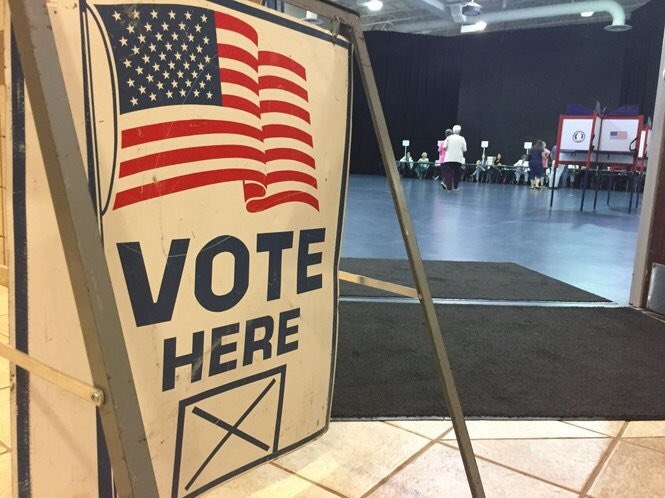
The midterm elections are approaching. Even with all the efforts to undermine the democratic process, no one has yet suggested holding those elections on property owned by a candidate. Yet that is precisely the situation workers seeking union representation face. Employees who want a union typically register that choice in a secret-ballot election administered by the National Labor Relations Board, and those elections are almost always held at the workplace—a space owned and controlled by theemployer. For decades, the NLRB’s Casehandling Manual has instructed that “[t]he best place to hold an election … is somewhere on the employer’s premises.”
My new article in the Illinois Law Review critiques the practice of voting at work. Employer property is a decidedly non-neutral setting; not only do employers typically oppose unionization, but the workplace is often the site of their anti-union campaign. Work is also a peculiarly undemocratic space, with background norms like control and dependence that undergird the employment relationship but are antithetical to democratic values like equality of decision-making and avoiding arbitrary exercises of power. Moreover, holding representation elections at the workplace is a policy choice; nothing in the National Labor Relations Act requires it.
So why do employees vote at work? That practice is another example of a phenomenon that I and others have written about before—labor law’s use of political analogies. The voting-at-work model stems from the flawed premise that representation elections should look like political elections. Like in representation elections, in-person voting at a particular time and place is also the default and majority practice in elections for political candidates. Although both sometimes permit voting by mail as an alternative, they also limit that practice in similar ways. The NLRB holds mail-ballot representation elections only if employees are “scattered” such that it would be difficult to get to an in-person election site. Until recently, voting by mail in political elections similarly was reserved for voters unable to vote in person (and still is in several states). Even today, voters in almost all states who wish to vote by mail must affirmatively request a mail ballot.
Voting at work reveals the political analogy’s flaws by highlighting the ways in which representation elections are different than political elections. It poses dangers to the democratic process that have no analogue in the political context. Employers have nearly complete control over employees for hours at a time, day after day. That control is exclusive, because employers generally can exclude unions from the workplace. Employers can leverage that power to advance their anti-union preference. Moreover, this dynamic persists even if employees unionize. Unlike when a challenger defeats an incumbent officeholder, a vote for union representation does not remove the employer as the governing actor. Unions bargain with, but do not replace, the employer.
No political candidate has the kind of power over voters that an employer holds over employees. Indeed, the irony of using political elections as the model for representation elections is that it leads to circumstances that never would fly in the political context—an election held on the property of an interested party. Another distinction between the labor and political contexts renders the analogy even less apt. Unlike political elections, which take place within an existing democratic system, the choice in a union election is whether to have representation at work at all. An employer opposing unionization doesn’t just oppose a particular candidate to represent employees, it opposes the establishment of a democracy where none previously existed. In that way, voting at work in representation elections is like voting at the palace on whether to depose the king.
The discourse surrounding alternatives to voting at work like mail ballots likewise resembles such debates in political elections, again without recognizing the differences between the two contexts. For example, critics of mail ballots in both spheres raise alarms about fraud. Lack of evidence for such claims aside, electoral misconduct is easier to challenge and remedy in the labor realm than the political realm. A party alleging fraud can file election objections with the NLRB, which can order a re-run election—a remedy almost unheard of in the political context. On the flip side, in both contexts, the value of mail ballots is framed in terms of convenience to voters. That’s largely accurate for political elections. But the benefit of mail ballots in representation elections sounds less in convenience—for all its faults, voting at work is convenient, because employees are typically there anyway—and more as an opportunity to vote away from employer control.
The analogy to political elections is not only bad reasoning, but can lead to policies like voting at work that risk undercutting the right to representation. Voting mechanics can shape voting outcomes. Although not exhaustive, some statistics show a higher success rate for unionization when representation elections are held by mail rather than in-person at work. That the voting-at-work default favors employers is also demonstrated by the fact that employers tend to prefer it. They routinely agree to host representation elections on their property, even though nothing requires them to do so.
The impact on outcome stems from dynamics both particular to the labor context and embedded in the psychology of decisionmaking. Holding elections at work means that voters approach the unionization decision in the mindset of employees, with the norms of obedience and economic dependence that characterize that status. Because employees depend upon the employer for their livelihood, they may be hesitant to vote against their employer’s anti-union wishes. More broadly, phenomena like recency bias and construal theory indicate that temporal and spatial proximity to something heightens its influence on decisionmaking. These factors play out when workers vote in the place where employer power is most manifest and where the employer’s anti-union views are typically the first, last, and loudest ones they hear before voting.
That representation elections are held by secret ballot doesn’t eliminate these effects. And even if secrecy lessens the likelihood of employer retaliation against any particular employee for their vote, the risk of unit-wide retaliation if employees unionize remains.
When applied to voting mechanics, the political analogy thus undercuts democracy at work. Compounding that consequence, less democracy at work also harms democracy elsewhere. For example, nonunionized employees are less likely to vote in political elections than are unionized employees. And states with lower union density are more likely to pass legislation restricting the right to vote in political elections, such as stricter voter-identification laws or limits on early voting.
Rethinking labor law’s political analogies can open a path to policies that better serve the law’s purpose and promise. That could be reforms like the NLRB mailing a ballot to all employees in a proposed bargaining unit and letting them choose whether to vote by mail or at an in-person election at a neutral location the agency secures. Or it could be broader changes like card check or other shifts away from the electoral model altogether. Getting past political analogies is important because changing how we think about labor law can improve how we practice it. Having a voice at work doesn’t have to mean voting at work.



Daily News & Commentary
Start your day with our roundup of the latest labor developments. See all
October 29
Dolores Huerta, labor leader, feminist, and civil rights icon, dies at 96.
October 28
The Writers Guild of America East provides writers with access to software that protects their work from AI scraping, and city workers in Oregon reach a tentative agreement after a six-day strike.
October 27
Some California union locals defy their statewide leadership to back the state’s billionaire tax proposal; a Brown University technology center releases a map of the hidden global workforce behind AI; the National Women's Soccer League and its players union settle six grievances.
October 26
Harvard dining workers authorize strike; New York City bans horse carriages; Brooklyn nurses rally in support of colleague.
October 25
Dallas Cowboys Cheerleaders unionize; Bureau of Prisons again pushes for union contract cancellation; CSU faculty votes on strike authorization.
October 23
Employers increasingly shift health care costs onto workers and NYC proposes placing restrictions on fully automated customer service.