
James Blanchfield is a student at Harvard Law School.
In today’s News and Commentary, Korean unions oppose labor exemption bill, Portland city workers prepare to strike, and the University of Pennsylvania’s graduate student union looks to dismiss a university filing claiming that certain grad students are not eligible for representation.
In Seoul, labor unions came out in opposition of a new bill which would create special economic zones with reduced labor protections. The bill was introduced by the Democratic Party of Korea (DPK), the liberal majority party headed by President Lee Jae Myung. Known as the Special Act on Super-Regional Economic Zones, the bill would allow local governments to form a larger economic “mega-zone” which would come with faster permitting and additional tax incentives. However, the current proposal also includes significant labor exemptions. Certain workers would be allowed make individual agreements which are outside of Korea’s Labor Standards Act, which could extend the workweek beyond the current 52-hour legal limit. The Korean Confederation of Trade Unions immediately condemned the plan, saying that this would not only harm workers in the short term but also pave the way for a broader erosion of labor protections down the line. The DPK insists that the current bill is not the final version, and that it will pursue discussions on a proposal without the labor exemptions as well. Korean business leaders, on the other hand, claim the exemptions must be included for the plan to work.
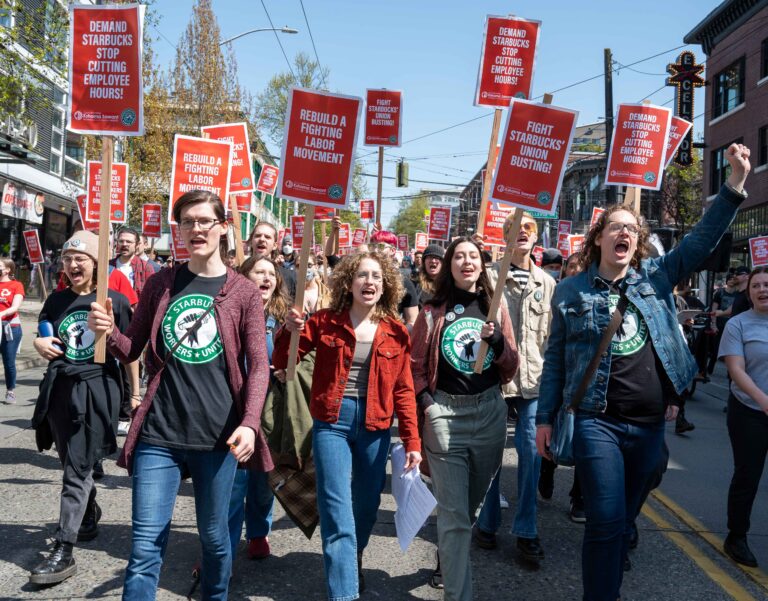
In Portland, over 800 city workers are prepared to walk off the job as soon as November 1 after voting to authorize a strike. The City of Portland Professional Workers (CPPW) represents municipal employees in a range of positions, including technology staff, multimedia specialists, and financial analysts. The union has been in negotiations with the city for approximately ten months, but the gap between the two proposals is still significant. The city’s final offer for total spending comes in over $10 million short of the union’s proposal. Kari Koch, the president of CPPW, says that the union’s proposals are just matching what other city workers’ unions have in their respective contracts. “It’s not outrageous,” she said, “It’s addressing the realities of inflation and the cost of living in the city.” CPPW could soon be joined by multiple other city worker unions in striking, including Portland City Laborers who are voting on a strike authorization this week.
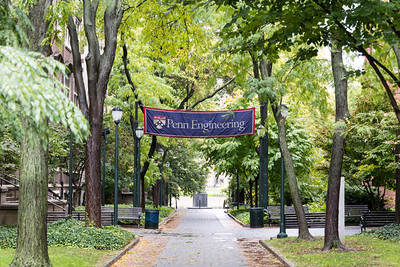
On Monday, GET-UP, the University of Pennsylvania’s graduate student union, asked a federal court to dismiss a university filing that would call into question whether certain grad students are eligible for union representation. The core of the dispute is the status of first- and second-year students in Penn’s Biomedical Graduate Studies Program. GET-UP’s first contract with the university, ratified in February, excludes those students. However, in April, the union filed a grievance challenging their exclusion. In August, the university responded by filing for a declaratory judgment in the United States District Court for the Eastern District of Pennsylvania, maintaining that these specific students are engaged in academic training, not employment, under the NLRA. In its most recent motion, GET-UP argued that the court lacks jurisdiction because the university agreed to arbitrate all contract disputes. The union cited federal labor policy favoring arbitration, as well as a recent decision that sent a similar situation involving the Harvard graduate student union to arbitration. A GET-UP spokesperson called Penn’s suit an attempt to sidestep the grievance process.


Daily News & Commentary
Start your day with our roundup of the latest labor developments. See all
October 20
Korean unions oppose labor exemption bill; Portland city workers prepare for strike; UPenn grad student union looks to dismiss university filing
October 19
FDA reverses course on policy prohibiting off-duty union activity; FAA and NATCA reach deal to secure pay increase for air traffic controllers.
October 18
Federal judge again halts cancellation of the Bureau of Prisons’ CBA; tabletop gaming workers face roadblocks in union recognition.
October 16
Department of Labor reduces wage-and-hour enforcement at unionized workplaces; Fain's victory poses question of federal monitor's extension.
October 15
New reporting examines the rollback of child labor protections; California tries to block a strike; NLRB charges Wisconsin mental health provider with firing workers during union drive.
October 14
Eleventh Circuit overturns ERISA exhaustion rule; DHS finalizes removal of automatic renewal for work permits; AFGE challenges SSA over flexible scheduling policy.