
Kaitlin Knocke is a student at Harvard Law School and a member of the Labor and Employment Lab.
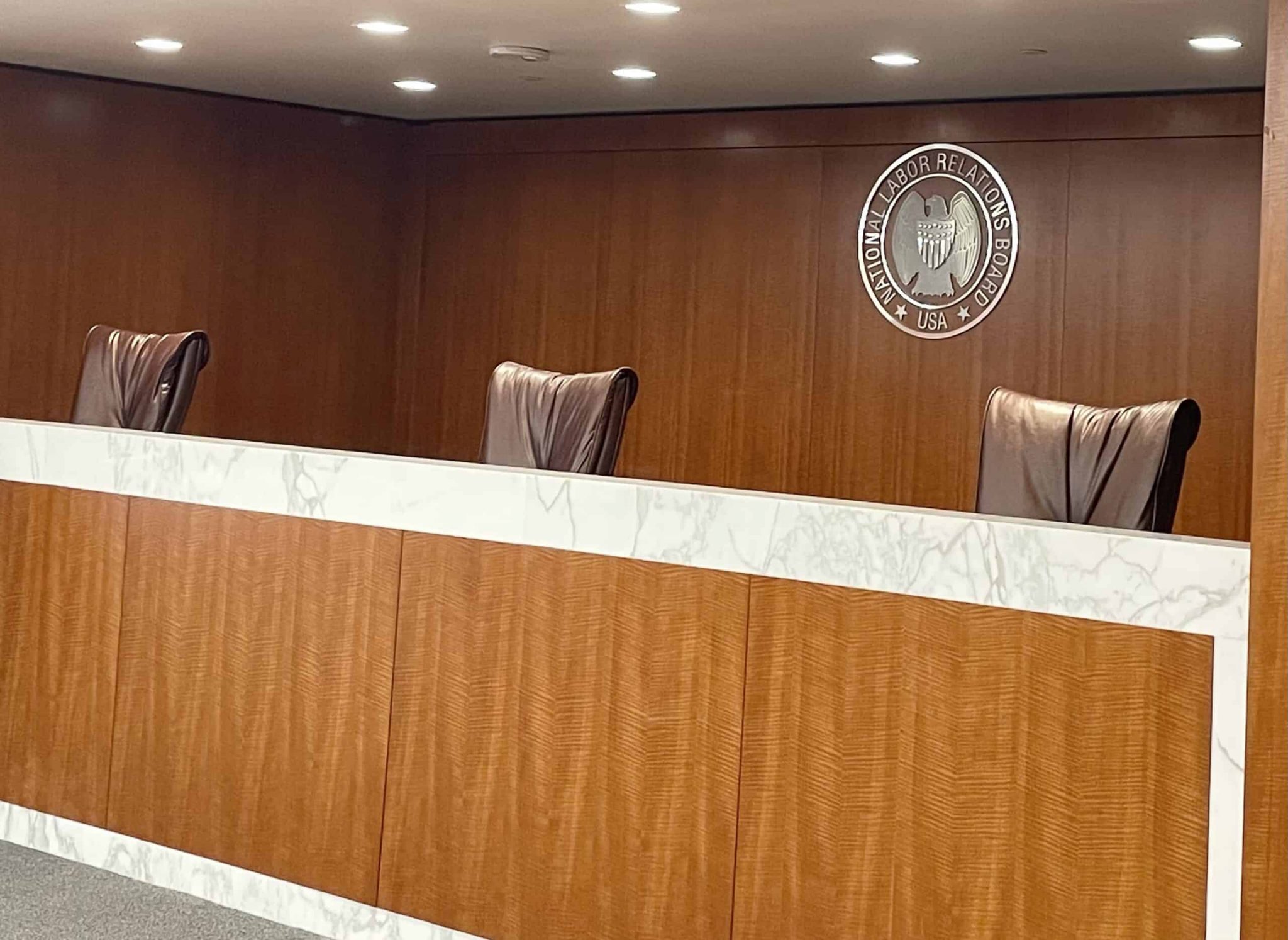
On Monday, the Supreme Court declined to review former NLRB member Gwynne Wilcox’s challenge to her removal by President Trump. The decision leaves intact a December 2025 D.C. Circuit ruling holding that the NLRA’s statutory restrictions on presidential removal of Board members are unconstitutional. Trump fired Wilcox in January 2025 without alleging neglect of duty or malfeasance, the grounds required by the statute. The D.C. Circuit concluded that the NLRB exercises substantial executive power through its rulemaking, adjudicatory, and enforcement functions, placing its members outside the protections recognized in Humphrey’s Executor. The Supreme Court subsequently overruled that precedent in Trump v. Slaughter, eliminating longstanding removal protections for FTC commissioners. Although Monday’s denial of certiorari does not itself decide the constitutionality of the NLRA’s removal provisions, it leaves the D.C. Circuit’s decision intact, further diminishing the NLRB’s independence from presidential control.
Meanwhile, the Pennsylvania Labor Relations Board ruled Tuesday that Penn State graduate research assistants are employees entitled to collective bargaining rights under state law, rejecting the university’s appeal seeking to exclude them from the bargaining unit represented by the Coalition of Graduate Employees (CGE–UAW.) In its underlying 2025 decision, a Board hearing examiner concluded that research assistants perform services as public employees under Pennsylvania’s Public Employee Relations Act, notwithstanding the university’s argument that their research primarily advances their academic training. The examiner distinguished research assistants from graduate students on fellowships, who generally lack assigned service obligations. Penn State graduate workers voted to unionize in 2025, but the university’s challenge prevented research assistants, who comprise more than half of the roughly 4,000 graduate workers, from participating in ongoing contract negotiations. Tuesday’s decision clears the way for their inclusion in bargaining.
Finally, the Service Employees International Union (SEIU) and its Pennsylvania healthcare affiliate face a federal lawsuit alleging that they unlawfully terminated an organizer because she took leave for Army Reserve training. Stephanie Gonzales filed her complaint Tuesday in the Eastern District of Pennsylvania in Gonzales v. Service Employees International Union (No. 2:26-cv-08037). According to Bloomberg Law’s account of the allegations, Gonzales’s supervisor allegedly denied her a vacation day because she had already taken military leave, and the union subsequently terminated her employment. Gonzales alleges that her firing violated the Uniformed Services Employment and Reemployment Rights Act, which prohibits employers from discriminating against employees because of their military service. The lawsuit underscores that labor unions, like other employers, are subject to federal employment protections when managing their own staff.





Daily News & Commentary
Start your day with our roundup of the latest labor developments. See all
October 22
SCOTUS declines Wilcox appeal; Penn State research assistants win bargaining rights; SEIU sued over military leave firing.
October 21
DOL withdraws tipped-worker rule; Instacart settles hiring-bias claims; Phillips 66 locks out New Jersey refinery workers.
October 20
Korean unions oppose labor exemption bill; Portland city workers prepare for strike; UPenn grad student union looks to dismiss university filing
October 19
FDA reverses course on policy prohibiting off-duty union activity; FAA and NATCA reach deal to secure pay increase for air traffic controllers.
October 18
Federal judge again halts cancellation of the Bureau of Prisons’ CBA; tabletop gaming workers face roadblocks in union recognition.
October 16
Department of Labor reduces wage-and-hour enforcement at unionized workplaces; Fain's victory poses question of federal monitor's extension.