
Gurtaran Johal is a student at Harvard Law School.
In today’s news and commentary, the Writers Guild of America reaches a tentative deal with the Alliance of Motion Picture and Television Producers; the EEOC recovers almost $660 million in compensation for employment discrimination in 2025; and highly-skilled foreign workers consider leaving the United States in light of changes to the H-1B visa program.
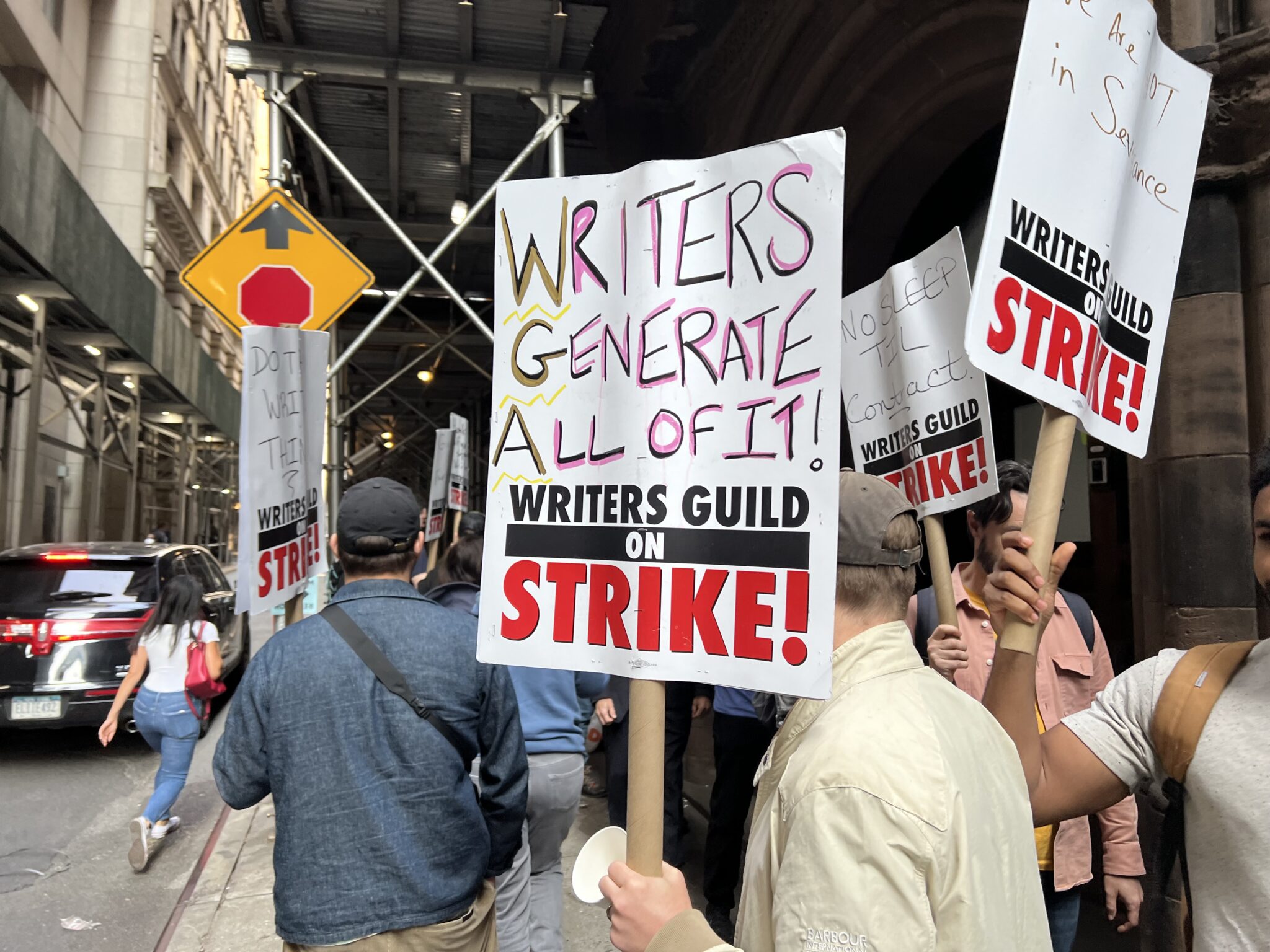
In March, the Writers Guild of America, which represents Hollywood screenwriters, began negotiations with the Alliance of Motion Picture and Television Producers, which represents studios and streaming services, for a new contract. On Saturday, they reached a tentative four-year deal that protects health care, increasing royalty payments for streamed content, and ensures that AI does not lower the writers’ compensation. This deal arrived a few weeks before the union’s current contract was set to expire on May 1st. The contract still requires ratification by union members, which will likely happen at the end of the month. Moving forward, the Alliance of Motion Picture and Television Producers will focus on negotiations with unions representing actors and directors.
Meanwhile, the Equal Employment Opportunity Commission (EEOC) recovered approximately $660 million for 17,680 victims of employment discrimination in fiscal year 2025. Of the $660 million, the EEOC recovered $528 million through pre-litigation enforcement, including mediation, conciliation, and settlements. This monetary recovery is 12% higher than fiscal year 2024. Former Democratic EEOC officials, in a statement, stated that the annual performance report demonstrates the work of career staff. For example, many of the settlements in fiscal year 2025 came at the hands of years of litigation. The EEOC will also likely continue focusing its strategies around targeting DEI programs, with a focus around efficiency and effectiveness.
Lastly, with the newly minted hurdles in obtaining an H-1B visa, which provides a pathway for highly skilled foreign workers to work in the United States, these workers are considering leaving the United States. The New York Times interviewed three international workers impacted by these changes, stating that it has felt nearly impossible to find employers who would sponsor their H-1B visas in the biotechnology and marketing analytics space. Additionally, Bloomberg Law reports that the Department of Labor has increased its number of H-1B investigations, with many companies seeing a large increase in the number of site visits and searching for technical violations.





Daily News & Commentary
Start your day with our roundup of the latest labor developments. See all
October 13
Chicago hotel workers remain on strike; a coalition of Democratic states sues the Labor Department over canceled unemployment insurance grants; the Federal Labor Relations Authority establishes a new mediation framework for federal worker disputes.
October 12
Workers at the Obama Foundation begin organizing; MLB submits its latest collective bargaining agreement proposal; Brigham & Women's nurses postpone strike.
October 11
UAW President Shawn Fain succeeds in his reelection bid, and Spanish unions call for a general strike.
October 9
DHS proposes a $100k fee for the foreign grad employment program; Trump suspends tech company access to green card program; and private equity perpetuates poor working conditions for home care workers.
October 8
NLRB judge finds UPS unlawfully restricted union insignia; Harvard graduate workers authorize second strike; OSHA orders Union Pacific to pay $300,000 in damages in whistleblower case.
October 7
DOL scraps plan to remove decades-old wage-and-hour guidance from federal regulations; New York enacts personnel records access law; Starbucks loses bid to dismiss Workers United trademark suit.