
Emily Tulli is the strategic advisor to The Movement Project, an initiative of Yale Law School and The International Refugee Assistance Project, and a former Biden-Harris appointee to the U.S. Department of Labor.
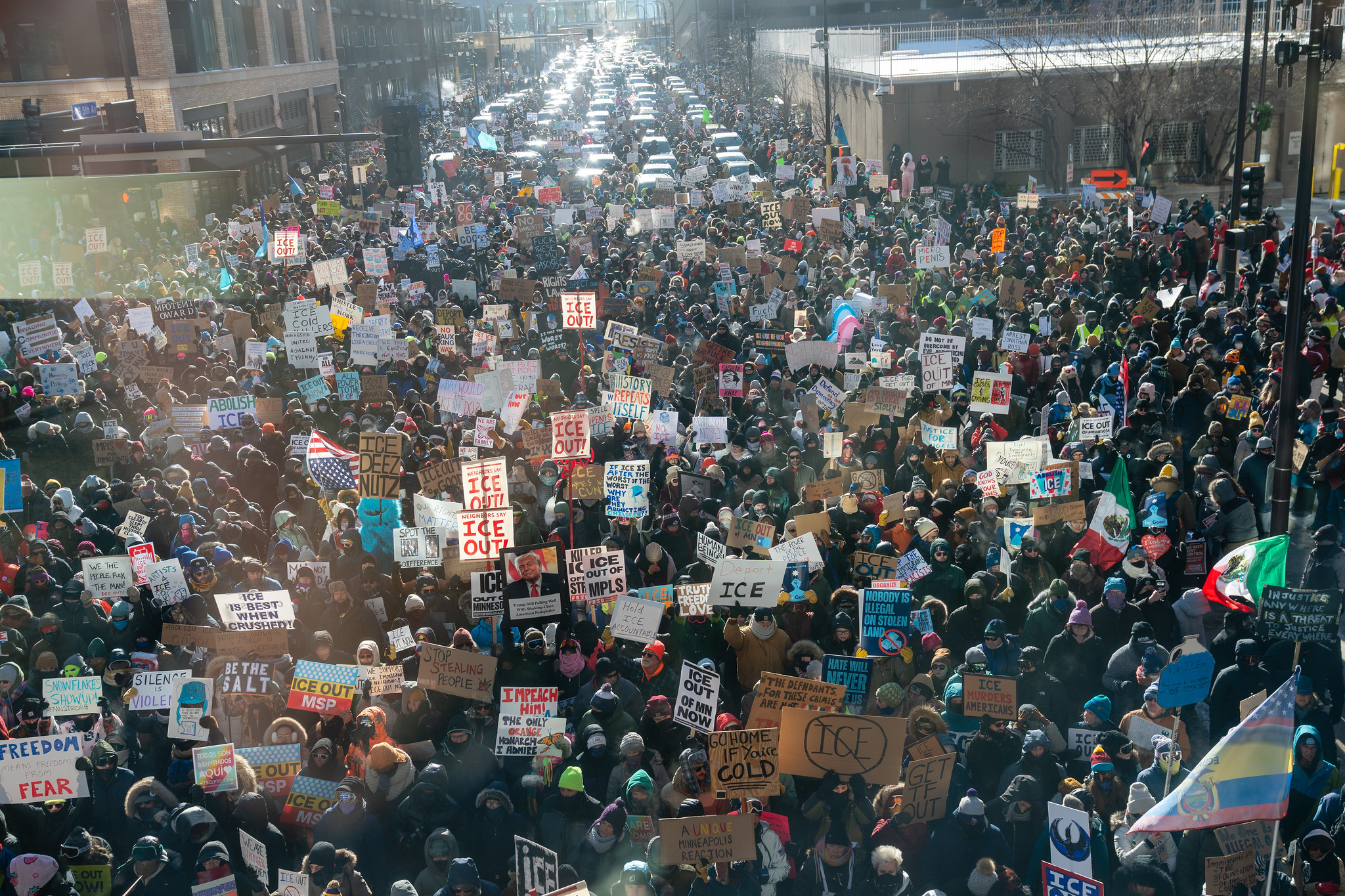
The world’s eyes were fixed on Minnesota this weekend after AFGE member and VA nurse Alex Pretti was killed by Customs and Border Protection (CBP) agents. The second U.S. citizen to be killed by federal law enforcement in recent weeks, Pretti’s violent death at the hands of the state stoked fear, anger, and panic in Minnesota and across the nation. But in a moment of crisis like this, something remarkable can happen: acts of courage inspire more courage, and solidarity swells. Today, that principle is being affirmed in Minnesota, where labor unions and community members are standing together in response to a tragic loss and an immigration enforcement campaign that is causing tremendous harm to workers, unions, and our communities.
The labor movement’s role in this moment builds on a longer history of unions opposing policies that seek to divide working people, and the foundational principle that an injury to one is an injury to all. But it also illustrates how solidarity is growing in real time in the second Trump administration. Labor unions at every level have condemned Pretti’s killing and the violence and disruption we’ve experienced from Immigration and Customs Enforcement (ICE) and CBP over the last year. The labor movement in Minnesota has been organizing since before the federal agent surge began there to defend its members and communities. They are protesting in frigid weather, providing food to those in need, and helping secure counsel for their detained members.
Throughout the country, unions have been organizing to support their members. They are running citizenship clinics, helping members find immigration counsel, and engaging in education activities and training to equip members with accurate, rights-based information and the ability to develop a rapid response plan in case of a workplace raid or detention. They are also bargaining for contract language to protect workplaces from warrantless ICE invasions and protect workers’ rights on the job in case they get detained or lose work authorization.
Unions are also fighting back in court, using every tool to build power and solidarity. When the Department of Homeland Security began terminating TPS and parole, unions worked with community partners to challenge these terminations. In an amicus brief on the termination of parole for immigrants from Cuba, Haiti, Nicaragua, and Honduras, the AFL-CIO highlighted the unprecedented disruption that such an immediate, blanket revocation of parole status would wreak on its members and the U.S. workforce as a whole. And in the first few weeks of the Trump administration, as we saw international students and scholars snatched and detained based on their speech, the American Association of University Professors (AAUP) brought a quick legal challenge (resulting in a stunning rebuke to the administration from a Reagan-appointed judge).
These and other actions are a powerful reminder that solidarity builds over time and courageous action starts to multiply. Notably, the day before Pretti’s death, the labor movement was instrumental in coordinating a courageous solidarity effort with echoes to its storied history. On January 23, faith leaders, community groups, and labor leaders organized a day of action involving tens of thousands of Minnesotans who refused to work, shop, or attend school in protest of the federal government’s aggressive immigration enforcement tactics. The power of that action built into another nationwide strike and protest on January 30th and February 1 and pushed Congress into action, with a 2 week sprint to negotiate reforms to immigration enforcement before a looming DHS shutdown sets in.
This moment shows that when workers choose to stand together, whether in the streets of Minneapolis or in the union halls of Los Angeles, their shared solidarity and courage can spread, deepen, and shape the fight for working people everywhere.
Emily Tulli is the strategic advisor to The Movement Project and a former Biden-Harris appointee to the U.S. Department of Labor.






Daily News & Commentary
Start your day with our roundup of the latest labor developments. See all
October 22
SCOTUS declines Wilcox appeal; Penn State research assistants win bargaining rights; SEIU sued over military leave firing.
October 21
DOL withdraws tipped-worker rule; Instacart settles hiring-bias claims; Phillips 66 locks out New Jersey refinery workers.
October 20
Korean unions oppose labor exemption bill; Portland city workers prepare for strike; UPenn grad student union looks to dismiss university filing
October 19
FDA reverses course on policy prohibiting off-duty union activity; FAA and NATCA reach deal to secure pay increase for air traffic controllers.
October 18
Federal judge again halts cancellation of the Bureau of Prisons’ CBA; tabletop gaming workers face roadblocks in union recognition.
October 16
Department of Labor reduces wage-and-hour enforcement at unionized workplaces; Fain's victory poses question of federal monitor's extension.