
Elias Decker is a student at Harvard Law School.
In today’s News and Commentary, workers and unions organize for International Workers’ Day, and Volkswagen challenges NLRB regional directors.
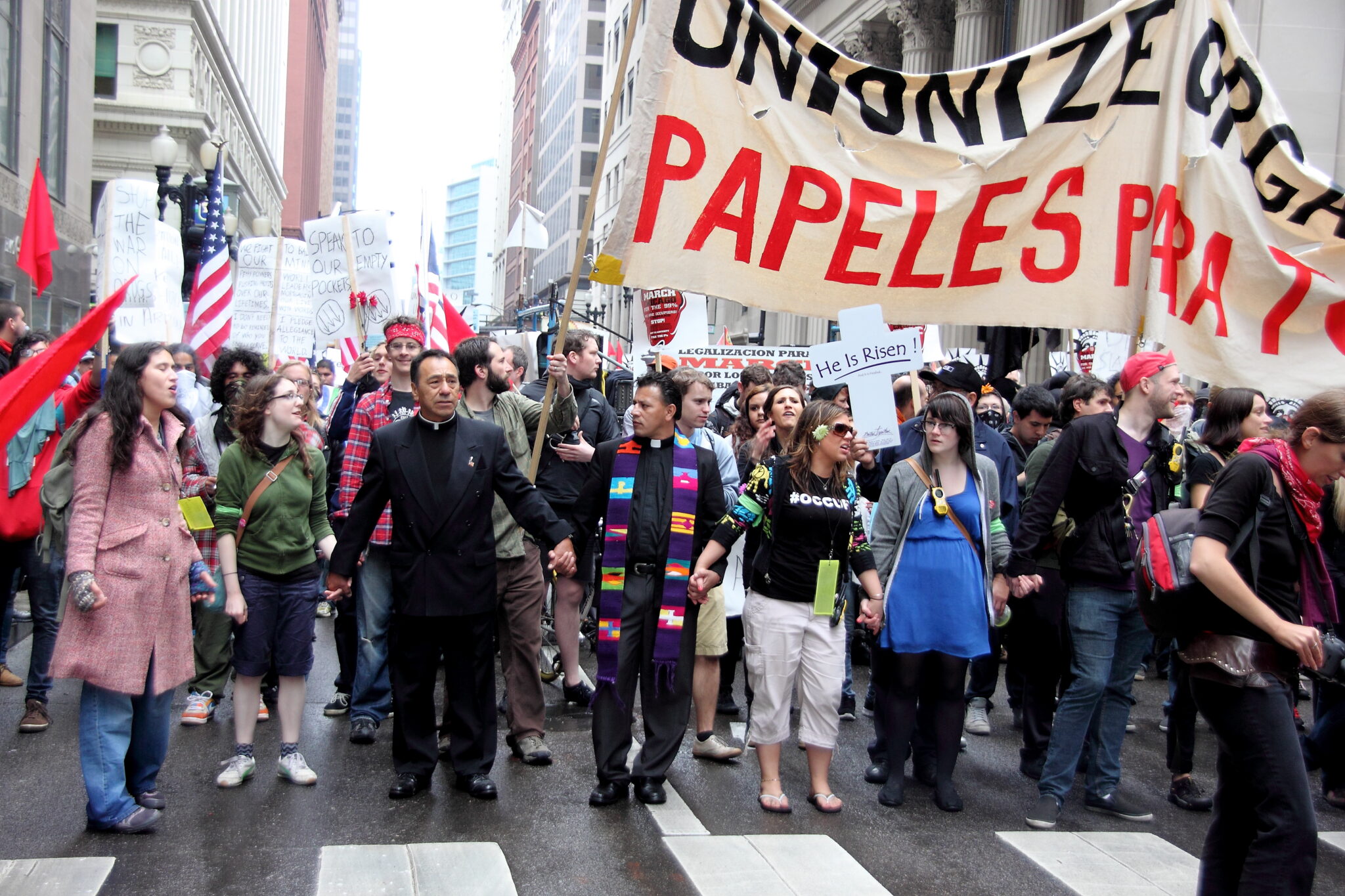
Under the banner of May Day Strong and slogan “No School, No Work, No Shopping,” unions, community groups, and workers across the country are planning mobilizations to observe International Workers’ Day, or May Day, in what could be the largest May Day mobilization in recent history. Some have connected it to the growing trend of quasi-general strikes, whose resurgence in popularity began with January 23rd’s “Day of Truth and Freedom” in Minnesota. Nationally, unions like the National Education Association, American Federation of Teachers, and the American Postal Workers Union have signed onto the day of mobilization. In Chicago, where International Workers’ Day started as a commemoration of workers killed by police during a rally for the 8-hour workday, the Chicago Teachers Union reached an arrangement with Chicago Public Schools to close school for the day to allow staff and students to attend the rally. Unions supporting the Chicago May Day mobilization include: Chicago Teachers Union, Illinois Coalition for Immigrant and Refugee Rights, Chicago Federation of Labor, SEIU Healthcare Illinois, Teamsters, National Nurses United, AFGE Locals 704 and 789, and Centro de Trabajadores Unidos. Similarly, in Ashevill, N.C., the Asheville City Association of Educators will lead a walkout, effectively closing local schools for the day. In Boston, high school students have organized several walkouts, and several unions — including SEIU Local 32BJ, Unite HERE Local 26, the Association of Flight Attendants, and IUE Local 201— are organizing local mobilizations.
On April 20th, Volkswagen filed a now-dismissed suit against the NLRB in Texas federal court alleging, among other things, that NLRB Regional Directors have unconstitutional removal protections. Though employers have challenged the NLRB’s constitutionality nearly 50 times since 2023, this is the first such case to focus on NLRB Regional Directors. Volkswagen brought this Texas suit to prevent the NLRB from compelling it to negotiate with a unionizing workplace in New Jersey, asserting that the company’s Texas-New Jersey supply chain made the southern venue appropriate. Though Volkswagen has since dismissed that suit, the seal has been broken on suits claiming that NLRB Regional Directors violate the Constitution. For instance, Rogers Memorial Hospital has raised this theory in a suit to stop representation proceedings at two of its Wisconsin locations. The judge in that case recently denied the company’s request for a TRO and asked for further briefing on a preliminary injunction, in what could turn out to be a metaphorical bellwether case for the novel employer legal theory.



Daily News & Commentary
Start your day with our roundup of the latest labor developments. See all
November 23
New York City’s teachers’ union announces intent to sue the city’s main pension fund; Teamsters win nearly $100 million arbitration award against Union Pacific Railroad; security workers at two busy California ports reach tentative contract agreement.
November 22
Research from the Rutgers Workplace Justice Lab finds that states are failing to use their wage theft enforcement powers, and global union leaders call for governments to review contracts with Amazon and AWS.
November 19
Harvard academic workers end strike without contract; Reuters journalists authorize a strike; Spirit Airlines’ sale of employee data to Google for AI training approved.
November 18
Judge vacates foreign-student visa limits; DOL proposes QPAM relief; Supreme Court declines Nexstar appeal.
November 17
Amazon workers in Canada win company's first union contract in North America; NY law gives employees access to personnel records; D.C. Circuit looks to overturn Trump joint employer rule
November 16
FMCSA ordered to disburse $73 million in withheld highway funds to New York; Department of Labor final rule regarding large union financial disclosures issued six years after initial withdrawal is upheld; Department of Labor issues enforcement alert for physician ghost networks maintained by health plans.