
Gali Racabi is an Assistant Professor at Cornell's ILR School and an associated faculty member of Cornell Law School. He is reachable at [email protected].
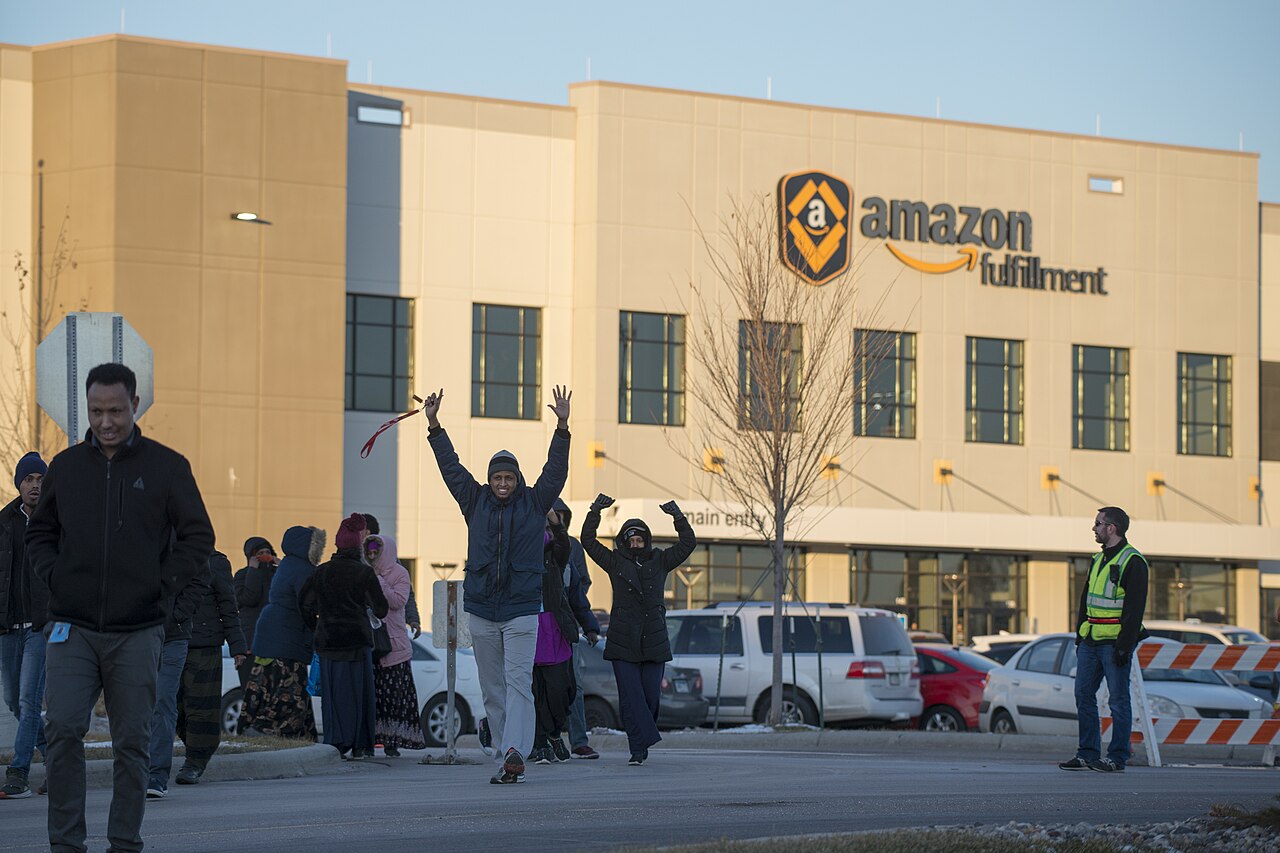
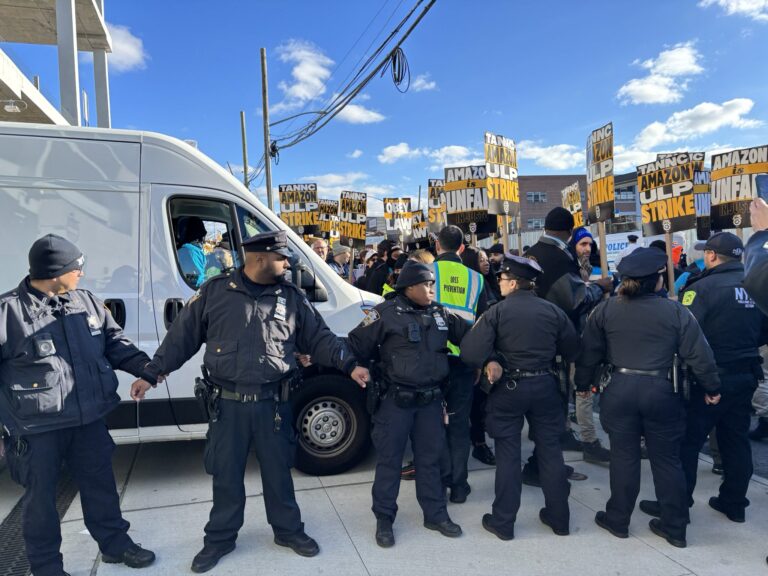
Amazon workers at the JFK8 fulfillment center in Staten Island are caught in a labor-law no-man’s land. Amazon has challenged the constitutionality of the National Labor Relations Board (NLRB) in federal court, seeking to block the Board’s remedies. Still, when those same workers sought labor protections under New York’s labor law, Amazon invoked Garmon preemption to block the state from acting. The result: workers have nowhere to go.
This situation might sound like a niche doctrinal issue. It is not. As employers and their legal and political proxies succeed in paralyzing the NLRB or evading its authority through employee classification arguments, states can step in to fill the gap. New York has done so in response to the Board’s lack of quorum; California has acted in response to the Board’s diminished capacity to promptly address workers’ grievances; Washington followed by enacting a state trigger law; Rhode Island might take on the case of student employees who face employee classification issues. In each of those situations, employers advocate against de jure or de facto NLRA authority, while invoking preemption when workers turn to state law.
This cannot be right, and indeed it isn’t.
Garmon preemption was never intended as a blanket prohibition of state authority. Garmon prohibited state authority over issues protected, prohibited, or arguably protected or prohibited by the NLRA — a broad judicial declaration of uniform federal authority, but not an absolute one. Garmon included a set of built-in exceptions, relied on the NLRB’s existence, function, and independence, and still acknowledged the dynamic, litigation-based nature of jurisdiction-setting between states and the federal government. However, Garmon, by prioritizing uniformity, aggravated the risk that workers would find themselves in a remedial no-man’s land, with a reluctant Board on the one hand and a preempted state on the other.
Months after Garmon was decided and following Guss v. Utah Labor Relations Board (1957), Congress amended the NLRA to clarify that a declined federal jurisdiction empowers state authority. A remedial vacuum, Congress made clear, is a defect, not a feature, in the Congressional design.
Another strand of NLRA preemption reinforces a presumption against jurisdictional no-man’s lands: Machinists. In International Association of Machinists v. Wisconsin Employment Relations Commission (1976), the Supreme Court recognized that there are situations in which Congress intended the Act to leave workers and employers without access to state or federal labor remedies. In those areas of labor law, Congress intended that workers and employers be governed by the “free play of economic forces.” While the case in point was the use of economic weapons, Machinists’ broader point is that locking workers out of both state and federal remedies requires a finding of Congressional intent for such an effect.
An employer that simultaneously contests the Board’s authority and invokes Garmon preemption to block state authority is making a Machinists argument in Garmon’s clothing. The practical outcome of succeeding in this Garmon argument is identical to succeeding in a Machinists’ arguments. But, in a cruel twist, the “free play of economic forces” now means leaving workers to the unilateral prerogatives of the employer. Yet, while Machinists would demand finding Congressional intent to leave the activity unregulated and subject only to the free play of economic forces, a Garmon argument requires only an “arguably” protected or prohibited standard.
To make sense of a cryptic NLRA preemption doctrine, one must keep two principles at heart: a strong preference for a uniform federal rule and procedure, and an aversion to creating labor law no-man’s land. Amazon, like other employers that try to suspend and carve out their workers from both federal and state authorities, flouts both principles: actively pulling the rug out from under the federal regime while using its wobbly existence as an excuse for total authority over workers. Garmon is flexible enough to allow for deviations from those principles — but a party that argues against both needs to demonstrate why such litigation maneuvers are fulfilling the Congressional scheme.
Remedying this is straightforward. Courts, legislators, agencies, and workers should force employers to choose a lane. The California AB288 ruling seem to nod that way, New York courts are more hesitant.
For courts, hearing a Garmon claim for a Machinists purpose ought to lead, at minimum, to a more robust demand from employers to justify Garmon’s application, if not the adoption of a Machinists’ standard. Under Garmon and its antecedents, a party arguing for preemption already faces the burden of showing that the Board reasonably could adjudicate the conduct. Courts should heighten Garmon scrutiny when employers simultaneously contest the Board’s authority. At minimum, courts should permit the state to present evidence of the employer’s dual procedural posture and weigh it against the preemption claim.
Courts could also analyze those Garmon arguments for what they are: Machinists arguments. Meaning that an employer that contests both authorities must demonstrate that Congress intended such employers to be relieved of their obligations under both federal and state law, or exist in a liminal space of jurisdictional contestation. There is no such evidence of Congressional intent; however, that is what proving a Machinists argument would require, and that is the burden our employer-class must demonstrate to escape both state and federal jurisdiction.
Legislators, regulators, and organizers should push employers to make a choice. Is your employer arguing against the Constitutionality of the NLRA, classifying you and your colleagues as a non-covered student-employee, as independent contractors, or otherwise contest the authority of the NLRA? File a claim under your state’s private sector labor law. Are you residing in one of the many states without one? Lobby your legislator to enact an aggressive trigger bill.
Employers ought to internalize the costs of dismantling and cutting holes into the national economic citizenship framework. The only viable way to do so is to create strong state-based labor counter-frameworks. Courts, regulators, legislators, and unions should force this choice on employers who, in pursuing tactical gains, leave workers without rights, states without jurisdiction, and federal authorities without power.
Waiting, stalling, and obfuscating are the employers’ tools. The question is what labor does next.






Daily News & Commentary
Start your day with our roundup of the latest labor developments. See all
October 11
UAW President Shawn Fain succeeds in his reelection bid, and Spanish unions call for a general strike.
October 9
DHS proposes a $100k fee for the foreign grad employment program; Trump suspends tech company access to green card program; and private equity perpetuates poor working conditions for home care workers.
October 8
NLRB judge finds UPS unlawfully restricted union insignia; Harvard graduate workers authorize second strike; OSHA orders Union Pacific to pay $300,000 in damages in whistleblower case.
October 7
DOL scraps plan to remove decades-old wage-and-hour guidance from federal regulations; New York enacts personnel records access law; Starbucks loses bid to dismiss Workers United trademark suit.
October 6
Protect College Sports Act dampens athlete unionization outlook; Stanford RA union decides to withdraw petition
October 5
Delaware bans captive audience meetings; EEOC settles remote work national origin discrimination claim; First Circuit stays enforcement order in VA's dispute with AFGE.