

Aaron Halegua is a Harvard Law graduate and the founder of Aaron Halegua, PLLC, a boutique employment law firm in New York City that represents forced labor and human trafficking victims.
Twenty-five years ago, Congress enacted the Trafficking Victims Protection Reauthorization Act (“TVPRA”), 18 U.S.C. §§ 1581 et seq., as a criminal statute prohibiting forced labor, slavery, peonage, or indentured servitude, as well as trafficking persons (i.e., recruiting, transporting, or harboring them) in furtherance thereof. (The TVPRA also criminalizes trafficking persons for the purpose of commercial sex). Since 2003, the TVPRA has provided victims of these crimes with a private right of action, and such lawsuits have steadily increased over time. In 2024, 280 new cases were filed in U.S. district courts asserting claims under the TVPRA—more than any prior year.
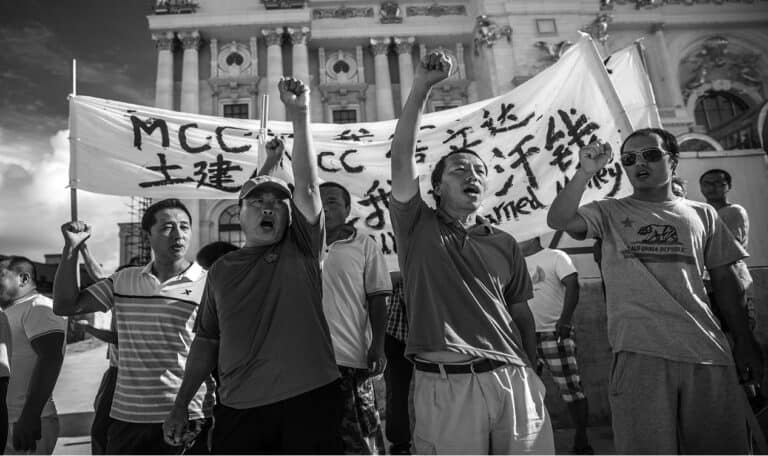
Litigants have achieved significant financial recoveries through such cases, totaling nearly $942 million as of 2024. For example, in 2015, in the Signal case, H-2B workers from India obtained a $14 million verdict against the companies who falsely promised them green cards to lure them to work in shipyards in Mississippi and Texas. In 2021, in one of my firm’s cases, Wang v. Gold Mantis Construction (the subject of a prior OnLabor post), seven Chinese construction workers obtained a $5.4 million judgment after being defrauded into traveling to Saipan, where they had their passports confiscated and worked long hours for little pay under dangerous conditions.
Despite the growing number of civil cases brought under the TVPRA, many labor and employment advocates nonetheless remain unfamiliar with the statute or harbor misconceptions about its scope. Accordingly, this blog post aims to introduce this powerful tool for workers and address these misconceptions.
As a preliminary matter, while “forced labor” certainly occurs when an employer threatens to physically harm a worker if they stop working, the scope of prohibited conduct is far wider. Any scheme designed to make a worker believe that they will suffer “serious harm” if they do not continue working constitutes forced labor under the TVPRA, and “serious harm” may include financial, psychological, reputational, or other non-physical harm. In Lyu v. Alfa Chemistry, for example, a chemical company required the plaintiff, a scientist from China on an H-1B visa, to sign a contract requiring her to pay the company up to $48,000 if she left the job before the four-year term concluded. The district court found that this liquidated damages provision in the contract constituted a threat to cause her serious financial harm.
Another misconception is that the TVPRA only applies where a worker is brought from overseas to work in the United States. However, the crime of forced labor has no such requirement. In the Lyu case, the plaintiff spent several years completing her PhD at Rutgers University before taking the job at the chemistry company. Similarly, forced labor or human trafficking victims need not be foreigners or immigrants. In Cotto, another case handled by my firm, a group of U.S. citizens were recruited to go rebuild houses in the Virgin Islands after a series of hurricanes, where the employer then refused to pay the promised wages and threatened to hurt or even kill the workers if they complained.
Critically, the TVPRA also casts a much wider net for potential defendants than many labor and employment statutes because the defendant need not have an employment relationship with the plaintiff. The TVPRA creates liability not only for the perpetrators of forced labor or trafficking, but any party who “knowingly benefits … from participation in a venture” that violates the TVPRA. In fact, a defendant need not even take an overt act in furtherance of the venture. In the Wang case, although it was the Chinese construction firms that confiscated the plaintiffs’ passports and threatened to deport them back to China, the casino developer who hired those companies was also deemed liable because it benefited from the long hours worked by the plaintiffs while ignoring the numerous red flags of their exploitation. (However, while the scope of liability is broad, it is not limitless: the D.C. Circuit recently affirmed that tech companies’ mere purchase in the global supply chain of cobalt mined by children did not amount to “participation in a venture” with the firms mining or selling the cobalt).
My law firm’s case, Kan, et al. v. Lin, et al., further illustrates the above points. Most of the fifteen Chinese immigrant plaintiffs had been living in California for many years before COVID eliminated their jobs. Desperate for work, they traveled to a small town in New Mexico after seeing a WeChat post promising “farming jobs” paying $200 per day. However, upon arrival, the traffickers confiscated their phones, crammed them into motel rooms, and compelled them to work fourteen-hour days trimming illegally-grown marijuana—even kicking them to make them work faster. The police eventually arrested the plaintiffs at the motel and charged them with drug crimes—which took months to have dismissed. We brought claims under New Mexico’s state anti-trafficking statute, which mirrors the TVPRA, even though the plaintiffs had not crossed an international border. Moreover, because we anticipated that enforcing a judgment against the traffickers themselves would be difficult, we also sued the individuals who invested in the project as well as the motel that benefited from the rent paid by the traffickers.
Practitioners should also understand that the damages available under the TVPRA are often far greater than under wage and hour or discrimination statutes, and there are no statutory caps. Noting the remedial purpose of the TVPRA, courts typically hold that victims may recover any damages that are the proximate result of the trafficking offense—including unpaid wages and economic harm, emotional distress, medical expenses, and therapy. Some courts have awarded emotional distress damages of $800 or $1000 for each day the plaintiffs were subjected to forced labor. In the Wang case, the trafficked workers who suffered physical injuries on the construction site were able to recover pain and suffering as well as lost income damages tied to those injuries. Courts also regularly require TVPRA defendants to pay punitive damages given the inherently egregious nature of the conduct.
Another critical point is that the TVPRA’s statute of limitations is significantly longer than other employment statutes and there are no administrative exhaustion requirements. Recognizing that many victims have been traumatized by their trafficking, which may delay their ability or desire to bring a lawsuit, the TVPRA permits civil actions within ten years of the offense, and further tolling may be available in some instances.
Of course, the TVPRA also has its limitations. Trafficking claims are not immune from being compelled to arbitration. Additionally, courts have held that certain threatened harms if one leaves a job—such as difficulty finding work in one’s home country or ostracization by former coworkers—are insufficiently serious to state a claim. Nonetheless, given the TVPRA’s wide scope of potential defendants, broad categories of available damages, and long statute of limitations, lawyers representing workers should understand the contours of the statute and the many similar state laws. Furthermore, the TVPRA can be used to hold individuals and entities accountable for trafficking and forced labor that occurs outside the United States in some instances—a topic I will explore in a forthcoming post for OnLabor.








Daily News & Commentary
Start your day with our roundup of the latest labor developments. See all
October 20
Korean unions oppose labor exemption bill; Portland city workers prepare for strike; UPenn grad student union looks to dismiss university filing
October 19
FDA reverses course on policy prohibiting off-duty union activity; FAA and NATCA reach deal to secure pay increase for air traffic controllers.
October 18
Federal judge again halts cancellation of the Bureau of Prisons’ CBA; tabletop gaming workers face roadblocks in union recognition.
October 16
Department of Labor reduces wage-and-hour enforcement at unionized workplaces; Fain's victory poses question of federal monitor's extension.
October 15
New reporting examines the rollback of child labor protections; California tries to block a strike; NLRB charges Wisconsin mental health provider with firing workers during union drive.
October 14
Eleventh Circuit overturns ERISA exhaustion rule; DHS finalizes removal of automatic renewal for work permits; AFGE challenges SSA over flexible scheduling policy.