
Kaitlin Knocke is a student at Harvard Law School.
In today’s news and commentary, the First Circuit denies federal worker unions’ petition for a writ of mandamus in their “loyalty question” lawsuit against the Department of Labor (DOL), a federal district court denies the American Federation of Labor and Congress of Industrial Organizations (AFL-CIO)’s motion for a preliminary injunction against a new DOL reporting requirement, and House Agriculture Committee Chairman Glenn Thompson proposes legislation to overhaul the H-2A visa program and codify the Trump administration’s farmworker wage policy.
Last Friday, the First Circuit denied a petition for a writ of mandamus filed by several federal employee unions seeking to compel the district court to rule on their complaint and pending motion for a preliminary injunction, which have remained unresolved for approximately seven months. In mid-June, the unions, including the American Federation of Government Employees (AFGE), the American Federation of State, County and Municipal Employees (AFSCME), and the National Association of Government Employees (NAGE), petitioned the First Circuit to direct the District Court for the District of Massachusetts to act on their challenge to DOL’s hiring practices. The lawsuit challenges the Trump administration’s use of a “loyalty question” in the federal hiring process, alleging that requiring applicants to affirm their loyalty to the administration as a condition of employment imposes an unconstitutional condition on public employment.
On Tuesday, Chief Judge James E. Boasberg denied the AFL-CIO’s motion for a preliminary injunction in its challenge to DOL’s new union financial reporting rule. The rule, issued in early June and previously covered by James, creates a revised Form LM-2 that unions with annual receipts of at least $40 million must file each year. The revised reporting rules require covered unions to disclose officer salaries and additional itemized financial information. According to the AFL-CIO’s complaint, approximately 104 unions will be subject to the new reporting obligations. DOL maintains that the rule is intended to deter fraud and embezzlement and ensure that financial reporting requirements keep pace with modern labor organizations. The AFL-CIO argues that the agency unlawfully bypassed the notice-and-comment process required by the Administrative Procedure Act before adopting the rule. The rule took effect yesterday, July 1.
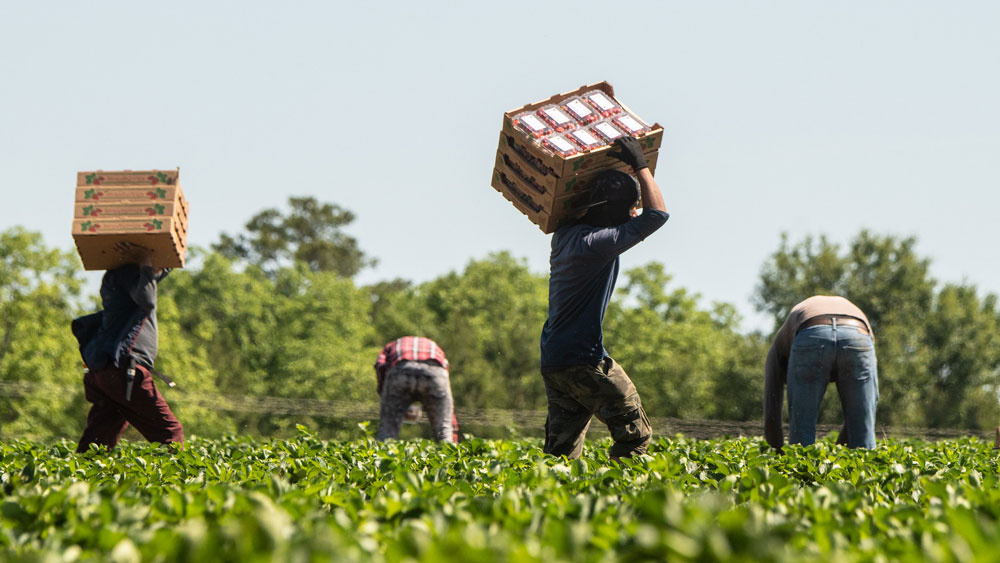
Also on Tuesday, House Agriculture Committee Chairman Glenn Thompson (R-PA-15) introduced the Securing Agriculture’s Workforce Act (SAWA), legislation that would substantially reform the H-2A temporary agricultural worker visa program for the first time since it was established by the Immigration Reform and Control Act of 1986. The bill is intended to address persistent agricultural labor shortages by expanding access to temporary foreign workers. Among other changes, SAWA eliminates the program’s seasonal work limitation, allowing workers to remain under contract for up to 350 days, expands eligibility to controlled environment agriculture, forestry, aquaculture, and livestock operations, caps annual adverse effect wage rate adjustments at a 3.5% increase or a 1.5% decrease, and permits employers to offset a portion of the federally required cost of providing worker housing. The United Farm Workers (UFW) has publicly opposed the legislation, arguing that it would permanently codify the Trump administration’s farmworker wage policy, which the union is currently challenging in federal court.




Daily News & Commentary
Start your day with our roundup of the latest labor developments. See all
September 3
Seond Circuit rejects a NLRB standard for union insignia in employer dress codes; House Republicans ramp up labor union investigations.
September 2
Trump’s US Steel agreement impacts labor talks; Mamdani clashes with teachers’ union; Boeing plans to resume bargaining talks.
September 1
California legislature passes a bill banning AI workplace surveillance of workers' emotional states; Labor Department repeals decades-old farmworker protection rules; Sixth Circuit upholds a $1.4 million verdict for farmworkers.
August 31
Boston Symphony Orchestra musicians stave off first-ever strike; Cleveland Public Library workers ratify new contracts; New York State AFL-CIO makes endorsements
August 30
Seattle teachers vote to authorize a strike days before the school year begins; BNSF Railway’s AI dispatching system puts workers in danger; and a California court finds that the DOL’s pay cuts for non-citizen farmworkers are unlawful.
August 28
Calls for a “token tax” on AI consumption grow and the number of Amazon workers on federal aid explodes.