Kaitlin Knocke is a student at Harvard Law School and a member of the Labor and Employment Lab.
In today’s news and commentary, New York City Mayor Zohran Mamdani signs an executive order to protect workers in hazardous heat, the Fifth Circuit denies enforcement of an NLRB order against Starbucks, and the AFGE is unlikely to secure an injunction against FEMA layoffs.
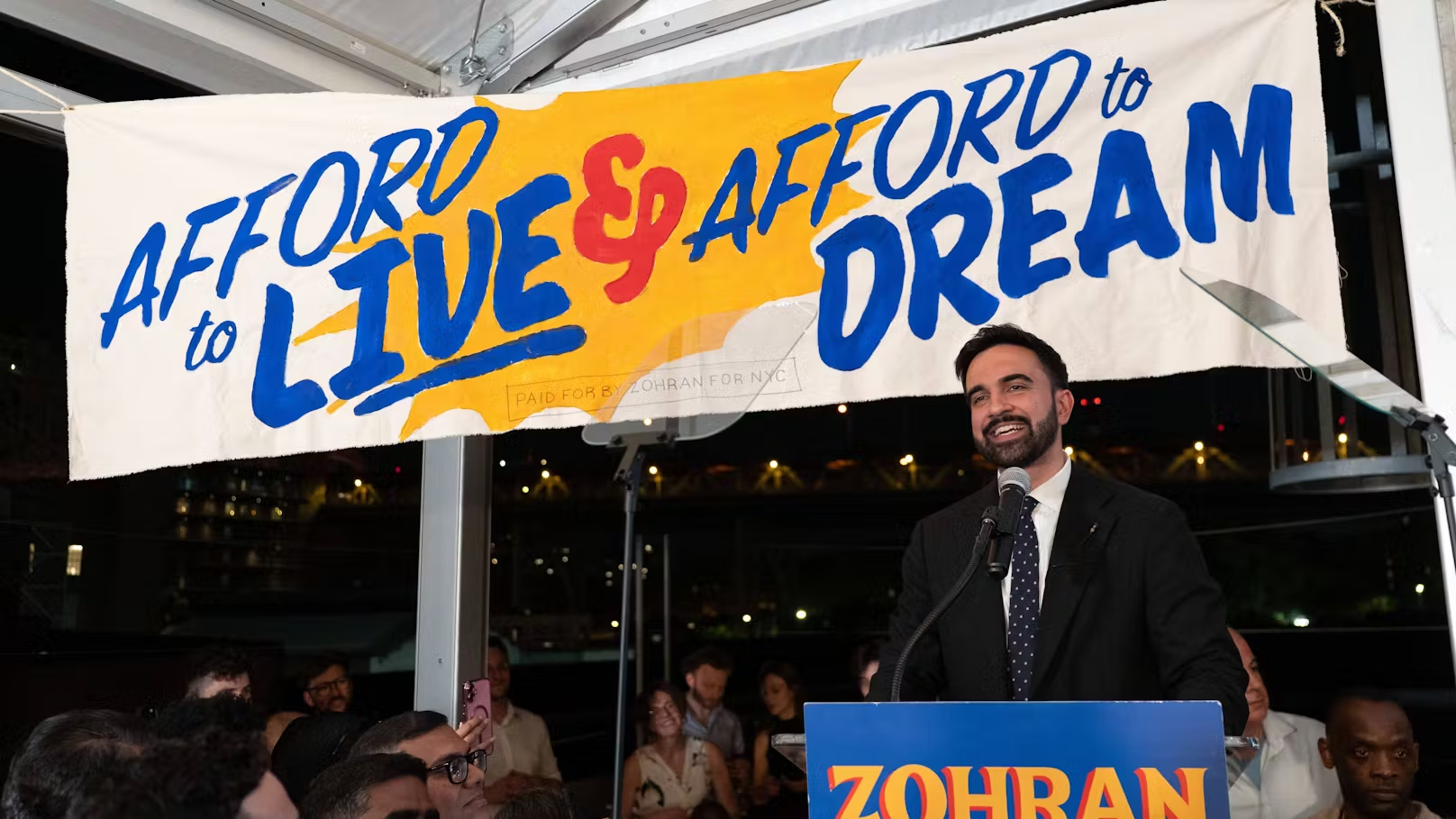
On Monday, New York City Mayor Zohran Mamdani signed Executive Order No. 17, aimed at protecting workers exposed to extreme heat. The order requires every mayoral agency to develop and implement heat illness prevention plans for New York City employees and contractors. The Department of Buildings will also revise construction-site heat safety requirements and provide recommendations by March of next year. The order comes on the heels of the release of the New York City Health Department’s 2026 Heat-Related Mortality Report, which found that approximately 500 heat-exacerbated deaths occur in New York City each year. The announcement also noted that over 1.4 million people in the city spend extended periods working outdoors during the summer, accounting for roughly one-third of the city’s workforce.
Announcing the order, Mamdani emphasized that “[no] one should have to choose between their paycheck and their health” and that workers have “borne the burden of extreme heat while government looked the other way.”
The order comes as the United States continues to experience record-breaking heat waves while comprehensive workplace heat standards at both the federal and state levels have largely stalled.
On Tuesday, the U.S. Court of Appeals for the Fifth Circuit overturned a National Labor Relations Board (NLRB) finding that Starbucks Corp. unlawfully fired a worker for engaging in union activity. Writing for the court, Judge Jerry Smith ruled that the NLRB relied on faulty comparator evidence in concluding that Starbucks terminated an employee because of anti-union animus at one of its Southern California stores. The court also denied enforcement of other NLRB orders finding that Starbucks had made coercive threats against employees. The case is one of at least six NLRB decisions that Starbucks has challenged recently in the conservative-leaning Fifth Circuit, despite the underlying conduct occurring elsewhere.
Also on Tuesday, the American Federation of Government Employees (AFGE) appeared unlikely to secure an injunction preventing the Federal Emergency Management Agency (FEMA) from laying off thousands of on-call responders. The union alleges that the agency plans to eliminate roughly half of its workers, or about 11,000 employees, by cutting a category of temporary disaster relief workers. During a hearing in federal court in San Francisco, Judge Susan Illston indicated that she was likely to deny AFGE’s request for a preliminary injunction because FEMA has offered to rehire some of the terminated workers.
AFGE attorney Stacey Leyton of Altshuler Berzon LLP warned that further harm was likely absent an injunction, arguing that “[n]othing prevents [FEMA], the day after this court denies the preliminary injunction, from just moving forward with whatever their mysterious secret plan is to restructure this agency.”



Daily News & Commentary
Start your day with our roundup of the latest labor developments. See all
October 11
UAW President Shawn Fain succeeds in his reelection bid, and Spanish unions call for a general strike.
October 9
DHS proposes a $100k fee for the foreign grad employment program; Trump suspends tech company access to green card program; and private equity perpetuates poor working conditions for home care workers.
October 8
NLRB judge finds UPS unlawfully restricted union insignia; Harvard graduate workers authorize second strike; OSHA orders Union Pacific to pay $300,000 in damages in whistleblower case.
October 7
DOL scraps plan to remove decades-old wage-and-hour guidance from federal regulations; New York enacts personnel records access law; Starbucks loses bid to dismiss Workers United trademark suit.
October 6
Protect College Sports Act dampens athlete unionization outlook; Stanford RA union decides to withdraw petition
October 5
Delaware bans captive audience meetings; EEOC settles remote work national origin discrimination claim; First Circuit stays enforcement order in VA's dispute with AFGE.