
Charles Du is the Deputy General Counsel of SEIU Local 32BJ.

Manny Pastreich is the President of SEIU Local 32BJ.
In May, workers secured the biggest single union organizing victory in decades: 70,000 Uber and Lyft drivers in Massachusetts won certification of their union and the right to bargain collectively with the largest rideshare companies in the country. By forming a unique labor partnership, creating a new state-level labor law, and organizing workers in unorthodox ways, the App Drivers Union (ADU) is demonstrating how unions can advance the struggle for worker organizing to a higher level. In this piece, we discuss the path to victory, the roadblocks workers faced, and how other states and industries can build on their wins.
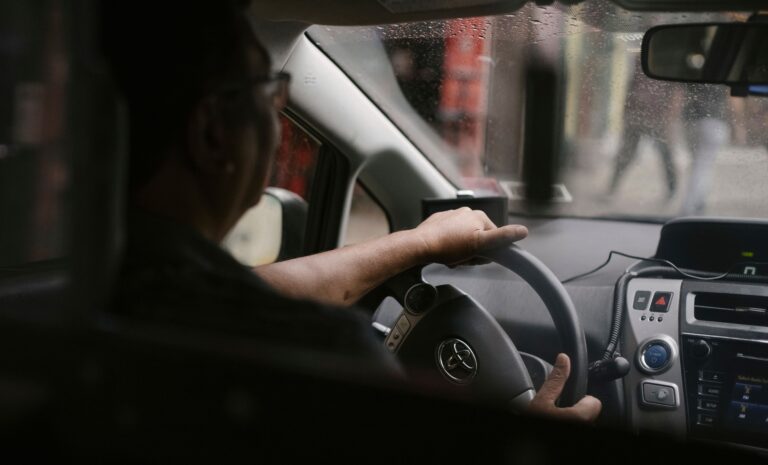
In order to win, these drivers had to overcome a key barrier to the unionization of the contemporary workforce: their exclusion from federal labor law due to their independent contractor status. The latest Bureau of Labor Statistics figures count nearly 12 million people making a living as independent contractors. About two million of them are drivers working for Uber, Lyft, and a variety of smaller rideshare companies.
The National Labor Relations Act, enacted more than 90 years ago, has failed to adapt to the proliferation of this type of arrangement. As we have seen over the past several decades, the changing structure of work—often designed precisely to deny workers their rights—has resulted in legal barriers to people in all sorts of occupations who would otherwise organize a union. More and more workers have been disempowered, excluded, and left out of legal protections, with no realistic path to changing their conditions through collective action.
The path to victory for Massachusetts app drivers required them to pass via ballot initiative in 2024 a new law providing a comprehensive framework for organizing at the state level. Only then did they have a protected right to unionize. That is why the victory of Massachusetts app drivers is so significant. This could be the beginning of a wave that sweeps away barriers across the country, at least in states with pro-worker politics and organizations willing to invest. California recently passed a similar law through their legislature, and a coalition of three unions there are well on their way to successfully organizing the hundreds of thousands of drivers in that state. Illinois passed legislation at the beginning of June, and drivers there will not be far behind.
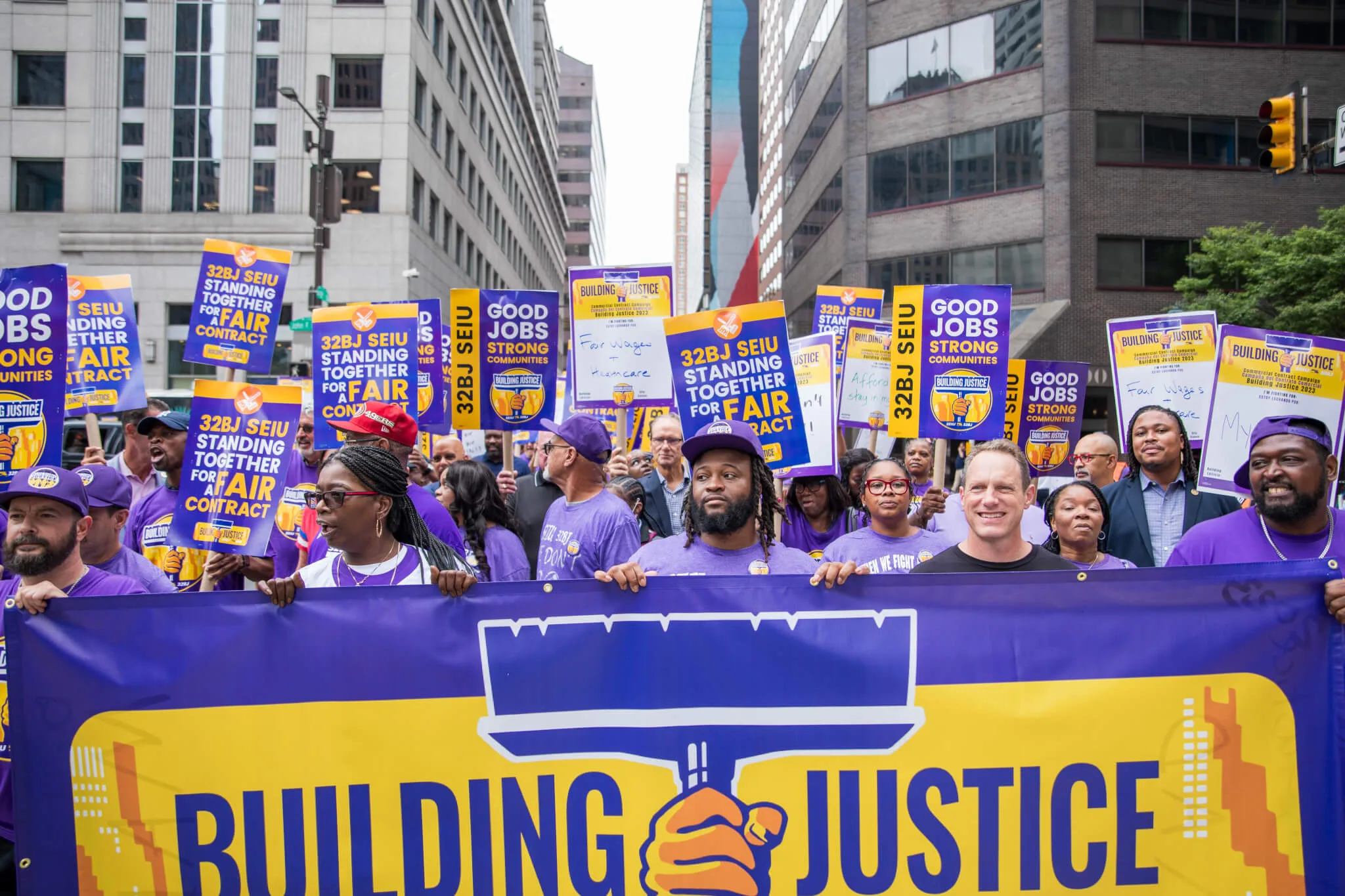
The initiative in Massachusetts was undertaken by two unions bringing very different backgrounds and experiences that came together to form a new union: the App Drivers Union (ADU). ADU is supported by the International Association of Machinists, a union that has deep roots in transportation and in drivers, particularly on the East Coast and Midwest. The other partner is SEIU Local 32BJ, a property services union that is a political powerhouse in many East Coast states and has a history of innovative campaigns, including Justice for Janitors and the Stand for Security organizing effort. Both unions have made new organizing a priority.
After an attempt to pass the law through the Massachusetts legislature stalled, the two unions went directly to the ballot and won. The victory created a state law, Chapter 150F, that gave app drivers all the rights provided under the NLRA—and then some. Crucially, the law includes key improvements over the NLRA such as card check recognition, a statewide sectoral bargaining unit, a realistic path for a union to obtain a contact list of app drivers taking into account the dispersed and atomized nature of their work, and binding interest arbitration to set a collective bargaining agreement if the parties reach impasse. The Commonwealth of Masschusetts is responsible for implementing the law and overseeing its procedures, and any agreement reached between the union and the companies must ultimately be authorized by the Massachusetts Secretary of Labor.
Within 24 hours of the election victory, around two thousand drivers joined a virtual meeting to come together and learn about their newfound rights. Within weeks, thousands more had signed cards stating that they wanted ADU to represent them. In May, the union submitted enough cards to achieve certification as the drivers’ exclusive bargaining representative. Under the new law, ADU and the companies now have 180 days to bargain a contract, at which point if the parties are at impasse, workers can request mediation and binding arbitration. Drivers would vote to approve any tentative agreement reached or to send any remaining issues to interest arbitration. The agreement will apply to all companies and all drivers—a sectoral approach that sets the standard for all.
It is a truism that federal labor law is failing workers across the country. While we have seen a surge of interest in unions and even some high-profile organizing victories, the reality is that the difficulty workers have in reaching first contracts clearly has a deflating effect on workers’ hopes.
The only thing that will reverse the continuing shrinkage of unions is organizing at a mass scale. Yet there is the chicken-and-egg problem of how to organize huge numbers without labor law reform—and how to enact labor law reform without the political power and pressure that comes from workers mobilizing at scale. Digging ourselves out of this hole requires a strategy. And as the legendary organizer Marshall Ganz has put it, “strategy” is how you turn what you have into what you need to get what you want.
It is no secret that the Massachusetts law has been the subject of debate. In particular, some have insisted that we continue the fight over employee status for purposes of state employment laws, and have pointed out that the Massachusetts law is silent on the issue. Recent history has shown, however, that we have not succeeded on this front—see Prop 22 in California. And with the current administration and Supreme Court, there is certainly no path at the federal level to bring app drivers under NLRA jurisdiction.
Our contention is that the Massachusetts unionization law helps turn the less-than-ideal conditions we have into what we need to build power and advance the struggle for worker organizing and unions to a higher level. In the realm of policy innovation, both lawmakers and unions often hesitate to be the first to try something new and untested. We believe that success in Massachusetts means that other states will learn from the ADU’s playbook and app drivers across the country will increasingly see unions as both valuable and viable. And as we look forward to 2029 and beyond, state labor policy innovation can serve as proofs of concept for stronger, bolder, more ambitious federal labor law reform.
What does the future hold for app drivers across the country? New paths have opened because of the Massachusetts ballot initiative and the work of the ADU. California and Illinois will burn tire marks onto this new road, and one would expect more states to follow. New organizing efforts can use ADU’s playbook and look to other examples for ideas, like home care and childcare organizing campaigns. These drivers are taking a road that is both well-traveled and brand new. Where it leads could determine the future for millions of gig workers in the new economy.






Daily News & Commentary
Start your day with our roundup of the latest labor developments. See all
October 22
SCOTUS declines Wilcox appeal; Penn State research assistants win bargaining rights; SEIU sued over military leave firing.
October 21
DOL withdraws tipped-worker rule; Instacart settles hiring-bias claims; Phillips 66 locks out New Jersey refinery workers.
October 20
Korean unions oppose labor exemption bill; Portland city workers prepare for strike; UPenn grad student union looks to dismiss university filing
October 19
FDA reverses course on policy prohibiting off-duty union activity; FAA and NATCA reach deal to secure pay increase for air traffic controllers.
October 18
Federal judge again halts cancellation of the Bureau of Prisons’ CBA; tabletop gaming workers face roadblocks in union recognition.
October 16
Department of Labor reduces wage-and-hour enforcement at unionized workplaces; Fain's victory poses question of federal monitor's extension.