
Ethan Story is a student at Harvard Law School.
In today’s news and commentary, Queens College faculty protest budget cuts, UAW holds a presidential debate, and the Big Ten and Southeastern Conference announce their support of the Protect College Sports Act.
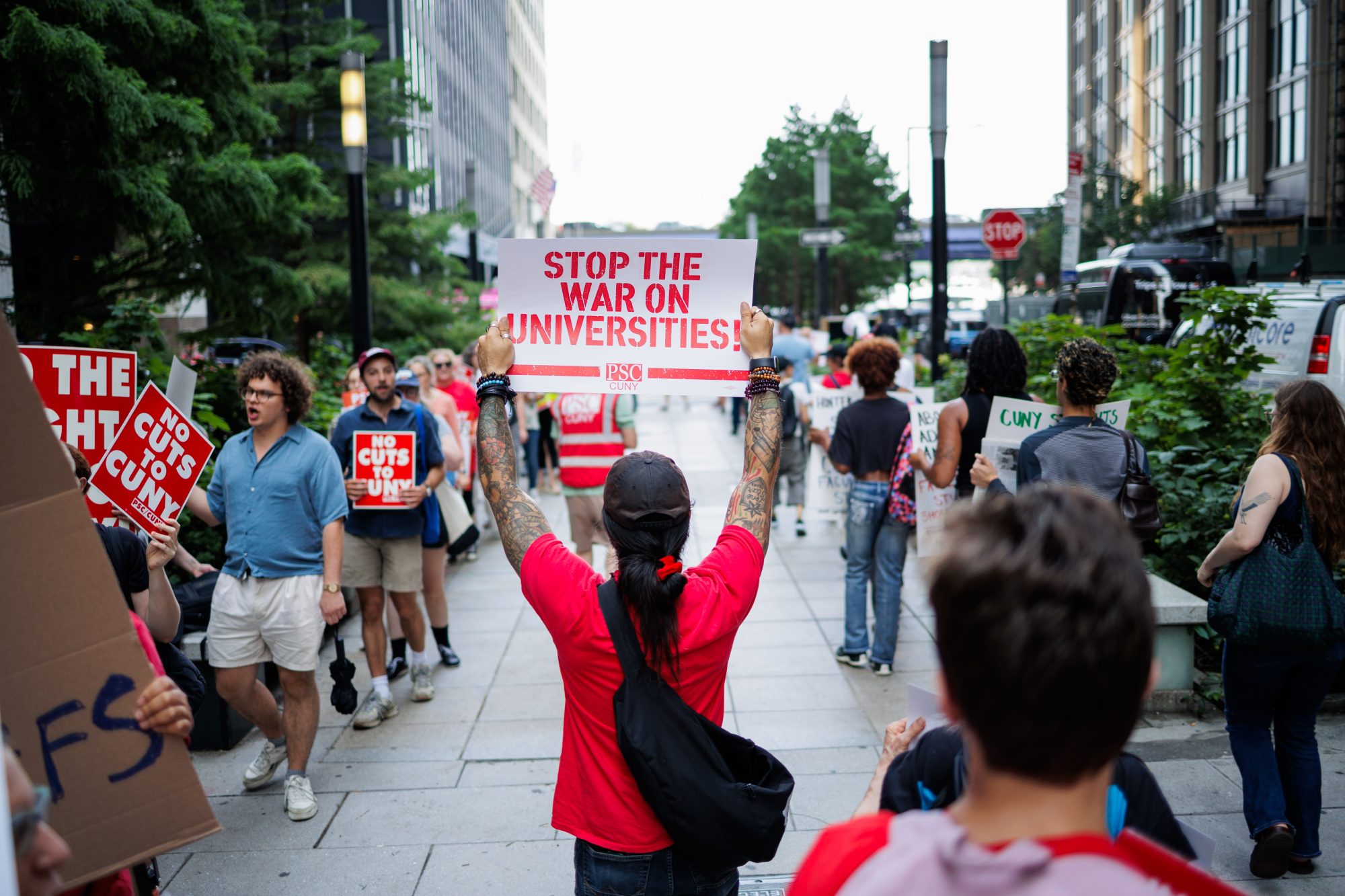
Last week, faculty members at Queens College, the largest City University of New York (CUNY) campus in the borough, began picketing in protest of widespread layoffs and budget cuts. According to the Professional Staff Congress (PSC), the union that represents CUNY faculty and staff, adjunct faculty budgets are in danger of being slashed by as much as 40 percent, with cuts also reducing student access to some library services and even chemistry labs. Like other CUNY campuses Queens College has seen a sharp reduction in enrollment since the pandemic, leading administrators to slash the number of classes offered by nearly 4,000. Faculty members, however, say that even programs whose enrollment isincreasing, such as early childhood education or information services, are being cut. Rather than place the blame on declining enrollment, union leaders pointed to board mismanagement and the excessive promotion and hiring of administrators as the true reason for the cuts. The protesting faculty members have the support of a number Queens elected officials, including Assemblymember Claire Valdez, the Democratic nominee for New York’s 7th Congressional District.
On Thursday, the UAW held a debate among the six candidates for the union’s upcoming presidential election. While current UAW President Shawn Fain downplayed the ongoing Department of Justice investigation into whether he took actions to impermissibly benefit his fiancée, the other candidates on the stage criticized Fain for creating a distraction and sowing distrust of union leadership. Fain also highlighted his record of delivering contract wins—including the 2023 agreement with the Detroit automakers that secured workers a 25 percent raise—and reiterated his reasons for supporting the UAW’s organizing efforts among graduate students, with the union spending up to 50 percent of its organizing budget on higher education. Ballots will be sent to members starting this month, and results are expected in October.
On Friday evening, the Big Ten and the Southeastern Conference (SEC) agreed to support the Protect College Sports Act (PCSA), breathing new life into what could potentially be the most extensive federal regulation of college athletics in decades. For weeks, lawmakers and the two conferences had been negotiating over key terms, with the summer Congressional recess that begins on August 7th and lasts for five weeks looming. Now, there is a chance Senate Majority Leader John Thune brings the bill to a vote before the summer recess starts, though it is unclear if the PCSA has the 60 votes it needs to pass or whether the bill will be able to be squeezed in on time. Among the PCSA’s key provisions is an antitrust exemption that would allow the NCAA and its member conferences to enforce rules regarding transfer limits, NIL compensation, and athlete eligibility. Crucially, the bill fails to give college athletes status as employees, the subjectof the NLRB’s 2015 Northwestern University decision. As a result, the AFL-CIO opposes the bill, arguing that it “silences college athletes voices” and “undermines their right to collective bargaining.”



Daily News & Commentary
Start your day with our roundup of the latest labor developments. See all
October 13
Chicago hotel workers remain on strike; a coalition of Democratic states sues the Labor Department over canceled unemployment insurance grants; the Federal Labor Relations Authority establishes a new mediation framework for federal worker disputes.
October 12
Workers at the Obama Foundation begin organizing; MLB submits its latest collective bargaining agreement proposal; Brigham & Women's nurses postpone strike.
October 11
UAW President Shawn Fain succeeds in his reelection bid, and Spanish unions call for a general strike.
October 9
DHS proposes a $100k fee for the foreign grad employment program; Trump suspends tech company access to green card program; and private equity perpetuates poor working conditions for home care workers.
October 8
NLRB judge finds UPS unlawfully restricted union insignia; Harvard graduate workers authorize second strike; OSHA orders Union Pacific to pay $300,000 in damages in whistleblower case.
October 7
DOL scraps plan to remove decades-old wage-and-hour guidance from federal regulations; New York enacts personnel records access law; Starbucks loses bid to dismiss Workers United trademark suit.