
Charity Ryerson is Executive Director at Corporate Accountability Lab and an Adjunct Professor of Law at Northwestern Pritzker School of Law. She earned 12 cents per hour separating scrap metal during her six-month incarceration in federal prison in the U.S.

James Yap is Assistant Professor at the University of Windsor Faculty of Law, Counsel with the Toronto law firm Jackman & Associates, and President of Canadian Lawyers for International Human Rights (CLAIHR).
Our colleague Aaron Halegua recently authored a two-part series on using legal advocacy tools in the US to combat forced labor outside the US. In this post, we explore the reverse angle: using legal advocacy tools outside the US to combat forced labor inside the U.S. We hope to illustrate that forced labor is a truly global phenomenon, and that addressing it requires globally coordinated action across the value chain.
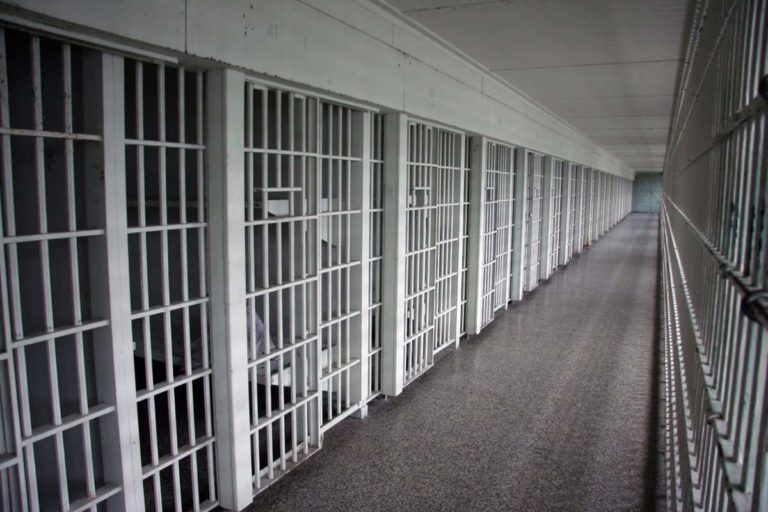
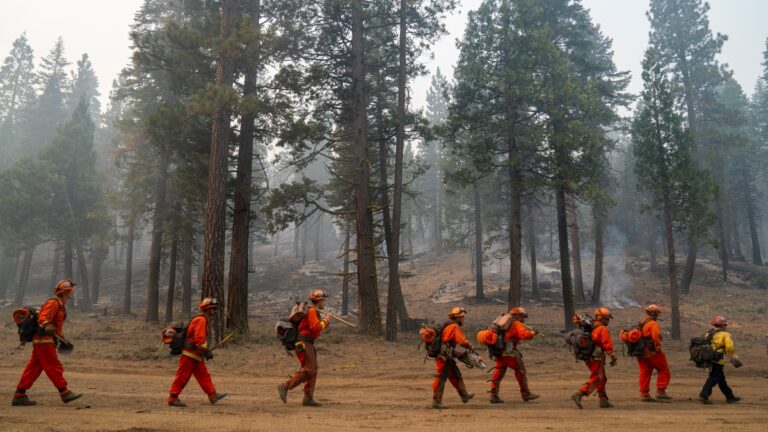
Forced labor exists everywhere. In the form of chattel slavery, it is an inextricable part of U.S. history—one that continues in a different form today. After the Civil War, the Thirteenth Amendment abolished slavery – “except as punishment for a crime.” In much of the U.S., forced prison labor is practiced in clear violation of International Labour Organization norms, which prohibits prison labor performed for private companies or not supervised by public officials.
The Forced Labor Import Ban Model Being Promoted by the U.S. Can be Used Against U.S. Companies
While legal challenges in U.S. courts to the use of prison labor by private companies have met mixed results, the proliferation of forced labor import bans in jurisdictions across the globe may provide complementary mechanisms to challenge these practices.
Take Canada as an example. As the world’s largest purchaser of U.S. goods, it imports over US$300-billion worth of goods from the U.S. annually, accounting for over 15% of total U.S. goods exports. Regardless of what current trade disputes portend for long-term trends in trade relationships, they are not foreseen to have any substantial immediate impact on trade volume, as supply chains take a long time to shift. Canada therefore has enormous potential as a source of disruptive economic pressure on forced prison labor in the US.
Canada has a ban on importing goods made using prison labor, and a similar ban on goods made using forced labor. The former, introduced in the 19th century, was specifically aimed at addressing rampant use of forced prison labor in the post-slavery US, while the introduction of the latter, in 2020, was prompted by the US itself. The US updated its own 1930s-era forced labor import ban in 2016, and persuaded Canada and Mexico to take on the same obligations. More recently, it introduced Section 301 tariffs on nations who have not passed and implemented a forced labor import ban.
Enforcement of the ban in the US has been driven by a focus on goods made by Uyghur forced prison labor in the Xinjiang region of China. Canada, meanwhile, has struggled to enforce its own ban. In this respect it has received strong criticism from the US government, which complains that goods that would otherwise be prevented from being imported into the US directly can easily circumvent the ban by being routed through Canada. Canada, for its part, has struggled with the natural difficulty of determining if an item has been made using forced labor, compounded by the lack of reliable information available from inside China.
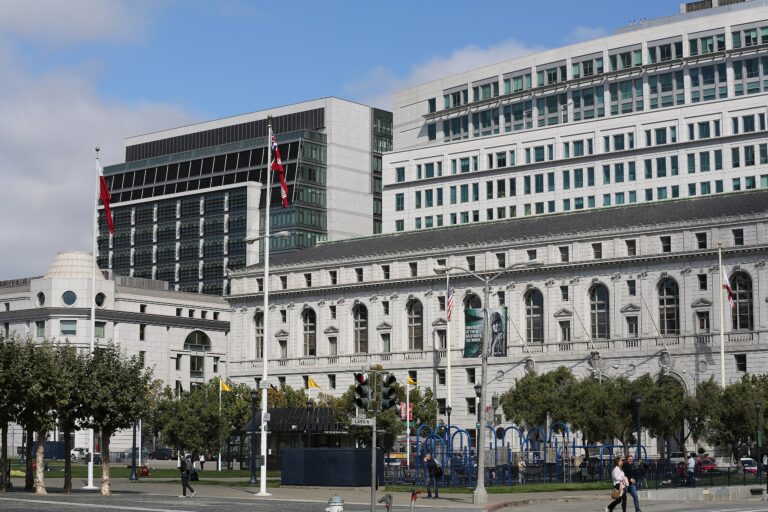
However, there is another major world power that uses forced prison labor extracted disproportionately from a specific racial group to produce goods for export: the U.S. Canada can greatly improve its compliance with its forced labor import ban obligations simply by stopping imported goods made using forced prison labor in the U.S. Advocates in the U.S. can assist Canada in doing so by helping the Canadian Border Services Agency identify goods produced using forced prison labor so that they can be stopped from entering Canada.
Civil Litigation Against U.S. Companies for Violating International Norms
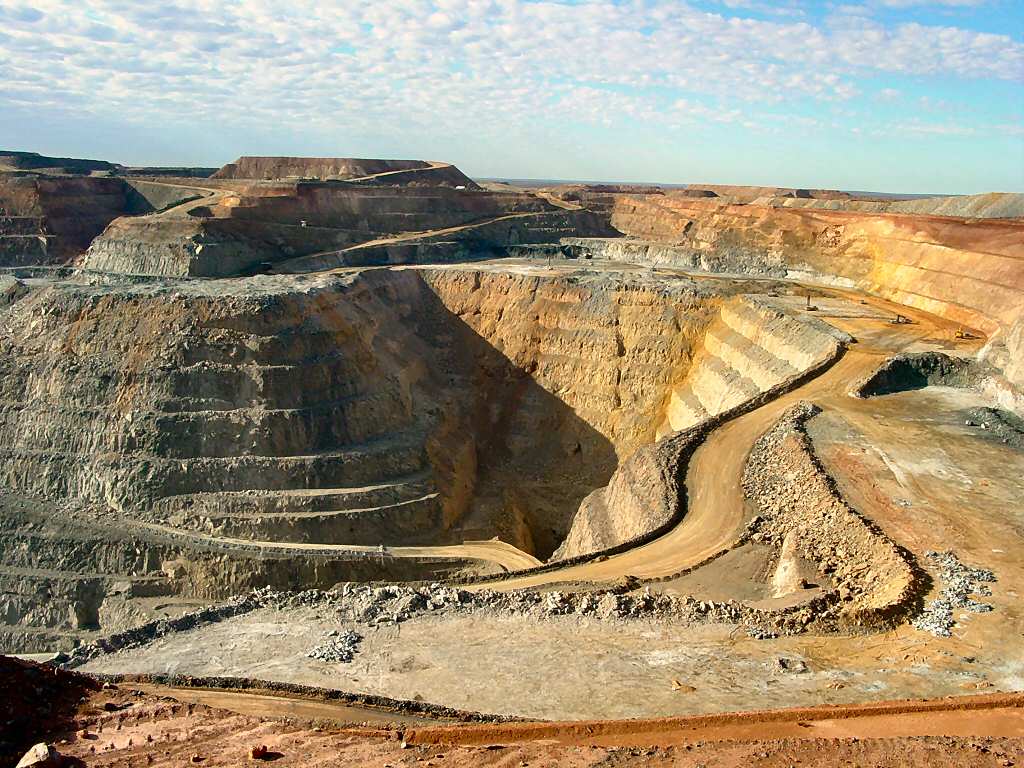
Canadian law features a number of other levers that can be applied to exert pressure on forced labor in other countries. Particularly ambitious in scope may be a civil claim against a Canadian company that uses forced prison labor in the US. In the recent case of Araya et al. v. Nevsun Resources Ltd. (in which one of the authors represented the plaintiffs), the Supreme Court of Canada held that a Canadian mining corporation could be held civilly liable for the use of forced labor in Eritrea.
In Nevsun, the plaintiffs were a group of several dozen Eritrean nationals who claimed they had been forced to work for the defendant Canadian mining company in the construction of its Bisha gold mine in Eritrea. The plaintiffs argued that Nevsun was liable not only under conventional torts such as negligence and false imprisonment, but also under rules of customary international law, such as the prohibitions on forced labor, slavery, torture, and crimes against humanity. The Supreme Court of Canada rejected a motion to dismiss the claims based in customary international law, and held that they could go ahead.
If a Canadian company can be held civilly liable for the use of forced labor in Eritrea, then arguably the same might apply for a Canadian company using forced labor in the United States. Any Canadian company with business operations in the US that makes use of forced prison labor may be exposed to civil liability in this way.
Canadian antitrust law provides another intriguing option. It is a violation of Canadian antitrust law to make a false or misleading representation for the purpose of promoting business interests. At the same time, Canadian legislation requires certain Canadian companies to issue annual reports on the risks of forced labor in their supply chains. If a Canadian company has forced prison labor in its supply chain, but makes contradictory statements in its annual forced labor reporting, complainants may report the company to the Canadian Competition Bureau. Similar antitrust complaints against companies in the greenwashing context have led to multimillion-dollar fines.
Canadian proceeds of crime legislation may also be relevant here. Under Canadian federal criminal prohibitions on laundering proceeds of crime, ‘crime’ includes any act committed anywhere outside Canada that would constitute a designated criminal offence if occurring in Canada. Forced labor is prohibited under the Canadian criminal provisions on trafficking in persons, and forced labor occurring in the US could thus constitute a designated criminal offence for the purpose of Canadian proceeds of crime legislation. Similarly, importing goods made using forced labor into Canada would also constitute a designated criminal offence under Canada’s Customs Act, which makes it a criminal offence to import prohibited goods into Canada, “whether clandestinely or not.” Thus, any Canadian entity that handles proceeds of forced prison labor in the US, or of the importation into Canada of goods made using forced prison labor in the US, could be guilty of a criminal offence.
Conclusion
No matter where it occurs, forced labor is usually linked to a value chain that is global. Hence it should be approached as just one end of a global value chain rather than an isolated local issue. Advocates should seek to identify pressure points along the entire value chain, and deploy strategies that exploit them for maximum leverage.
The global economy is structured around complex trade networks that transcend international borders. An injustice may manifest primarily in one jurisdiction while its underlying causes, consequences, and beneficiaries are distributed across multiple jurisdictions. An effective response requires a comparable level of transnational coordination. A global issue like forced labor must be addressed with global solutions.




Daily News & Commentary
Start your day with our roundup of the latest labor developments. See all
October 8
NLRB judge finds UPS unlawfully restricted union insignia; Harvard graduate workers authorize second strike; OSHA orders Union Pacific to pay $300,000 in damages in whistleblower case.
October 7
DOL scraps plan to remove decades-old wage-and-hour guidance from federal regulations; New York enacts personnel records access law; Starbucks loses bid to dismiss Workers United trademark suit.
October 6
Protect College Sports Act dampens athlete unionization outlook; Stanford RA union decides to withdraw petition
October 5
Delaware bans captive audience meetings; EEOC settles remote work national origin discrimination claim; First Circuit stays enforcement order in VA's dispute with AFGE.
October 4
Boston nurses announce open-ended strike; federal judge restores federal prison workers' union protections; St. Louis workers form the first movie theater union in Missouri.
October 2
Gov. Newsom signs bill regulating AI in workplace; federal judge blocks Trump's $100,000 H-1B visa fee.