
Melinda Meng is a student at Harvard Law School.
In today’s News and Commentary, student-athletes file a class action suit challenging the NCAA’s new Age-Based Rule, a federal judge declines to issue a preliminary injunction against FEMA’s reduction in force but expedites proceedings, and Gavin Newsom opposes California’s proposed billionaire tax in favor of a federal approach.
On Thursday, DeJuan Campbell, at basketball player for the UC Berkeley Golden Bears, filed a class action complaint challenging the NCAA’s new age-based eligibility rules. Campbell alleges that the NCAA’s decision to grant D1 athletes five years of eligibility over five seasons—one more year than the previous four-in-five framework—imposes “unreasonable eligibility restrictions that arbitrarily and disparately cut short college athletes’ ability to compete” and receive compensation for the use of the names, images, likenesses, and athletic reputations. Critically, the NCAA chose to only apply the rule to those enrolling beginning in fall 2027, rather than allowing student-athletes whose four-year term ended in spring 2026 to benefit from another potential year of eligibility. Under the new “Age-Based Rule,” the eligibility clock begins upon initial full-time enrollment in college or at the beginning of the academic year following the student-athlete’s 19th birthday, whichever is earlier. The NCAA D1 Student-Athlete Advocacy Committee published a statement in support of the new rule, praising it as a “transparent and reasonable timeframe” in which to pursue athletic and academic goals as well as an easy to understand and consistent framework. The D1 Cabinet said of their decision not to apply the new rule retroactively that doing so would “destabilize rosters just ahead of the coming season by disrupting settled expectations of countless student-athletes regarding their expected roster spots and playing time next year.” A similar suit has been filed in Ohio state court.
On Friday, a coalition of federal employee unions led by the American Federation for Government Employees was denied its motion for a preliminary injunction to prevent FEMA from laying off thousands of Cadre On-Call Response and Recovery (CORE) workers. Judge Susan Illston of the Northern District of California found that, in seeking the preliminary injunction, the plaintiffs were requesting that the Court take affirmative action and rescind the non-renewal notices that were issued in January 2026, rather than simply pausing to preserve the status quo and prevent further harm. Furthermore, since the plaintiffs’ initial filing, FEMA had allegedly offered to re-hire those employees who did not resign or retire before their terms of employment expired. Due to the apparent change in factual circumstances, the Court elected to deny the motion for preliminary injunction but granted the plaintiffs’ request to move immediately to partial summary judgment on DHS/FEMA claims. Defendants’ responsive briefing is due July 31, 2026.
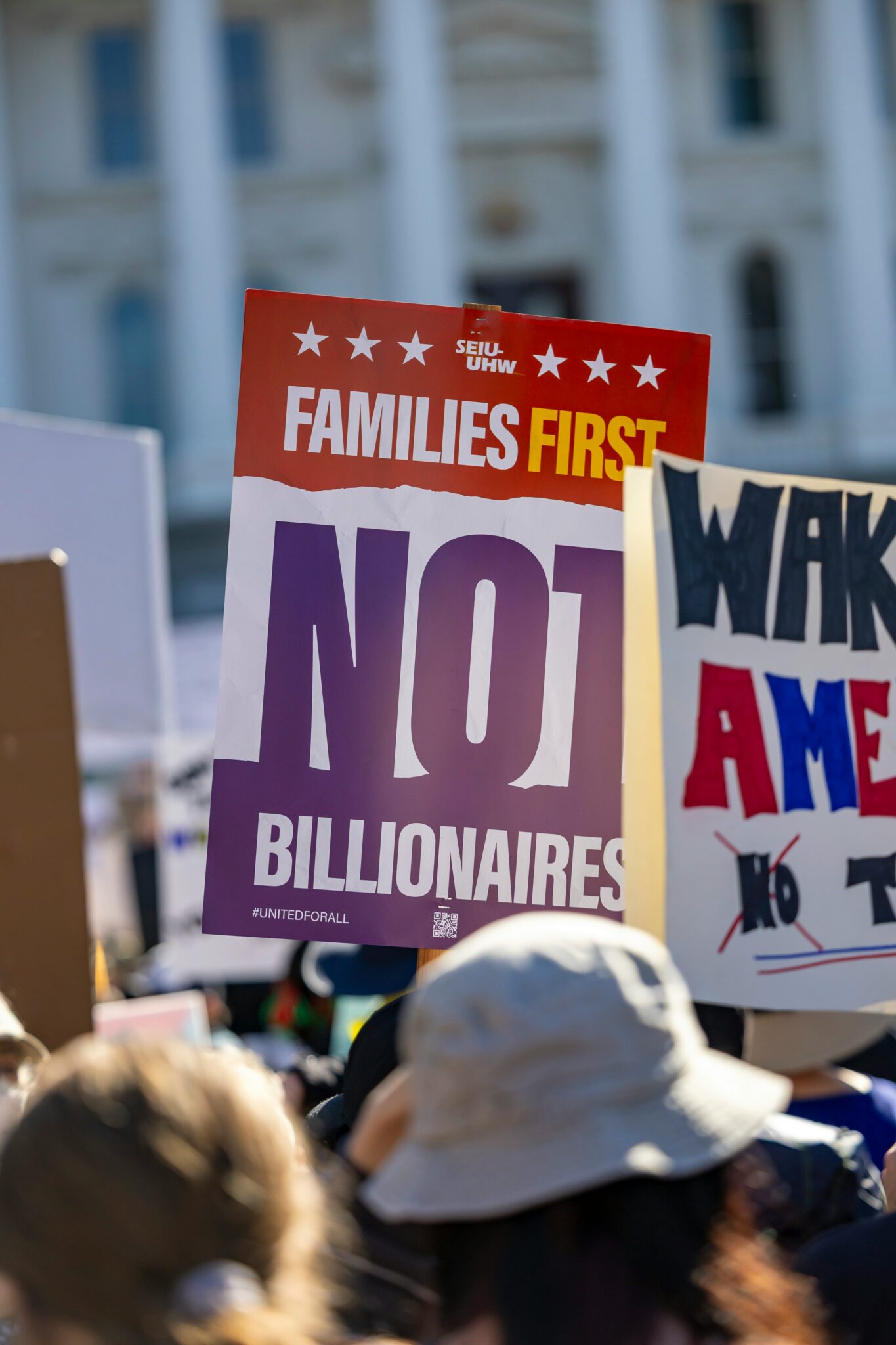
On Friday, California governor Gavin Newsom called for a federal billionaire tax, writing that “We must democratize the American economy to save democracy.” The 2026 Billionaire Tax Act is on the ballot in California as a combined initiated constitutional amendment and state statute to be voted upon on November 3. The initiative would levy a one-time 5 percent tax on the accumulated wealth of billionaires residing in California as of January 1, 2026, creating a tax reserve fund that would be used to fund health care access, public education, and food assistance. The initiative is sponsored by SEIU-UHW and has drawn support from Senator Bernie Sanders, Representative Ro Khanna, Teamsters California, and UNITE HERE Local 11, while Gavin Newsom has emerged as a vocal opponent. Newsom writes that “the fight to make the wealthiest Americans pay more in taxes is not one we should be fighting state by state,” pointing out that billionaires have the resources to pick up and change their residence to shelter their income from taxation, and they have been shown to do so. Newsom calls for a unified federal system and the closing of taxation loopholes that exist for the benefit of the ultra-wealthy.





Daily News & Commentary
Start your day with our roundup of the latest labor developments. See all
October 15
New reporting examines the rollback of child labor protections; California tries to block a strike; NLRB charges Wisconsin mental health provider with firing workers during union drive.
October 14
Eleventh Circuit overturns ERISA exhaustion rule; DHS finalizes removal of automatic renewal for work permits; AFGE challenges SSA over flexible scheduling policy.
October 13
Chicago hotel workers remain on strike; a coalition of Democratic states sues the Labor Department over canceled unemployment insurance grants; the Federal Labor Relations Authority establishes a new mediation framework for federal worker disputes.
October 12
Workers at the Obama Foundation begin organizing; MLB submits its latest collective bargaining agreement proposal; Brigham & Women's nurses postpone strike.
October 11
UAW President Shawn Fain succeeds in his reelection bid, and Spanish unions call for a general strike.
October 9
DHS proposes a $100k fee for the foreign grad employment program; Trump suspends tech company access to green card program; and private equity perpetuates poor working conditions for home care workers.