
Mila Rostain is a student at Harvard Law School and the Digital Director of OnLabor.
In today’s News and Commentary, a district judge issues a preliminary injunction blocking agencies from implementing Trump’s executive order eliminating collective bargaining for federal workers, workers organize for the reinstatement of two doctors who were put on administrative leave after using an internal directory to organize their coworkers, and Governor Lamont vetoes unemployment benefits for striking workers.
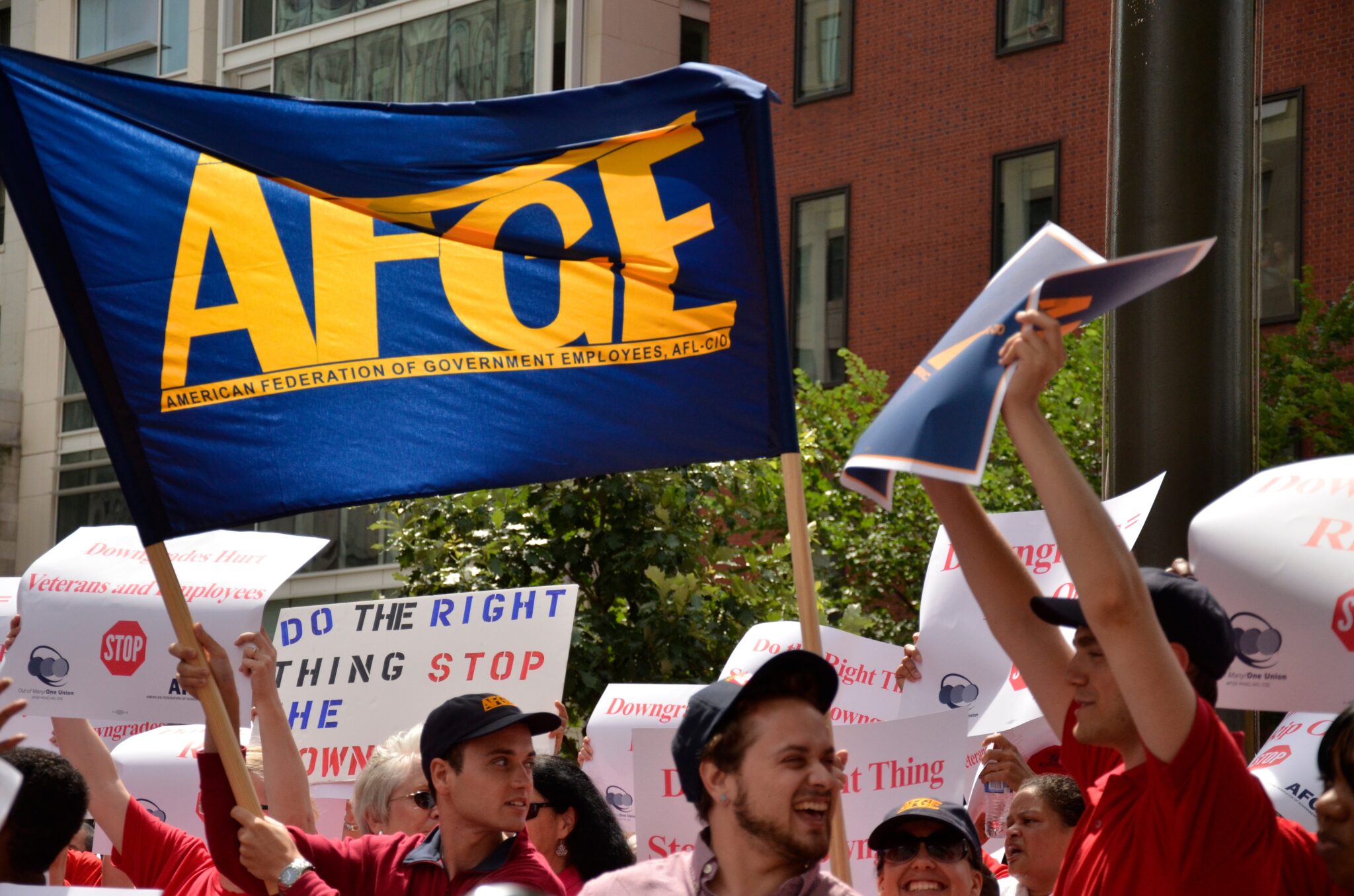
On Tuesday, US District Court for the Northern District of California Judge James Donato issued a preliminary injunction blocking agencies from implementing President Trump’s executive order eliminating collective bargaining rights for federal workers. The executive order invoked the national security exception to exclude certain agencies from the Federal Service-Labor Management Relations Statute. Along with the executive order, the White House published a fact sheet that singled out unions resisting Trump. Judge Donato held that the six unions who sued were likely to succeed on the merits of their claim that the executive order retaliated against the unions in violation of their First Amendment free speech rights and that they would likely face irreparable harm without the preliminary injunction. President of the National Association of Government Employees, David Holway, stated, “the court made it clear: national security cannot be used as a smokescreen to silence federal workers.” The preliminary injunction comes as the D.C. Circuit stayed a similar injunction issued by Judge Paul Friedman regarding the same executive order’s application to the National Treasury Employees Union.
Workers at University Hospitals, a healthcare system based in Cleveland, Ohio, launched a petition calling for the reinstatement of two doctors involved in union efforts. University Hospitals claims that the doctors were put on administrative leave because they improperly accessed an internal directory that includes personal cell phone numbers of doctors. According to the petition, the physicians did not violate a policy against such use of the internal directory, and that instead, University Hospitals removed the two physicians in response to their union activity.
Finally, Connecticut Governor Ned Lamont vetoed legislation that would have granted unemployment benefits to striking workers after two weeks. As Meredith previously pointed out, Lamont was expected to veto the legislation. Lamont argued that the bill would have fundamentally altered the purpose of unemployment insurance, because unemployment benefits are intended for those “who are out of work through no fault of their own.” Lamont expressed concern that the bill would have driven business from the state. Union leaders had argued that providing unemployment benefits to striking workers after two weeks was one of the ways the state could even the playing field without running into preemption issues.



Daily News & Commentary
Start your day with our roundup of the latest labor developments. See all
October 13
Chicago hotel workers remain on strike; a coalition of Democratic states sues the Labor Department over canceled unemployment insurance grants; the Federal Labor Relations Authority establishes a new mediation framework for federal worker disputes.
October 12
Workers at the Obama Foundation begin organizing; MLB submits its latest collective bargaining agreement proposal; Brigham & Women's nurses postpone strike.
October 11
UAW President Shawn Fain succeeds in his reelection bid, and Spanish unions call for a general strike.
October 9
DHS proposes a $100k fee for the foreign grad employment program; Trump suspends tech company access to green card program; and private equity perpetuates poor working conditions for home care workers.
October 8
NLRB judge finds UPS unlawfully restricted union insignia; Harvard graduate workers authorize second strike; OSHA orders Union Pacific to pay $300,000 in damages in whistleblower case.
October 7
DOL scraps plan to remove decades-old wage-and-hour guidance from federal regulations; New York enacts personnel records access law; Starbucks loses bid to dismiss Workers United trademark suit.