
Elias Decker is a student at Harvard Law School.
In today’s news and commentary, the third and final Republican NLRB member seems to sail through appointment, and UAW secures a symbolic deal with a large General Motors supplier ahead of Shawn Fain’s re-election.
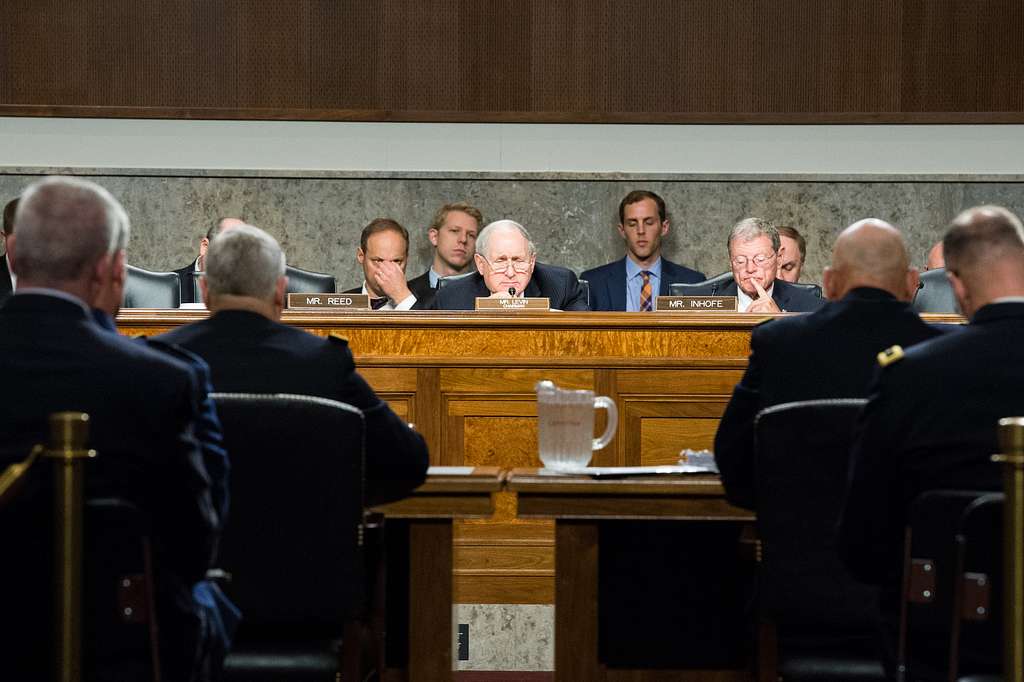
On Wednesday, June 10th, Republican nominee for the NLRB James Macy faced little friction during the Senate’s confirmation hearings. Macy would be the critical third Republican-appointed member of Board, allowing the bloc to change precedent and control decisional outcomes. But his hearings went by without much friction. The only challenge he got was from Senator Bernie Sanders of Vermont, who noted his opposition to Macy in his opening statement, complained that the nominee declined to answer some of the Senator’s queries. Notably, Macy received no pushback from Republican Senators like Missouri Senator Josh Hawley who held up the vote for Board Member Scott Mayer and agency GC Crystal Carey. Democratic Senators like Wisconsin Senator Tammy Baldwin pressed Macy on his independence from President Trump; Macy responded that as a Board Member he would “make an independent decision based upon the facts presented.” After the Board’s quorum was restored in December, 2025, Macy’s confirmation would fill out all outstanding Board vacancies.
Late on the night of June 10th, UAW Local 2093 arrived at a tentative agreement with General Motors supplier Dauch, Corp. (formerly American Axle) after a 10-day strike. This agreement, including a 30% wage increase over four years (“$30 in 2030”), comes at a strategic time for UAW President Shawn Fain, whose re-election campaign starts next week at the union’s 39th convention. The economic gains in this agreement carry symbolic weight: The agreement returns many workers to pre-2008 wages. The Great Recession hollowed out much of American manufacturing, including auto manufacturing. In 2008, workers at Dauch— then American Axle — saw their wages halved, from $29/hr to $14.50/hr. This agreement, now subject to membership approval, would restore many workers to those pre-2008 wages. UAW Region 1D Director Steve Dawes made this connection explicit and described the agreement as “tak[ing] care of the legacy people that were here and made the tough decisions back in 2008 to keep the place open [as well as] the people working there today.” Fain, who is ending his first three-year term as UAW President, will likely hope that these symbolic and material victories will support his re-election.


Daily News & Commentary
Start your day with our roundup of the latest labor developments. See all
October 7
DOL scraps plan to remove decades-old wage-and-hour guidance from federal regulations; New York enacts personnel records access law; Starbucks loses bid to dismiss Workers United trademark suit.
October 6
Protect College Sports Act dampens athlete unionization outlook; Stanford RA union decides to withdraw petition
October 5
Delaware bans captive audience meetings; EEOC settles remote work national origin discrimination claim; First Circuit stays enforcement order in VA's dispute with AFGE.
October 4
Boston nurses announce open-ended strike; federal judge restores federal prison workers' union protections; St. Louis workers form the first movie theater union in Missouri.
October 2
Gov. Newsom signs bill regulating AI in workplace; federal judge blocks Trump's $100,000 H-1B visa fee.
October 1
Senate confirms Keith Sonderling as Labor Secretary; Amazon warehouse workers launch an unfair labor practice strike.