
Ryan Zhang is a student at Harvard Law School and a member of the Labor and Employment Lab.
In today’s News and Commentary, New York City’s public defender strikes spreads to the Bronx, the NLRB drops its challenge to New York’s “trigger” labor law, and new research shows the Trump administration’s anti-DEI campaign is reshaping corporate boardrooms.
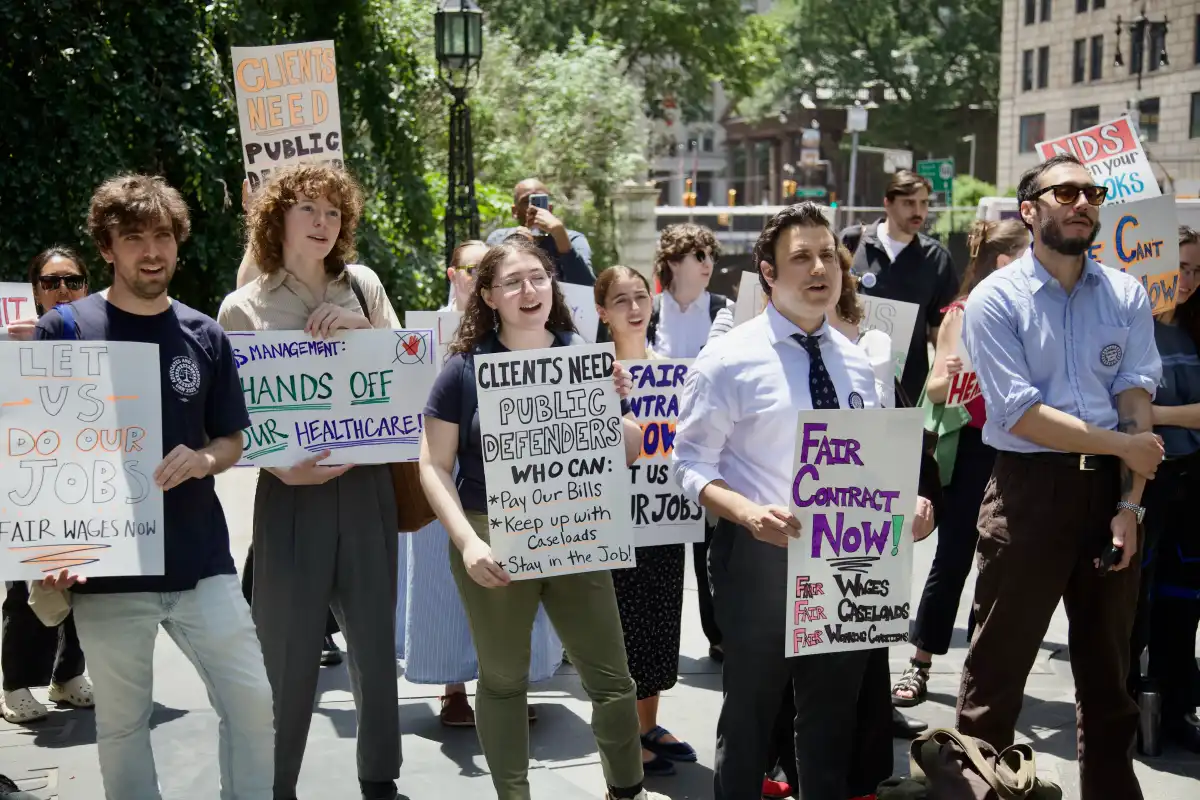
Around 300 attorneys and staff at the Bronx Defenders walked off the job, becoming the third New York City public defense organization to strike this month. The Bronx Defenders Union is demanding higher wages for its lowest-paid workers, including investigators, advocates, and social workers, who were offered annual raises of just 3%. The walkout follows strikes by Brooklyn Defender Services, which walked out on July 16 and reached a tentative deal about a week later, and the Neighborhood Defender Service of Harlem, which started striking on July 24. All three organizations are separate firms with separate contracts but share the same UAW-affiliated union. The Bronx Defenders represent roughly 20,000 clients annually, nearly all of whom cannot afford private attorneys, and staff say chronic underpayment is driving experienced attorneys and social workers to leave for better-compensated positions, undermining continuity of representation for clients. The union struck for three days last July over similar issues and won a $68,500 wage floor for non-attorney staff.
The NLRB has dropped its lawsuit challenging a New York state law that empowered the state’s Public Employment Relations Board to oversee private-sector union elections and unfair labor practice charges when the federal NLRB was unable to do so. The dismissal follows a permanent injunction issued last week by Judge Eric Komitee of the Eastern District of New York in a separate lawsuit brought by Amazon, which struck down the law as preempted by federal labor law. New York enacted the “trigger” law in 2025 after the NLRB was hobbled by vacancies and political gridlock. The theory underlying the trigger laws can trace its origins to this blog, in posts where Ben argued that Garmon preemption should not apply when the NLRB is prevented from exercising its jurisdiction. State and union lawyers had argued that New York’s law filled a gap the federal board could not, pointing to documented evidence of local NLRB offices’ diminished capacity to process charges. But Judge Komitee, a Trump appointee, held that Supreme Court precedent made federal jurisdiction over private-sector labor relations exclusive, regardless of the NLRB’s functional state. The Amazon Labor Union, a Teamsters affiliate that had intervened to defend the law, also agreed to dismissal. As we have previously discussed, the ruling leaves open a difficult question for workers whose employers exploit the gap between the NLRB’s statutory mandate and its operational capacity.
As the Trump administration’s campaign against corporate diversity programs reverberates through boardrooms, appointments of women and minorities to S&P 500 boards have dropped to their lowest level in more than a decade, according to new data from executive search firm Spencer Stuart. Of the 364 new independent directors named last year to S&P 500 boards, 40% were women or racial minorities—down from a peak of 72% in 2021-22 and the lowest share since 2014. 12% of S&P 500 companies now publicly cite diversity as a factor in board recruitment, down from 48% in 2024. Spencer Stuart attributes part of the shift to a growing preference for current and former CEOs as board candidates—a group that is less diverse than the broader pool of younger executives from which boards had increasingly been drawing in recent years. Meanwhile, the EEOC has been tasked with investigating what the administration calls illegal DEI practices. IBM in April agreed to pay $17 million to resolve allegations it prioritized diverse candidates in hiring—the first enforcement action under Trump’s anti-DEI executive orders.





Daily News & Commentary
Start your day with our roundup of the latest labor developments. See all
October 21
DOL withdraws tipped-worker rule; Instacart settles hiring-bias claims; Phillips 66 locks out New Jersey refinery workers.
October 20
Korean unions oppose labor exemption bill; Portland city workers prepare for strike; UPenn grad student union looks to dismiss university filing
October 19
FDA reverses course on policy prohibiting off-duty union activity; FAA and NATCA reach deal to secure pay increase for air traffic controllers.
October 18
Federal judge again halts cancellation of the Bureau of Prisons’ CBA; tabletop gaming workers face roadblocks in union recognition.
October 16
Department of Labor reduces wage-and-hour enforcement at unionized workplaces; Fain's victory poses question of federal monitor's extension.
October 15
New reporting examines the rollback of child labor protections; California tries to block a strike; NLRB charges Wisconsin mental health provider with firing workers during union drive.