
Mila Rostain is a student at Harvard Law School and the Digital Director of OnLabor.
In today’s News and Commentary, the Department of Defense terminates its union contracts, building workers in New York authorize a strike, and the American Postal Workers Union launches ads promoting mail-in voting.
In the latest of the Trump Administration’s attacks on federal employee collective bargaining rights, the Department of Defense has started terminating its union contracts. The DOD claims it is executing executive orders 14251 and 14343, both of which stripped federal employees of collective bargaining rights by determining that they fell under the national security exemption to the Federal Labor-Management Relations Statute. While President Trump signed both orders last year, court orders had temporarily blocked their implementation at certain agencies. But on February 12, the Office of Personnel Management issued a memorandum directing agencies to once again begin the process of terminating and modifying collective bargaining agreements. On April 9, Secretary of Defense Pete Hegseth sent a memorandum to DOD leadership instructing them to begin terminating collective bargaining agreements. Everett Kelley, national president of AFGE, which represents 300,000 workers at DOD, stated that “Secretary Hegseth’s decision to terminate the union rights of hardworking individuals who support our military is a cowardly continuation of this administration’s unlawful attack on federal employee’s first amendment right to belong to a union.” AFGE vowed to continue to challenge the termination of the collective bargaining agreements.
Yesterday, unionized building workers in New York voted to authorize a strike as early as next week. As Justin previously noted, the union’s current contract is set to expire on April 21. If they are unable to reach a deal, 34,000 doormen, porters, managers, and superintendents of buildings will go on strike for the first time since 1991, when doormen struck for 12 days. More than a thousand workers organized with 32BJ rallied Wednesday in support of higher wages and against increased health care costs. At present, the building workers make around $60,000 and receive fully employer-funded health care. But the Realty Advisory Board on Labor Relations, which represents the building owners, claims that it is unable to meet the demands of the workers because of Mayor Mamdani’s plans to freeze rents for rent-stabilized units. Mayor Mamdani, speaking at the rally, stated that the workers were “sending a clear message to every building owner that the hardworking members of 32BJ will not be pushed around by anyone.”
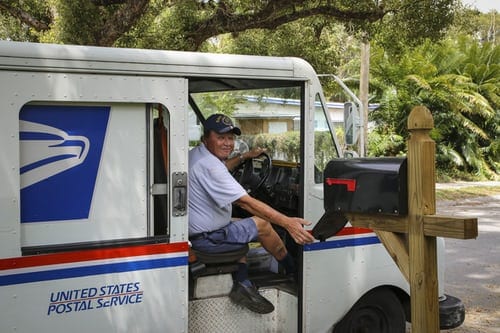
On Tuesday, the American Postal Workers Union announced an ad campaign in support of voting by mail. The campaign was planned prior to President Trump’s March 31 executive order that would bar the U.S. postal service from sending mail-in ballots to people not on a list of eligible voters created by the federal government. In response to the executive order, the National Rural Letter Carriers’ Association stated that USPS was not “authorized to decide who is or is not entitled to vote.” And APWU President Jonathan Smith likewise noted that “it is not the job of the postal workers to verify voter eligibility.” 23 states are currently suing to block the executive order.





Daily News & Commentary
Start your day with our roundup of the latest labor developments. See all
October 21
DOL withdraws tipped-worker rule; Instacart settles hiring-bias claims; Phillips 66 locks out New Jersey refinery workers.
October 20
Korean unions oppose labor exemption bill; Portland city workers prepare for strike; UPenn grad student union looks to dismiss university filing
October 19
FDA reverses course on policy prohibiting off-duty union activity; FAA and NATCA reach deal to secure pay increase for air traffic controllers.
October 18
Federal judge again halts cancellation of the Bureau of Prisons’ CBA; tabletop gaming workers face roadblocks in union recognition.
October 16
Department of Labor reduces wage-and-hour enforcement at unionized workplaces; Fain's victory poses question of federal monitor's extension.
October 15
New reporting examines the rollback of child labor protections; California tries to block a strike; NLRB charges Wisconsin mental health provider with firing workers during union drive.