
Mila Rostain is a student at Harvard Law School and the Digital Director of OnLabor.
In today’s News and Commentary, Sheridan, Colorado educators go on strike, and Maryland graduate student workers are one step closer to winning collective bargaining rights.
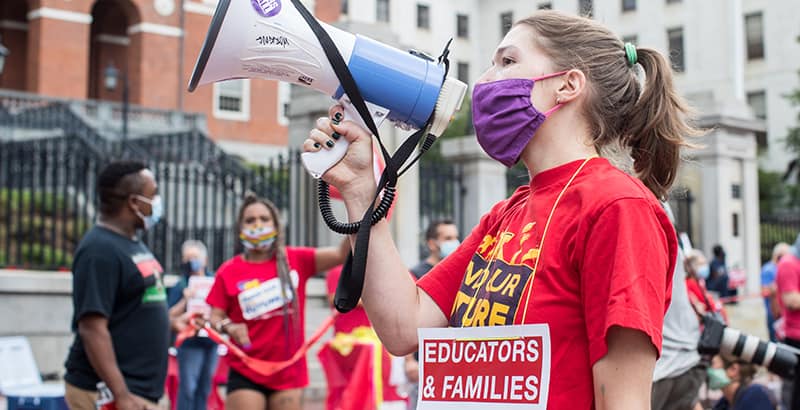
Yesterday, teachers and staff with the Sheridan Education Association in Sheridan, Colorado went on strike for better pay and improved working conditions. While the school district initially told families that schools would remain open, on Tuesday the district alerted families that all schools would be closed through the end of the week. The relationship between educators and the school district has been escalating since the district allowed the collective bargaining agreement to lapse last August. According to the union, staff were initially prohibited from entering the public portion of the school board’s emergency meeting on Tuesday evening. The district called police on educators and parents rallying outside the meeting. Educators on the picket line claim that the school district is failing to recognize their union, declining to make counter offers, and refusing to recognize classified staff as members of the bargaining unit. According to the union, the district’s actions hurt both workers and children. The last educator strike in Colorado was more than five years ago, when Denver Public Schools staff and teachers struck for three days.
Last week, both chambers of the Maryland General Assembly passed versions of a bill that would give public university graduate students collective bargaining rights. Graduate student workers in Maryland have been lobbying for such a bill for over fifteen years. But several amendments to the bill are preventing graduate student workers from celebrating. Under the amended bill, which the House will hear Tuesday, graduate student workers would not be able to bargain until 2028. And the bill only applies to students at two campuses of the University of Maryland and does not cover jobs funded by grants. The University, which has lobbied against the bill, previously claimed that it cannot afford to negotiate with graduate students. According to legislators supporting the bill, the amendments limit financial strain and give schools time to prepare. But graduate student workers argue they urgently need collective bargaining rights, as many students struggle to afford food on their stipends.





Daily News & Commentary
Start your day with our roundup of the latest labor developments. See all
October 15
New reporting examines the rollback of child labor protections; California tries to block a strike; NLRB charges Wisconsin mental health provider with firing workers during union drive.
October 14
Eleventh Circuit overturns ERISA exhaustion rule; DHS finalizes removal of automatic renewal for work permits; AFGE challenges SSA over flexible scheduling policy.
October 13
Chicago hotel workers remain on strike; a coalition of Democratic states sues the Labor Department over canceled unemployment insurance grants; the Federal Labor Relations Authority establishes a new mediation framework for federal worker disputes.
October 12
Workers at the Obama Foundation begin organizing; MLB submits its latest collective bargaining agreement proposal; Brigham & Women's nurses postpone strike.
October 11
UAW President Shawn Fain succeeds in his reelection bid, and Spanish unions call for a general strike.
October 9
DHS proposes a $100k fee for the foreign grad employment program; Trump suspends tech company access to green card program; and private equity perpetuates poor working conditions for home care workers.