
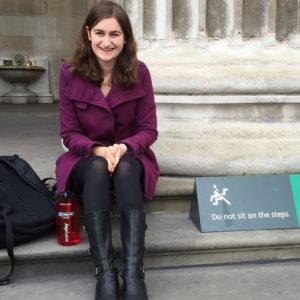
Rachel Sandalow-Ash is a student at Harvard Law School and a member of the Labor and Employment Lab.
Valerie Strauss writes in the Washington Post about how, following the successful United Teachers Los Angeles strike, teachers across the country are preparing to potentially go on strike in the upcoming weeks to secure increased salaries and improved school funding. Strauss highlights public school teachers in Oakland, Denver, Indiana, and Virginia; as well as charter school teachers in Chicago, among the educators who may go on strike.
An Indiana state Senator who runs a company that employs hundreds of minors is seeking to eliminate the state’s child labor protections. Among other protections, Indiana state law limits the number of hours that minors can work in any given week and requires employers to give minors a 30-minute break for every six hours they work. Both the Indiana School Boards Association and Indiana State AFL-CIO are working to preserve the state’s child labor laws.
The Ohio State Employment Relations Board (SERB) ruled in favor of striking faculty at Wright State University, allowing the strike to continue. Wright State faculty, who are represented by American Association of University Professors-WSU, began their strike on January 22nd. They are protesting the university’s unilateral decision to — among other things — decrease health care benefits and weaken certain workload protections. The union and the university are engaged in intensive talks and have indicated that they will likely reach a deal “sooner rather than later.”
Paul Sonn of the National Employment Law Project (NELP) and Naomi Walker of the Economic Policy Institute (EPI) write in the American Prospect about “How States Can Counter Trump’s War on Workers.” Sonn and Walker urge states to expand public employees’ collective bargaining rights. Similarly, they urge states to extend unionization and collective rights to private sector workers — such as agricultural and domestic workers — who are currently excluded from federal labor law. Furthermore, they write that states should increase enforcement of laws that protect employees’ rights at work; set high standards for government contractors; expand overtime pay; ensure that striking workers can access unemployment insurance; protect immigrant workers; and invest in good jobs for workers of color. The full NELP/EPI report, “A State Agenda for America’s Workers,” is available here.





Daily News & Commentary
Start your day with our roundup of the latest labor developments. See all
October 18
Federal judge again halts cancellation of the Bureau of Prisons’ CBA; tabletop gaming workers face roadblocks in union recognition.
October 16
Department of Labor reduces wage-and-hour enforcement at unionized workplaces; Fain's victory poses question of federal monitor's extension.
October 15
New reporting examines the rollback of child labor protections; California tries to block a strike; NLRB charges Wisconsin mental health provider with firing workers during union drive.
October 14
Eleventh Circuit overturns ERISA exhaustion rule; DHS finalizes removal of automatic renewal for work permits; AFGE challenges SSA over flexible scheduling policy.
October 13
Chicago hotel workers remain on strike; a coalition of Democratic states sues the Labor Department over canceled unemployment insurance grants; the Federal Labor Relations Authority establishes a new mediation framework for federal worker disputes.
October 12
Workers at the Obama Foundation begin organizing; MLB submits its latest collective bargaining agreement proposal; Brigham & Women's nurses postpone strike.