
Gurtaran Johal is a student at Harvard Law School.
In today’s news and commentary, the Trump administration proposes an overhaul to the H-1B process conditioning entry to the United States on a $100,000 fee; Amazon sues the New York State Public Employment Relations Board over a state law that claims authority over private-sector labor disputes; and Mayor Karen Bass signs an agreement with labor unions that protects Los Angeles city workers from layoffs.
On September 19th, President Trump issued a proclamation placing restrictions on the entry of nonimmigrants workers who perform services in a specialty occupation, unless they can provide a payment of $100,000. The entry fee took effect on September 21st, and it does not apply to foreign workers who filed their petitions prior to that date or already hold valid H-1B visas. H-1B visas are largely used by the technology sector, and this sector will feel the brunt of the impact of this proclamation. Specifically, startups and small businesses will likely be unable to pay the fee given their smaller scale and lack of resources, compared to larger companies like Amazon and Meta. However, the Nvidia CEO and OpenAI CEO have both stated that the new fee will allow the United States to only bring in the best talent for their companies. On September 23rd, the Trump administration also issued a proposal that highlights how the lottery system will work. That is, prospective employees will be placed in four different wage bands, with workers in the highest wage category being entered four times into the selection pool and workers in the lowest wage category being entered only one time into the selection pool. Thus, the Trump administration is focused on prioritizing the entry of higher-wage earners.
Meanwhile, Amazon filed a lawsuit in the U.S. District Court for the Eastern District of New York challenging a New York state law that claims authority over private-sector labor disputes. Specifically, the state law provides the New York Public Employment Relations Board with the authority to oversee union election disputes and unfair labor practice charges unless the NLRB “successfully asserts jurisdiction…pursuant to an order by the federal district court.” New York passed this law following the NLRB’s lack of quorum due to President Trump’s firing of Gwynne Wilcox from the Board. Amazon argues that the law is unconstitutional because it displaces exclusive federal authority, as private-sector labor disputes fall squarely within the purview of the NLRA.
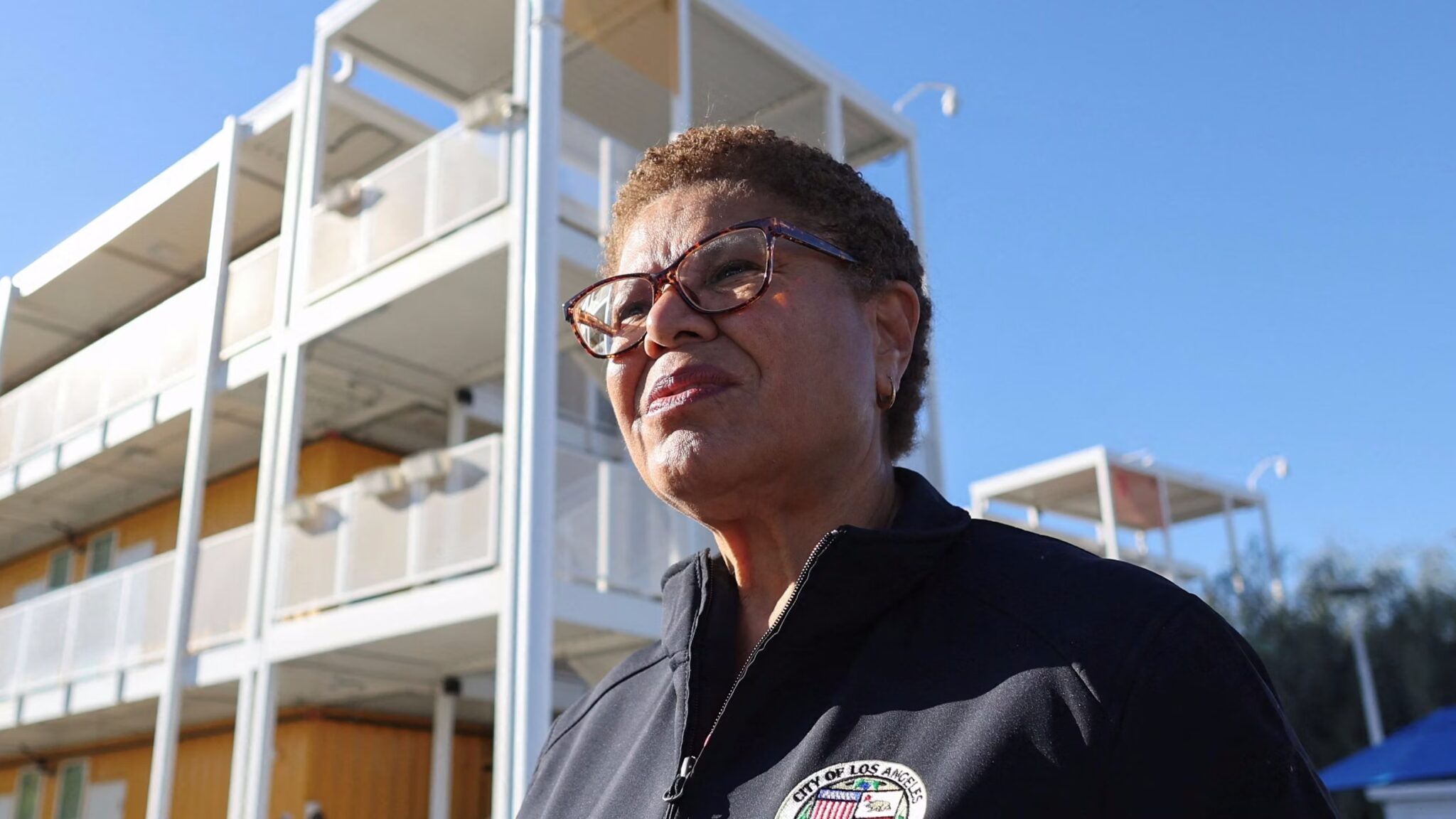
Lastly, Mayor Karen Bass signed an agreement to halt a planned furlough of municipal employees and all remaining civil service layoffs for fiscal year 2025-2026. In April, Bass had originally proposed over 1,600 layoffs as a result of a nearly $1 billion budget deficit. To avert these layoffs, the Los Angeles Police Protective League agreed to have its workers take overtime as paid time off to reduce overtime expenses, and the LA City Coalition of Unions and Engineers and Architects Association agreed to take up to five unpaid holidays in 2026. Additionally, some employees were transferred to the city’s proprietary departments, such as the Port of Los Angeles and Los Angeles World Airports, which are entities that are not impacted by the changes in the city’s General Fund.



Daily News & Commentary
Start your day with our roundup of the latest labor developments. See all
October 13
Chicago hotel workers remain on strike; a coalition of Democratic states sues the Labor Department over canceled unemployment insurance grants; the Federal Labor Relations Authority establishes a new mediation framework for federal worker disputes.
October 12
Workers at the Obama Foundation begin organizing; MLB submits its latest collective bargaining agreement proposal; Brigham & Women's nurses postpone strike.
October 11
UAW President Shawn Fain succeeds in his reelection bid, and Spanish unions call for a general strike.
October 9
DHS proposes a $100k fee for the foreign grad employment program; Trump suspends tech company access to green card program; and private equity perpetuates poor working conditions for home care workers.
October 8
NLRB judge finds UPS unlawfully restricted union insignia; Harvard graduate workers authorize second strike; OSHA orders Union Pacific to pay $300,000 in damages in whistleblower case.
October 7
DOL scraps plan to remove decades-old wage-and-hour guidance from federal regulations; New York enacts personnel records access law; Starbucks loses bid to dismiss Workers United trademark suit.