
Mila Rostain is a student at Harvard Law School and the Digital Director of OnLabor.
In today’s News and Commentary, the NLRB seeks an injunction of California’s law giving the state jurisdiction over private sector workers when the NLRB lacks a quorum, a US District Judge grants a temporary restraining order stopping shutdown-related RIFs, and Governor Newsom vetoes an ILWU supported bill.
Yesterday, the NLRB filed a complaint seeking to enjoin California’s AB 288, the state’s new law granting its Public Employment Relations Board jurisdiction over private sector workers when the NLRB implicitly cedes jurisdiction, including when it lacks a quorum. The law would go into effect in January. The NLRB claims that AB 288 is Garmon preempted. The suit comes after the NLRB and Amazon sued New York over a similar law last month. Like in New York, the NLRB’s case is likely to raise questions about the NLRB’s standing to sue in such cases.
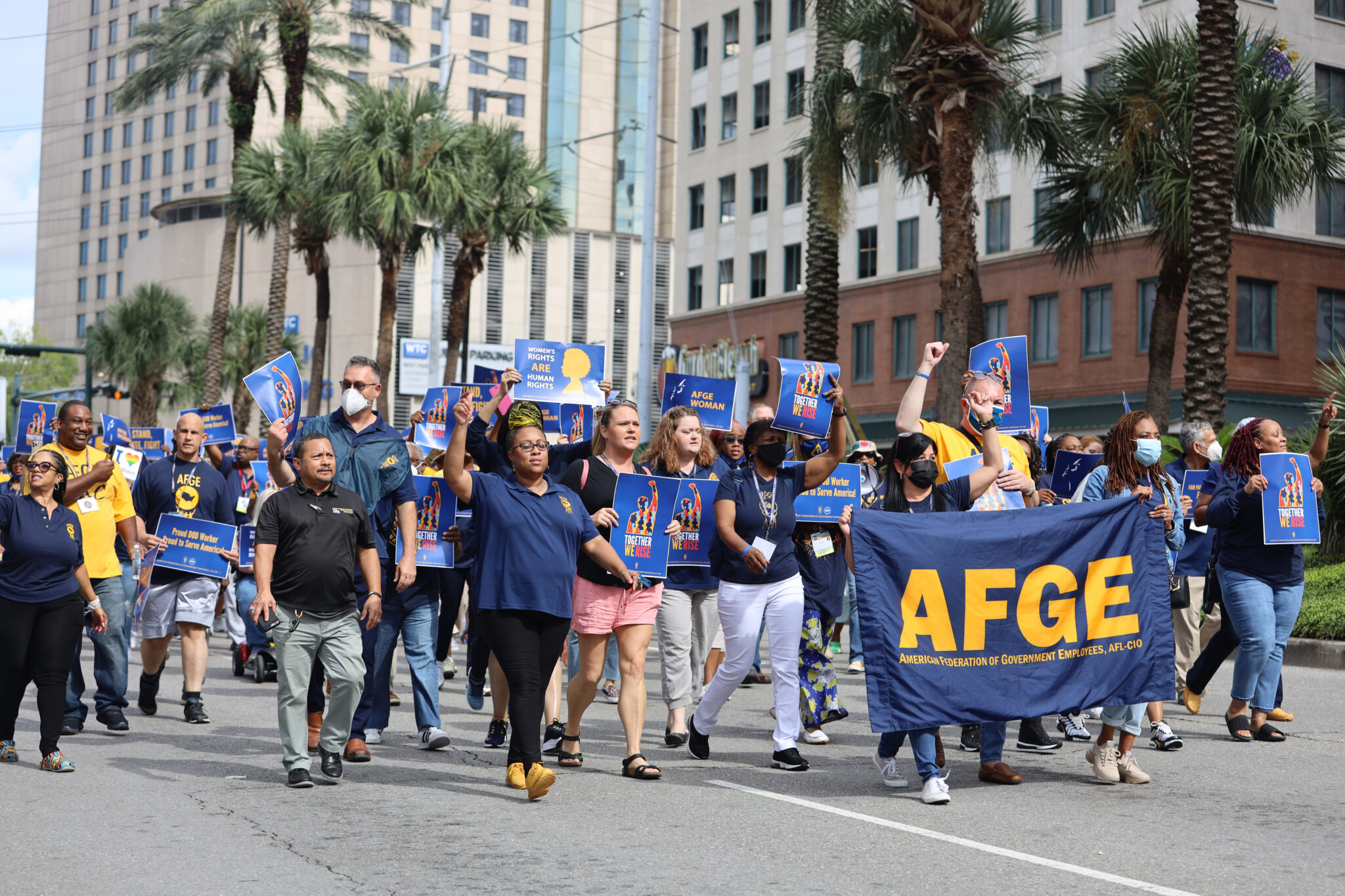
Also Wednesday, US District Judge Susan Illston granted a temporary restraining order enjoining shutdown-related reductions in force. So far, more than 4,000 federal workers have lost their jobs as a result of shutdown-related RIFs. According to Judge Illston, President Trump is firing “line-level employees during a government shutdown as a way to punish the opposing political party.” Judge Illston found that plaintiff unions were likely to prevail on the merits of their claim that the RIFs are unlawful agency actions under the APA, or in her words, “targeting for RIFs those programs that are perceived as favored by a particular political party—is the epitome of hasty, arbitrary, and capricious decisionmaking,” and likely rests on illegal grounds. Judge Illston also noted that “the irreparable harm in this case is distinct from prior RIFs because the record reflects that the shutdown is preventing some furloughed employees from even knowing that they are being RIF’d.” A hearing for the case is scheduled for October 28.
Earlier this week, Governor Newsom vetoed a law that would have blocked funding to support port automation while limiting the regulatory powers of air quality agencies. While environmental groups praised Governor Newsom for vetoing the law, the International Longshore and Warehouse Union, long opposed to the automation of ports, had supported the law. The International Longshoremen’s Association stated, “when a state uses taxpayer money to subsidize automation that replaces human labor, it’s not innovation, it’s corporate welfare. And when an elected official enables that process, it’s not leadership, it’s capitulation.” Governor Newsom said in his veto statement, “it is imperative that we maintain the tools we have and encourage cooperative action at all levels to avoid the worst health and climate impacts.”





Daily News & Commentary
Start your day with our roundup of the latest labor developments. See all
October 16
Department of Labor reduces wage-and-hour enforcement at unionized workplaces; Fain's victory poses question of federal monitor's extension.
October 15
New reporting examines the rollback of child labor protections; California tries to block a strike; NLRB charges Wisconsin mental health provider with firing workers during union drive.
October 14
Eleventh Circuit overturns ERISA exhaustion rule; DHS finalizes removal of automatic renewal for work permits; AFGE challenges SSA over flexible scheduling policy.
October 13
Chicago hotel workers remain on strike; a coalition of Democratic states sues the Labor Department over canceled unemployment insurance grants; the Federal Labor Relations Authority establishes a new mediation framework for federal worker disputes.
October 12
Workers at the Obama Foundation begin organizing; MLB submits its latest collective bargaining agreement proposal; Brigham & Women's nurses postpone strike.
October 11
UAW President Shawn Fain succeeds in his reelection bid, and Spanish unions call for a general strike.