
Sophia is a student at Harvard Law School and a member of the Labor and Employment Lab.
In today’s news and commentary, Governor Jared Polis directs Colorado’s labor agency to share information with ICE; and the Supreme Court issues two unanimous rulings including exempting a Catholic charity from paying unemployment compensation taxes and striking down the heightened standard for plaintiffs belonging to a majority group to prove a Title VII employment discrimination claim.
Scott Moss, the Director of the Division of Labor Standards and Statistics at the Colorado Department of Labor and Employment, filed a lawsuit against Colorado Governor Jared Polis for ordering state employees to provide U.S. Immigration and Customs Enforcement (ICE) with personally identifying information of Coloradans who have previously used state services. Moss claims that Governor Polis repeatedly assured Coloradans that they could use state services such as reporting workplace violations and claiming labor rights without fear of their personal information being shared with ICE. These assurances were codified in state law on several occasions including labor standard rules issued by the Polis administration in 2019, and legislation that Governor Polis signed into law in 2021 and 2025. Moss seeks a declaratory judgment and an immediate injunction, arguing that compliance with the Governor’s directive would force Moss and other state employees to violate the State’s ban on disclosing personal information to federal immigration enforcement, and thus risk incurring fines of up to $50,000 per violation.
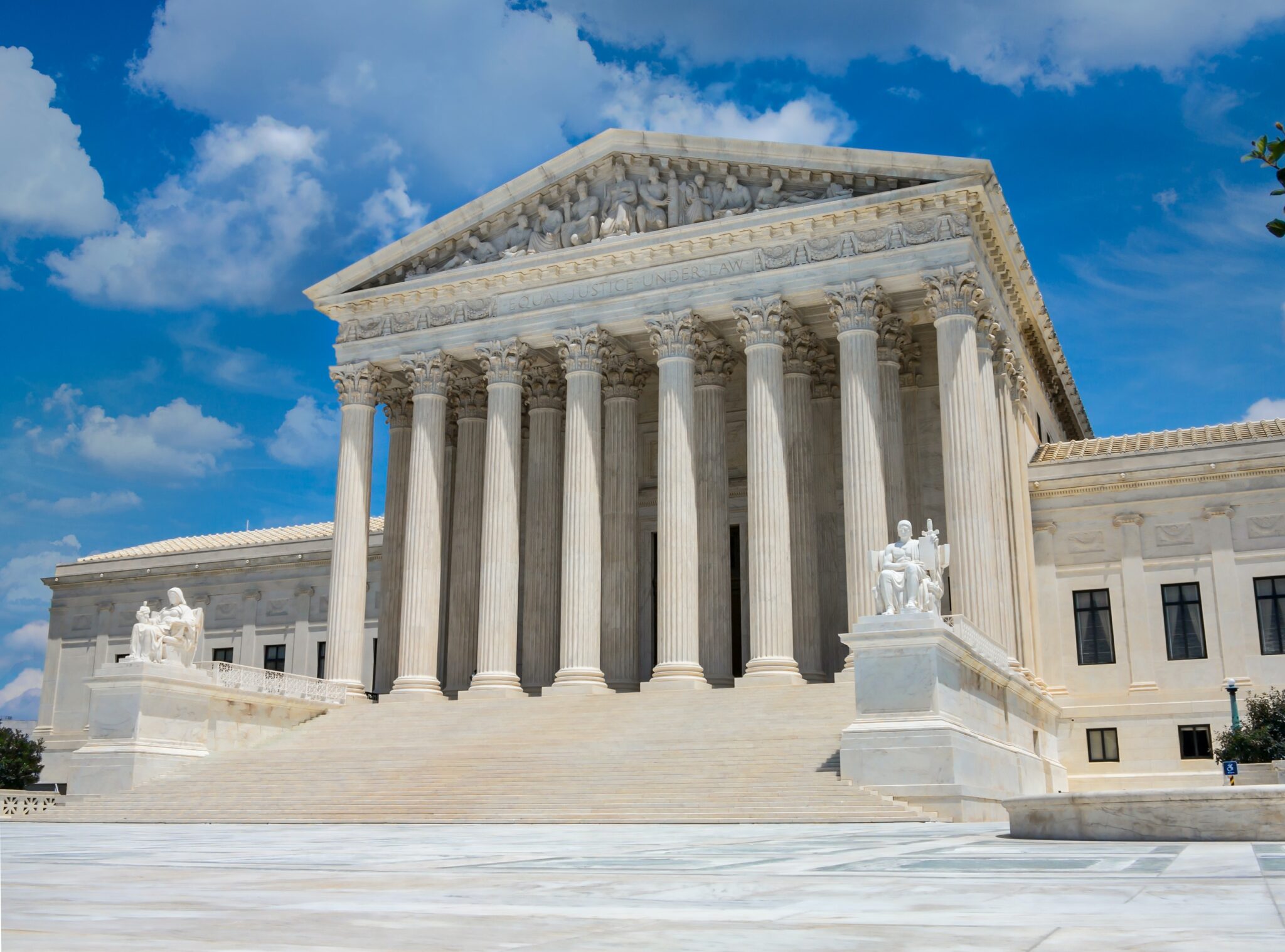
At issue in Catholic Charities Bureau, Inc. v. Wisconsin Labor and Industry Review Commission was Wisconsin Statute § 108.02(15) – the nation’s first unemployment compensation statute. The law mandated that all employers – public, private, and nonprofit alike – pay into the state’s unemployment system. However, the “religious purposes” exemption relieves organizations that “operate[] primarily for religious purposes” of their obligation to pay. Wisconsin argued that it had a compelling interest in ensuring unemployment coverage for its residents and in avoiding potential future controversy arising over whether employees tasked with inculcating religious doctrine satisfactorily complied with the relevant faith’s tenets. The Court found that Wisconsin’s refusal to grant the religious exemption to the Catholic Charities violated the First Amendment’s mandate that the government remain neutral when dealing with different religions. Critics of the Court’s decision argue that this case will enable more organizations to claim a religious motive to circumvent worker protections.
Lastly, the Supreme Court decided a case involving Marlean Ames, a heterosexual woman employed at the Ohio Department of Youth Services, who brought suit against the agency under Title VII, alleging that she was denied a work promotion and was later demoted because of her sexual orientation. At issue in Ames v. Ohio Dept. of Youth Services was whether the Sixth Circuit’s “background circumstances” rule was constitutional. Prior to the Court’s decision, about half of the nation’s circuit courts imposed a higher burden on men, white people, and other members of a majority group seeking to raise a Title VII employment discrimination claim. However, the Court unanimously struck down this requirement that members of a majority group show “background circumstances to support the suspicion that the defendant is that unusual employer who discriminates against the majority.”





Daily News & Commentary
Start your day with our roundup of the latest labor developments. See all
October 9
DHS proposes a $100k fee for the foreign grad employment program; Trump suspends tech company access to green card program; and private equity perpetuates poor working conditions for home care workers.
October 8
NLRB judge finds UPS unlawfully restricted union insignia; Harvard graduate workers authorize second strike; OSHA orders Union Pacific to pay $300,000 in damages in whistleblower case.
October 7
DOL scraps plan to remove decades-old wage-and-hour guidance from federal regulations; New York enacts personnel records access law; Starbucks loses bid to dismiss Workers United trademark suit.
October 6
Protect College Sports Act dampens athlete unionization outlook; Stanford RA union decides to withdraw petition
October 5
Delaware bans captive audience meetings; EEOC settles remote work national origin discrimination claim; First Circuit stays enforcement order in VA's dispute with AFGE.
October 4
Boston nurses announce open-ended strike; federal judge restores federal prison workers' union protections; St. Louis workers form the first movie theater union in Missouri.