
Ted Parker is a student at Harvard Law School and a member of the Labor and Employment Lab.
In today’s news and commentary, unions speak out against ICE’s senseless killing of Alex Pretti, the EEOC continues concentrating power in its Republican Chair, and courts decide the reach of the EFAA.
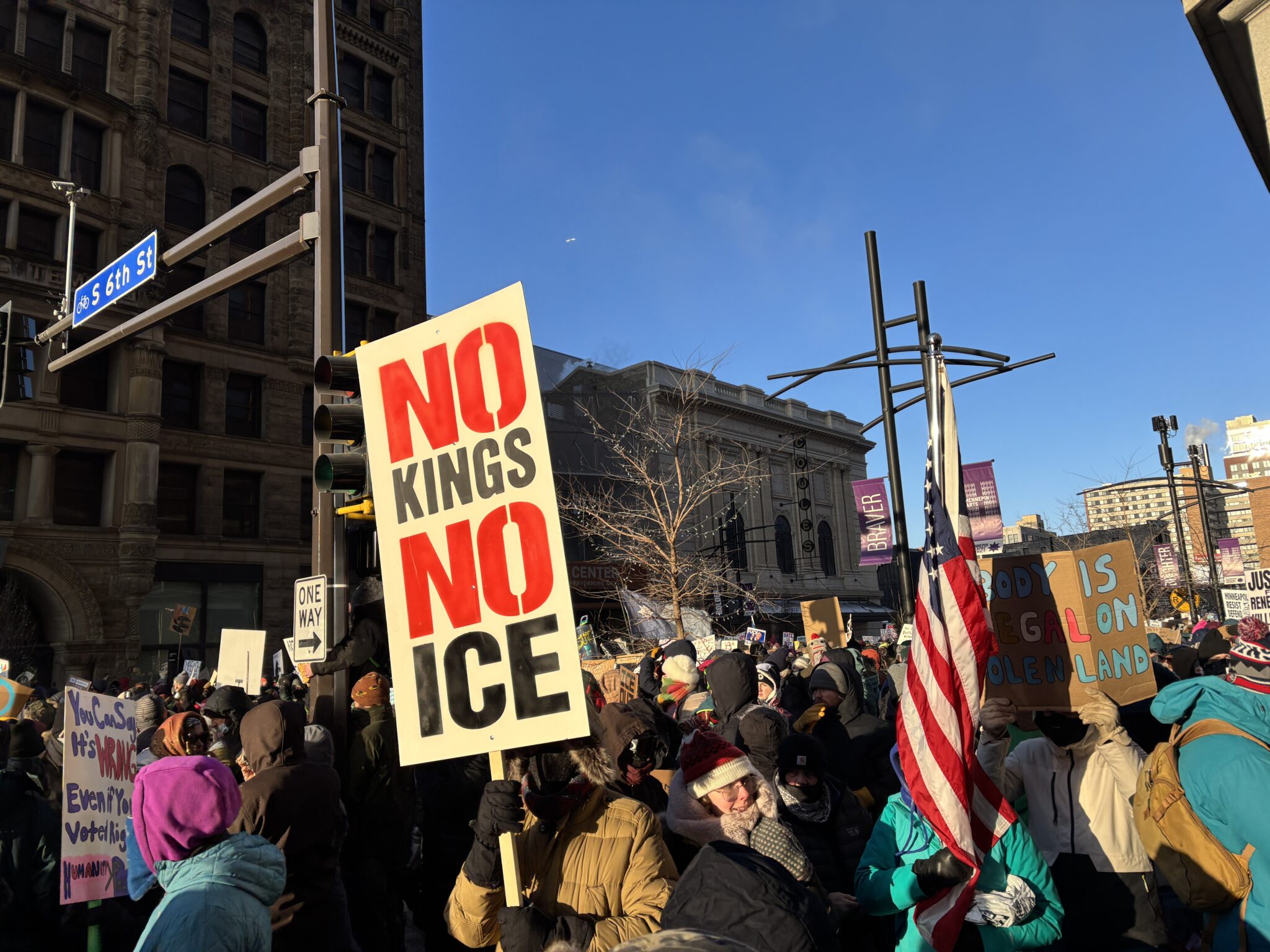
Unions speak up in outrage over the senseless killing of Alex Pretti by ICE this weekend. As an intensive care nurse at the Minneapolis Veterans Affairs Medical Center, Pretti was a union member of the American Federation of Government Employees (AFGE), Local 3669. AFGE President Everett Kelley expressed “mourn[ing]” and “grie[f] for this member” and said Pretti’s death was “the direct result of an administration that has chosen reckless policy, inflammatory rhetoric, and manufactured crisis,” one whose actions were “designed to provoke confrontation.” AFL-CIO President Liz Shuler likewise condemned the “senseless killing” of “a brother in our union family,” and reiterated that “American’s unions join the call for ICE to immediately leave Minnesota before anyone else is hurt or killed.” ICE killed Pretti the day after a general strike in Minneapolis, in which hundreds of businesses were closed to protest the presence of ICE in the city and thousands of demonstrators braved the cold in a show of solidarity.
Meanwhile, back in the nation’s capital, the Equal Employment Opportunity Commission (EEOC) continues to concentrate power in the hands of its Republican Chair. As I wrote a few weeks ago, the EEOC was expected to rescind its voting procedures, placing all discretion on whether and when to call public “agenda votes” (a vote on an important issue) in the Chair. That rescission happened about a week and a half ago. Then, late last week the Commission—now behind closed doors—voted to adopt a resolution clawing back case-bringing powers previously delegated to its general counsel and field office lawyers. The history and precise details of these procedures is a bit complex, but the upshot is that almost all litigation will now require Commission approval. Taken together, these two moves concentrate the agency’s decision-making power in the Republican commissioners and allow them to decide with less deliberation and without ever holding a public meeting.
Finally, courts across the country face the same question: Does the Ending Forced Arbitration of Sexual Assault and Sexual Harassment Act (EFAA) apply to cases of workplace harassment on the basis of sex where the harassing conduct is not itself sexual in nature? In Holsten v. Barclays Services LLC, for instance, the plaintiff alleged that she was harassed by her supervisor, who demeaned and humiliated her for being a woman (making inappropriate comments about her husband’s authority over her and mocking her, an executive, as “the person who gets my coffee”). Under Title VII, this behavior would indeed by sexual harassment (harassment on the basis of sex). The question is whether it also qualifies as sexual harassment under the EFAA. In an amicus brief, the EEOC argues that it does because, rather than advance its own single definition of sexual harassment, the EFAA notably “preserve[s] existing federal, tribal, and state definitions of sexual harassment.” Thus, whatever the relevant definition of sexual harassment is for a given suit (in this case, Title VII’s), that is the definition ported into EFAA for that suit. Similar cases are currently before the Second Circuit and in California state court.





Daily News & Commentary
Start your day with our roundup of the latest labor developments. See all
October 9
DHS proposes a $100k fee for the foreign grad employment program; Trump suspends tech company access to green card program; and private equity perpetuates poor working conditions for home care workers.
October 8
NLRB judge finds UPS unlawfully restricted union insignia; Harvard graduate workers authorize second strike; OSHA orders Union Pacific to pay $300,000 in damages in whistleblower case.
October 7
DOL scraps plan to remove decades-old wage-and-hour guidance from federal regulations; New York enacts personnel records access law; Starbucks loses bid to dismiss Workers United trademark suit.
October 6
Protect College Sports Act dampens athlete unionization outlook; Stanford RA union decides to withdraw petition
October 5
Delaware bans captive audience meetings; EEOC settles remote work national origin discrimination claim; First Circuit stays enforcement order in VA's dispute with AFGE.
October 4
Boston nurses announce open-ended strike; federal judge restores federal prison workers' union protections; St. Louis workers form the first movie theater union in Missouri.