
Henry Green is a student at Harvard Law School.
In today’s news and commentary, the Freedom Foundation appeals to the 9th Circuit over a law that allows suits for impersonating union representatives; a magistrate judge denies a motion to arbitrate claims by delivery drivers; and furloughed factory workers in Springfield return to work after Customs releases seized subway car shells.
Law360 reports that the Freedom Foundation has appealed a district court’s dismissal of their challenge to an Oregon law that makes it unlawful “to falsely impersonate a union representative.” The law creates a private right of action for unions to sue for damages. The Freedom Foundation brought challenges under the First and Fourteenth Amendments, arguing the law targeted its mailer campaigns that tell public employees how to opt out of union membership. The suit named six public sector unions and several state officials as defendants. Dismissing the complaint, the District of Oregon held that the Eleventh Amendment barred claims against the state defendants because they have no role in enforcement given the law’s private right of action. The Court also said claims could not be brought against the unions under Section 1983 because the unions had not pursued or threatened a private lawsuit.
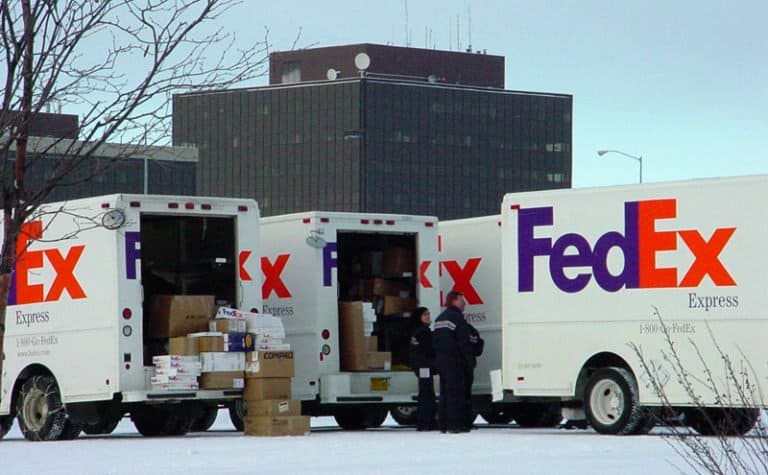
A magistrate judge in Massachusetts denied a motion to move claims brought by two delivery drivers to arbitration, Law360 reports. The drivers delivered goods for Bimbo Bakeries. Their lawsuit seeks overtime pay and reimbursement expenses and aims to represent a class of similarly situated drivers. Both drivers had signed agreements that included mandatory arbitration clauses. However, the judge ruled that the drivers couldn’t be compelled to arbitrate under the Federal Arbitration Act, because of the Act’s exception for “seamen, railroad employees, or any other class of workers engaged in foreign or interstate commerce.” Per the ruling, the First Circuit has held that last mile delivery drivers such as the plaintiffs in the case are “transportation workers ‘engaged in … interstate commerce,’” even if the workers themselves do not cross state lines.
In Springfield, The Boston Globe reports that nearly 150 employees will “gradually” return to work at a factory that assembles subway cars for the MBTA’s Red and Orange lines. The factory workers had been furloughed after US Customs and Border Protection seized subway car shells shipped from China last year over concerns about the shipment’s compliance with the Uyghur Forced Labor Prevention Act. Per the article, those concerns “have since been resolved.” The car shells were released after Congressman Richard Neal, who represents Springfield, approached White House Chief of Staff Susie Wiles at a St. Patrick’s Day event this week. In addition to the MBTA cars, some impounded cars were bound for the Los Angeles metro system amid upgrades in advance of the 2028 Summer Olympic Games.
Daily News & Commentary
Start your day with our roundup of the latest labor developments. See all
November 27
Momentum gains for local job-automation regulations; M.L.B. seeks declaratory judgment for lockout.
November 26
Opposition to a national rail merger grows; NLRB director rejects a challenge to the recognition bar at a Kroger store.
November 25
In today’s news and commentary, the DOL bars ESG investing in 401(k) plans, the Fifth Circuit rules the Pregnancy Workers Fairness Act was unconstitutionally passed, and the EEOC repeals workforce data requirements for federal agencies. On Tuesday, the Department of Labor published a proposed rule that would prohibit 401k plans from taking into account ‘environmental, […]
November 24
Labor Department finalizes a new independent contractor rule; Broadway wardrobe workers authorize a strike; President Trump's EEOC nominee lacks the Senate votes to advance.
November 23
New York City’s teachers’ union announces intent to sue the city’s main pension fund; Teamsters win nearly $100 million arbitration award against Union Pacific Railroad; security workers at two busy California ports reach tentative contract agreement.
November 22
Research from the Rutgers Workplace Justice Lab finds that states are failing to use their wage theft enforcement powers, and global union leaders call for governments to review contracts with Amazon and AWS.