
Mila Rostain is a student at Harvard Law School and the Digital Director of OnLabor.
In today’s News and Commentary, Minnesota school districts and the state’s teachers union sue to limit immigration enforcement actions near schools, California labor leaders call on Governor Newsom to protect workers from AI, and UAW and Volkswagen reach a tentative agreement.
Yesterday, Minnesota school districts and the state’s teachers union filed a suit in the U.S. District Court, District of Minnesota requesting the court enjoin a policy that has led to increased immigration enforcement actions at or near schools. Prior to the second Trump Administration, longstanding policy restricted enforcement near schools and other “sensitive locations.” In January 2025, the Administration rescinded that policy and gave discretion to individual federal agents to determine when to carry out enforcement actions at or near sensitive locations, including schools. The school districts and union claim that since Trump’s “Operation Metro Surge,” numerous enforcement actions have occurred near or at schools causing attendance rates to drop significantly. That attendance decrease then impacts the revenue of Minnesota’s schools, since the state uses daily attendance numbers to calculate funding. Schools have also spent money to plan new security measures in response to the enforcement actions. Their suit alleges that the agency policy change is arbitrary and capricious and was implemented without notice-and-comment rulemaking in violation of the Administrative Procedure Act.
Also on Wednesday, labor leaders in California urged Governor Newsom to protect workers from artificial intelligence related job loss and surveillance. The California Federation of Labor Unions is sponsoring a package of new bills that would protect workers and introduce safeguards against surveillance. The bills would require human oversight before discipline of a worker, require a 90-day advance notice to workers and state and local governments prior to AI related layoffs, and allow workers the ability to remove surveillance devices when entering areas such as bathrooms or employee-only spaces. Together with the AFL-CIO, the California Federation stated: “There is dignity in human work that is the foundation of a healthy, productive democracy. The future of our economy and our society cannot be left to the unchecked whims of profit driven technology corporations and billionaires.”
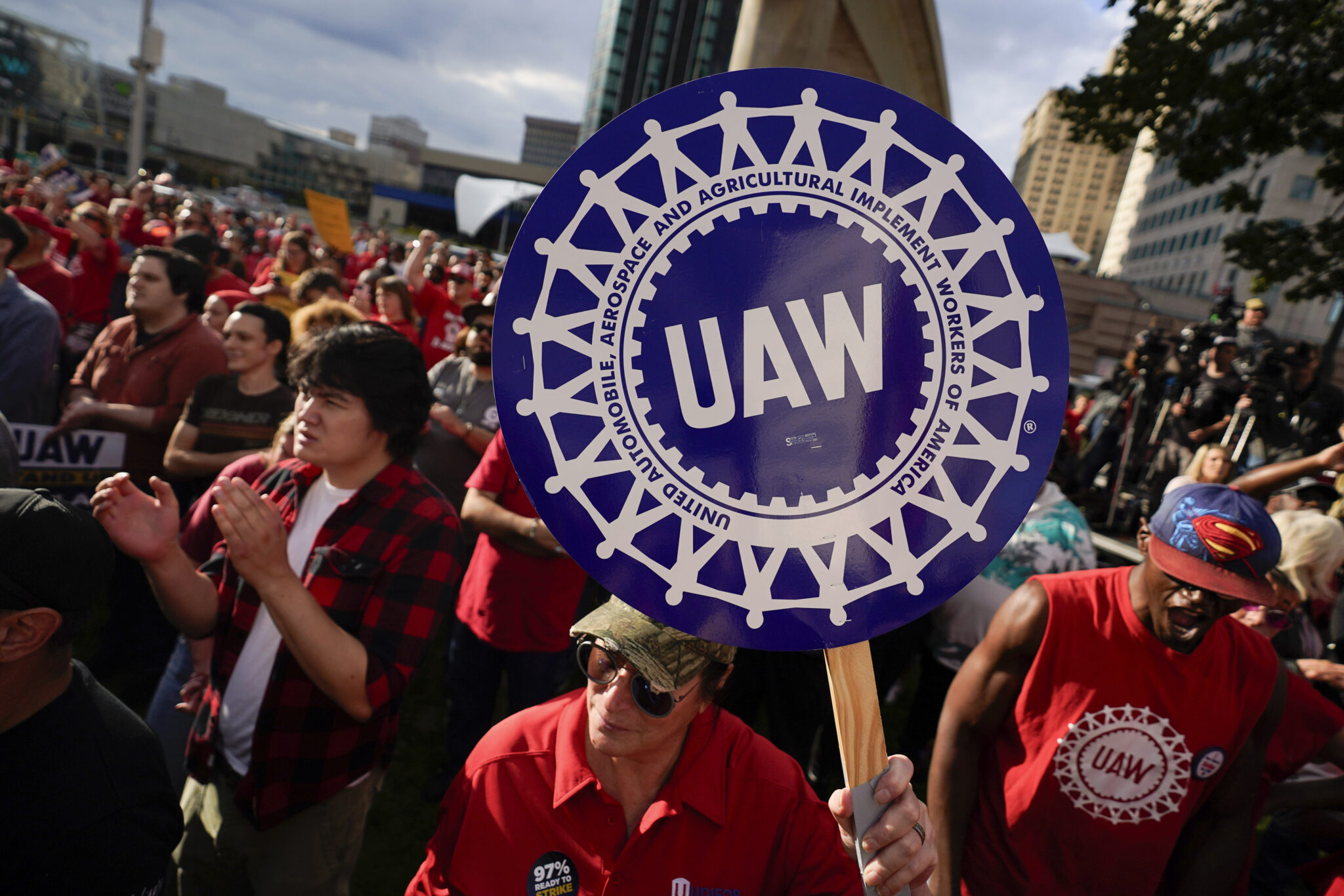
Finally, UAW and Volkswagen reached a tentative agreement yesterday, nearly two years after workers formed their union at the Tennessee plant. UAW members at the plant had previously voted to authorize a strike if necessary. The agreement provides for a 20% across the board wage increase, contract ratification and yearly bonuses, and stronger job protections. The plant is the first in the South outside the Big Three automakers to unionize.




Daily News & Commentary
Start your day with our roundup of the latest labor developments. See all
October 14
Eleventh Circuit overturns ERISA exhaustion rule; DHS finalizes removal of automatic renewal for work permits; AFGE challenges SSA over flexible scheduling policy.
October 13
Chicago hotel workers remain on strike; a coalition of Democratic states sues the Labor Department over canceled unemployment insurance grants; the Federal Labor Relations Authority establishes a new mediation framework for federal worker disputes.
October 12
Workers at the Obama Foundation begin organizing; MLB submits its latest collective bargaining agreement proposal; Brigham & Women's nurses postpone strike.
October 11
UAW President Shawn Fain succeeds in his reelection bid, and Spanish unions call for a general strike.
October 9
DHS proposes a $100k fee for the foreign grad employment program; Trump suspends tech company access to green card program; and private equity perpetuates poor working conditions for home care workers.
October 8
NLRB judge finds UPS unlawfully restricted union insignia; Harvard graduate workers authorize second strike; OSHA orders Union Pacific to pay $300,000 in damages in whistleblower case.