
Linh is a student at Harvard Law School.
Yesterday the Supreme Court heard arguments on a case that could set important precedent for workers’ ability to claim exemption from arbitrations. The case, Bissonnette v. LePage Bakeries Park St. LLC, revolves around wage disputes of delivery drivers working for Flower Foods, a primarily baked goods company. The legal issue in the case is whether, to be exempt from the Federal Arbitration Act (FAA), a class of workers actively engaged in interstate transportation must also be employed by a company in the transportation industry.
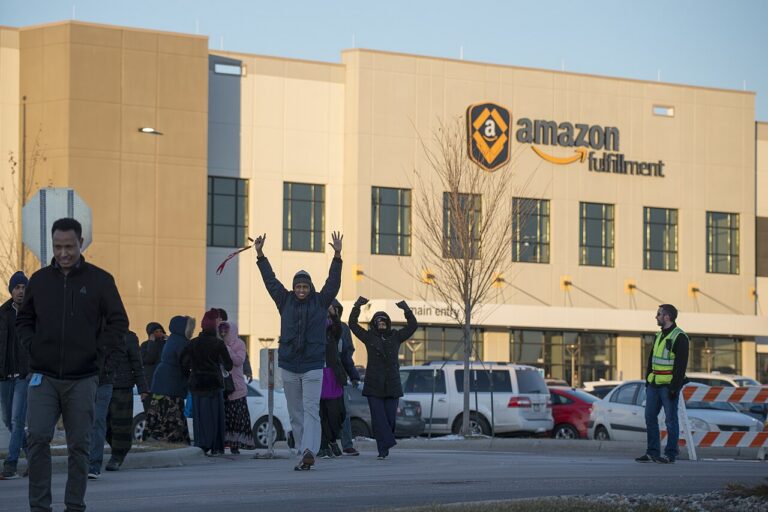
On oral argument, the justices scrutinized the history of the FAA and engaged with both the validity and practicality of the industry requirement, which Flower Foods suggested. On behalf of the workers, Jennifer Bennett argued that gaffing this additional industry requirement onto the FAA exemption is impractical. For companies that do everything, such as Amazon, who filed an amicus brief in support of Flower Foods, identifying an employer’s industry would be a hugely difficult task that courts should not engage with. Justice Alito questioned the practicality of line-drawing in future cases, while Justice Thomas asked why identifying an employer’s industry would be any more difficult than the current test, which asks whether a worker’s job involves interstate transportation. Chief Justice Roberts criticized the Second Circuit’s approach of looking at a company’s revenue and price structure, while Justice Jackson questioned the statutory basis for imposing such an industry limitation in the first place.
This latest dispute gives the Supreme Court an opportunity to resolve a circuit split on the FAA exemption, which allows certain workers to bring suits against their employers in state courts, an important litigation tool for workers.
To continue tracking constitutional attacks on the NLRB, SpaceX got a small victory yesterday when the Fifth Circuit temporarily halted the transfer of its lawsuit challenging the constitutionality of the NLRB from Texas to California. Judge Rolando Olvera, an Obama appointee in the Southern District of Texas, had previously granted the NLRB’s request to send the case to California. The order effectively transferred the case from the Fifth Circuit’s jurisdiction to the Ninth Circuit, where the law is less favorable for SpaceX’s constitutional claims against the NLRB. The Fifth Circuit halted the transfer in a one-sentence order, saying the move is stayed “pending further order of this court.”

Daily News & Commentary
Start your day with our roundup of the latest labor developments. See all
July 3
Unions seek a preliminary injunction to prevent USDA downsizing; the D.C. District Court issues a preliminary injunction against new student loan regulations; Matt Bruenig releases an analysis of Starbucks’ ongoing legal battle against Starbucks Workers United.
July 2
First Circuit denies federal worker unions’ mandamus petition; federal court denies preliminary injunction against new union reporting rule; House introduces the Securing Agriculture’s Workforce Act.
July 1
Trump nominates Keith Sonderling as Labor Secretary; DOL eliminates disparate-impact liability from Title VI regulations; OPM finalizes rule allowing suitability-based removal of federal employees for post-appointment conduct.
June 30
SCOTUS ends removal protections for agencies; staff at NYC cocktail bar vote to unionize.
June 29
In today’s News and Commentary, student-athletes file a class action suit challenging the NCAA’s new Age-Based Rule, a federal judge declines to issue a preliminary injunction against FEMA’s reduction in force but expedites proceedings, and Gavin Newsom opposes California’s proposed billionaire tax in favor of a federal approach. On Thursday, DeJuan Campbell, at basketball player […]
June 28
Philadelphia utility workers announce July 4 strike; national parks workers vote to unionize; Michigan considers “right to disconnect” bill.