
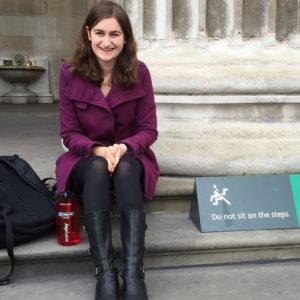
Rachel Sandalow-Ash is a student at Harvard Law School and a member of the Labor and Employment Lab.
North Carolina raised the minimum wage to $15/hour for around 10,000 state government and public university employees. Legislative budget-writers explained that this raise will help retain experienced state workers, who often leave their jobs for higher-paying private positions. Political analysts also believe that the Republican-controlled state legislature passed this measure to win the support of the State Employees Association of North Carolina, the state’s largest public-sector union, in anticipation of the November elections. North Carolina bars state workers from bargaining collectively.
Workers at thirty-one Chicago hotels — represented by UNITE HERE Local 1 — have voted to go on strike if they do not reach a contract by August 31. The union and hotels have yet to reach agreements on key issues such as pay, job security, pensions, health insurance, sick days, and workloads. Over 90% of workers voted in favor of authorizing the strike; workers have noted that while that the Chicago hotel industry makes billions of dollars each year, many hotels are trying to shift healthcare and other costs onto workers.
A former farmworker in New York State who was fired for trying to organize his coworkers is suing to overturn the provision of the 1937 New York State Employment Relations Act (SERA) that excludes farmworkers from the otherwise guaranteed right to organize and collectively bargain without fear of retaliation. If the plaintiff, Crispin Hernandez, wins his case, 60,000 agricultural workers in New York — most of whom are immigrants — will finally gain basic labor rights. Mr. Hernandez is represented by the New York Civil Liberties Union (NYCLU), with support from the Workers’ Center of Central New York and the Worker Justice Center of New York. Mr. Hernandez and NYCLU are arguing that the SERA’s exclusion of farmworkers violates the state constitution, which guarantees workers the “right to organize and bargain collectively.” They are also arguing that SERA’s exclusion of farmworkers (which mirrors a similar exclusion in the NLRA) is racist and was designed to exclude a workforce that was — and still is — majority people of color. New York State has declined to defend its own law; so instead, the New York Farm Bureau, an organization that represents the interests of farm owners, has intervened to argue that farmworkers should not have collective bargaining rights. Mr. Hernandez lost his suit at the trial court level, but he and NYCLU have appealed the trial court judgment.
Politico reports on the history of the fight for a nationally legislated eight-hour workday. On August 20, 1866, the National Labor Union first called on Congress to establish an eight-hour workday. Though the NLU dissolved in 1873, the major unions labor federations that emerged in the subsequent decades — such as the Knights of Labor and the AFL — as well as more radical and anarchist unions adopted the eight-hour-day demand. In 1912, Teddy Roosevelt’s Progressive (Bull Moose) Party included a call for an eight-hour workday in its presidential platform. Congress enacted an eight hour workday with additional pay for overtime work for railroad workers in 1916; the Supreme Court upheld the constitutionality of this regulation in Wilson v. New. The 1933 National Industrial Recovery Act established restrictions on work hours, but this law was struck down by the Supreme Court. In 1938, President Roosevelt signed the Fair Labor Standards Act, which required employers to pay overtime to employees working over forty hours per week. Nevertheless, many American workers today work over 40 hours per week, often without overtime pay — either because they are working several part-time jobs or because they are salaried employees exempt from overtime requirements. According to a 2014 Gallup poll, the average full-time worker in the US works 47 hours per week.

Daily News & Commentary
Start your day with our roundup of the latest labor developments. See all
July 1
Trump nominates Keith Sonderling as Labor Secretary; OPM finalizes rule allowing suitability-based removal of federal employees for post-appointment conduct.
June 30
SCOTUS ends removal protections for agencies; staff at NYC cocktail bar vote to unionize.
June 29
In today’s News and Commentary, student-athletes file a class action suit challenging the NCAA’s new Age-Based Rule, a federal judge declines to issue a preliminary injunction against FEMA’s reduction in force but expedites proceedings, and Gavin Newsom opposes California’s proposed billionaire tax in favor of a federal approach. On Thursday, DeJuan Campbell, at basketball player […]
June 28
Philadelphia utility workers announce July 4 strike; national parks workers vote to unionize; Michigan considers “right to disconnect” bill.
June 26
Mamdani issues workplace heat protections order; Fifth Circuit denies enforcement of NLRB order against Starbucks; AFGE unlikely to secure injunction against FEMA layoffs.
June 25
NLRB orders Amazon to bargain with workers; federal judge blocks ICE agents from making arrests in courthouses.