
Ryan Zhang is a student at Harvard Law School and a member of the Labor and Employment Lab.
In today’s News and Commentary, the Ninth Circuit revives a challenge to California’s cannabis labor-peace requirement and keeps the state’s captive-audience law on hold, while the NLRB appoints a longtime agency attorney as its solicitor.
The Ninth Circuit revived a California cannabis retailer’s challenge to the state’s labor-peace requirement. California cannabis businesses with at least ten employees must enter agreements under which unions refrain from strikes, picketing, and other economic action, while employers agree not to obstruct organizing and provide unions reasonable access to workers. Retailer Ctrl Alt Destroy Inc. argues that this licensing condition is unconstitutional and preempted by the National Labor Relations Act. A trial court dismissed the case because marijuana sales remain illegal under federal law, but the Ninth Circuit ruled that the business’s participation in the cannabis industry was not, by itself, enough to bar its claims. The decision allows a court to consider whether California may condition cannabis licenses on union-related requirements—an issue that could affect similar laws in other states. The Ninth Circuit did not decide the underlying challenge, and California’s requirement remains in effect.
Separately, the Ninth Circuit has affirmed an order temporarily blocking California from enforcing Senate Bill 399, the state’s captive-audience law. The law protects employees who refuse to attend employer meetings or receive communications expressing the employer’s views on political or religious matters, including union organizing. Business groups challenged the statute, and the appeals court concluded that they were likely to succeed on their First Amendment claim because the law restricts speech based on its subject matter and applies specifically to employers. The ruling concerns only a preliminary injunction; the court has not issued a final decision on the law’s validity. The litigation will continue, but California cannot enforce SB 399 in the meantime, leaving workers without its state-law protections when declining to attend covered employer meetings.
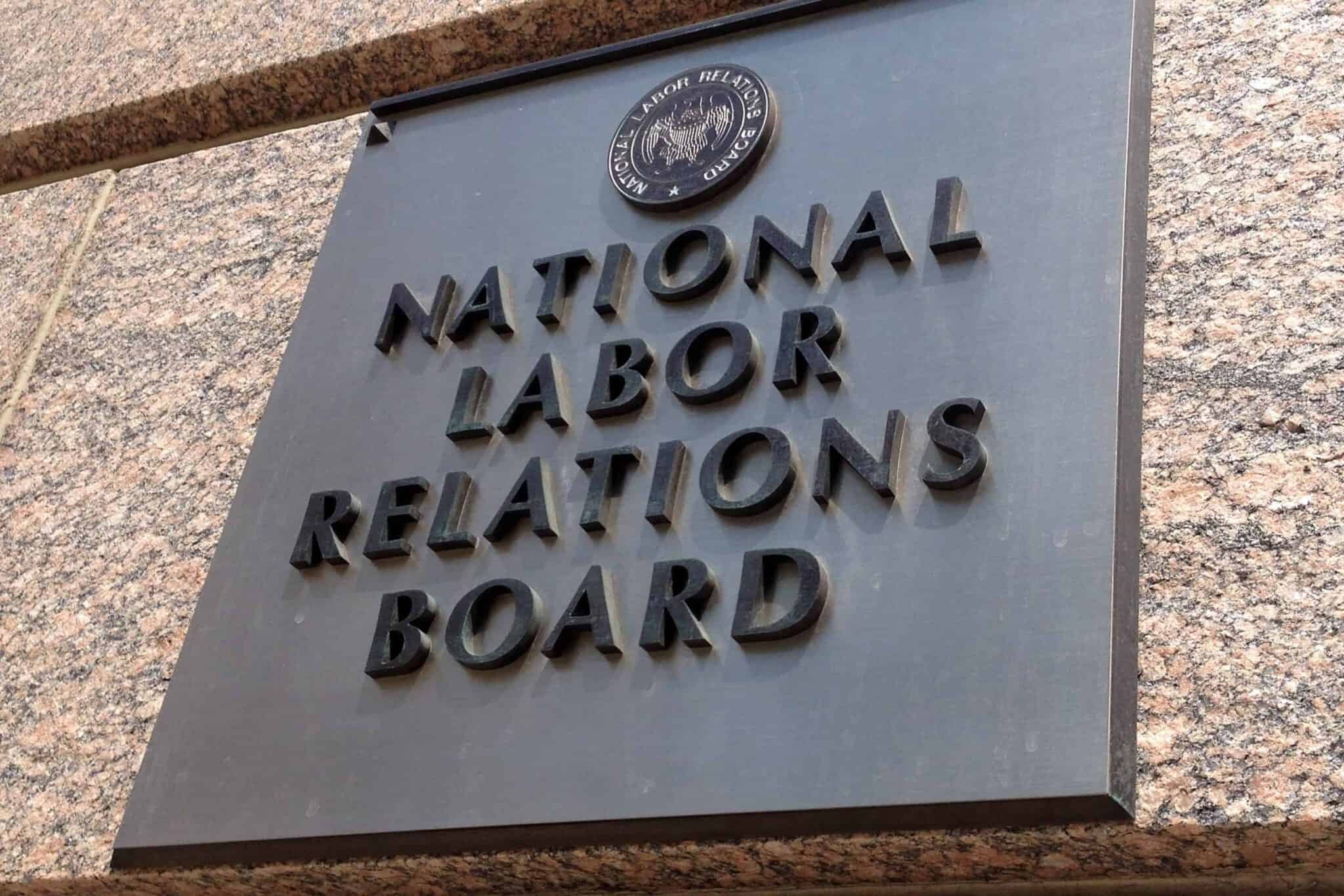
The National Labor Relations Board has appointed Amy L. Cocuzza as its solicitor. As the Board’s chief legal adviser, the solicitor provides guidance on agency operations and on major legal and policy questions when NLRB decisions are reviewed by federal appeals courts or the Supreme Court. The solicitor, however, is not a Board member and does not vote in agency cases. Cocuzza began her legal career at the NLRB, spent a decade in its Division of Advice, and later served as deputy solicitor and acting chief of staff to Chairman James Murphy. Before law school, she organized healthcare workers with 1199 SEIU and musicians with Local 802 of the American Federation of Musicians.





Daily News & Commentary
Start your day with our roundup of the latest labor developments. See all
November 24
Labor Department finalizes a new independent contractor rule; Broadway wardrobe workers authorize a strike; President Trump's EEOC nominee lacks the Senate votes to advance.
November 23
New York City’s teachers’ union announces intent to sue the city’s main pension fund; Teamsters win nearly $100 million arbitration award against Union Pacific Railroad; security workers at two busy California ports reach tentative contract agreement.
November 22
Research from the Rutgers Workplace Justice Lab finds that states are failing to use their wage theft enforcement powers, and global union leaders call for governments to review contracts with Amazon and AWS.
November 19
Harvard academic workers end strike without contract; Reuters journalists authorize a strike; Spirit Airlines’ sale of employee data to Google for AI training approved.
November 18
Judge vacates foreign-student visa limits; DOL proposes QPAM relief; Supreme Court declines Nexstar appeal.
November 17
Amazon workers in Canada win company's first union contract in North America; NY law gives employees access to personnel records; D.C. Circuit looks to overturn Trump joint employer rule