
Jason Vazquez is a staff attorney at the International Brotherhood of Teamsters. He graduated from Harvard Law School in 2023. His writing on this blog reflects his personal views and should not be attributed to the Teamsters.
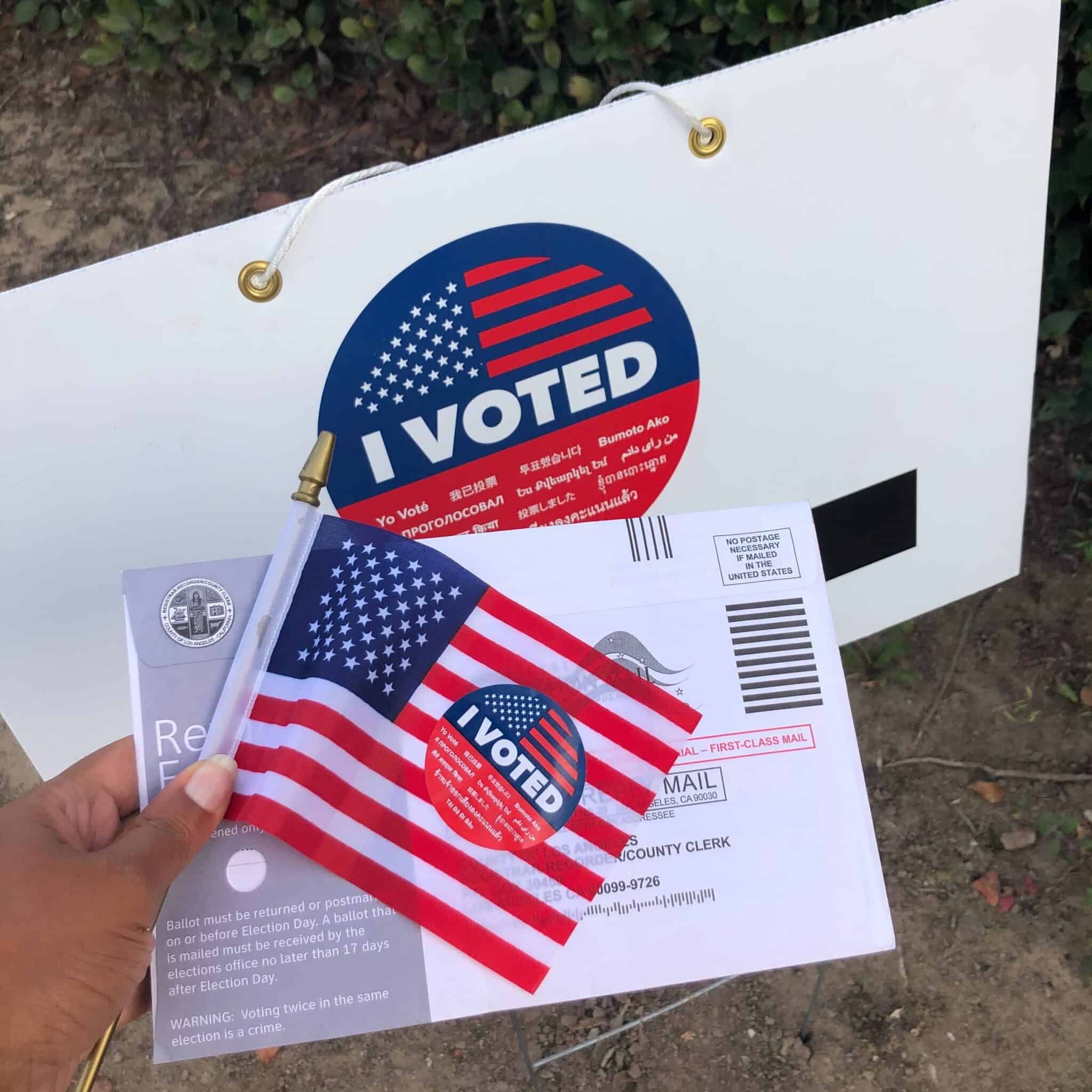
Tuesday was election day in the United States, as millions of Americans across the country cast ballots to select their next mayors, city councilors, school board members, congressional representatives, and governors.
From the perspective of national politics, the most significant results emerged in Virginia and New Jersey. In the Old Dominion, private equity executive Glenn Youngkin (R) will be the next governor, having secured just over 50 percent of the vote in a narrow contest against former Gov. Terry McAuliffe, the Democratic candidate.
While McAuliffe, a centrist establishment figure, had earned the endorsement of several major unions, he ultimately proved uninspiring on labor issues. Youngkin leaned into reactionary cultural grievances but embraced the economic rhetoric of a more orthodox conservativism, describing himself as a “probusiness candidate” and expressing opposition to increasing the state’s minimum wage or repealing its “right-to-work” law.
In New Jersey, it appears that incumbent Phil Murphy (D) will prevail in an unexpectedly close contest against Republican candidate Jack Ciatterelli, a businessman and former state lawmaker. The AFL-CIO has identified Murphy, endorsed by several major unions, as “one of the most pro-union governors in the country.” In his first term he hiked the state’s minimum wage and signed bills combatting worker misclassification, providing paid sick time, and stiffening penalties for wage theft, among other worker-friendly initiatives.
While off-year elections historically prove of limited utility in forecasting national political currents, prognosticators highlight that the GOP captured a surprising share of suburban voters in both races. This trend may portend electoral calamity for the Democratic Party, as it has increasingly abandoned the working class, its traditional political base, and pivoted to more affluent suburbanites.
In other election news, city council member Michelle Wu (D) was elected mayor of Boston. A political protégée of Senator Elizabeth Warren (D-MA), Wu was endorsed by several prominent unions and has embraced a broad vision of progressive economic reform. She has advocated for eliminating public transit fares, implementing a “Boston Green New Deal,” imposing rent control, and empowering working people. Progressive mayors endorsed by labor were also elected in Cleveland and Pittsburgh.
And in New York City, Brooklyn borough president and former police captain Eric Adams (D) decisively prevailed in the mayoral contest. Adams, who triumphed over several self-identified “progressives” in the Democratic primary, obtained the support of some — though not all — of the city’s biggest unions. While making certain promises to labor and describing himself as “a straight-up union guy,” Adams broadly sought to position himself as a corporate-aligned candidate, avowing to make the Big Apple a more “business-friendly city.”
As coronavirus cases plunge and the country’s vaccination rate continues to tick upward, the labor market is signaling a hiring surge may be imminent, following months in which companies in various sectors reportedly struggled to find and retain new employees.
Still, some GOP-controlled state legislatures have taken advantage of the perceived labor shortage to dismantle child labor laws, as the Guardian explored in a piece yesterday. To wit, Republican lawmakers in Ohio introduced a bill last month that would extend permissible working hours for children, and the Wisconsin legislature approved similar legislation last week.
A national survey released Monday by More Perfect Union, a journalism nonprofit, finds that a significant majority of Americans continue to hold a favorable view of labor unions. Strikingly, a majority of every income level indicated support for organized labor, though the most forceful backing came from low income workers.
As the MPU editorialized, “the same voters that Democrats have been struggling to win over and energize in recent elections … are among the strongest supporters of unions.” Thus, “if Democrats want to protect and expand their majorities in 2022, having prominent elected officials … speak out in support of workers fighting for better wages and dignity in the workplace could be a good place to start.” In that vein, abolishing the filibuster and enacting the PRO Act might also be a good idea.
In an open letter to Mayor Bill de Blasio (D) yesterday, New York City’s most influential unions expressed support for taxi drivers’ ongoing hunger strike, which Nikita recently outlined on this blog. “These workers have put in decades of work behind the wheel and many rightly expected to begin a dignified retirement today,” the letter says.
The strike aims to pressure de Blasio to relieve the drivers from the crushing loans into which many of them were predatorily channeled by large financial institutions. In March the mayor announced that the City would direct $65 million of federal stimulus funds to help the drivers restructure their loans, a move that would alleviate but not eradicate the cabbies’ debts.
Lastly, while “#Striketober” ended last week, “#Strikesgiving” may be taking shape. Nearly 1,000 SEIU members at a hospital system in West Virginia announced yesterday that they will walk off the job today at noon. Following months of negotiations, the unit rejected the hospital’s “last, best, final offer” last night, and the contract expired at midnight. The unit’s last strike was a couple decades ago.



Daily News & Commentary
Start your day with our roundup of the latest labor developments. See all
March 29
The Department of Veterans Affairs re-terminates its collective bargaining agreement despite a preliminary injunction, and the Federal Labor Relations Authority announces new rules increasing the influence of political appointees over federal labor relations.
March 27
“Cesar Chavez Day” renamed “Farmworkers Day” in California after investigation finds Chavez engaged in rampant sexual abuse.
March 26
Supreme Court hears oral argument in an FAA case; NLRB rules that Cemex does not impose an enforceable deadline for requesting an election; DOL proposes raising wage standards for H-1B workers.
March 25
UPS rescinded its driver buyout program; California court dismissed a whistleblower retaliation suit against Meta; EEOC announced $15 million settlement to resolve vaccine-related religious discrimination case.
March 24
The WNBPA unanimously votes to ratify the league’s new CBA; NYU professors begin striking; and a district court judge denies the government’s motion to dismiss a case challenging the Trump administration’s mass revocation of international student visas.
March 23
MSPB finds immigration judges removal protections unconstitutional, ICE deployed to airports.