
Sophia is a student at Harvard Law School and a member of the Labor and Employment Lab.
In today’s news and commentary, the Harvard Graduate Students Union announces a strike authorization vote.
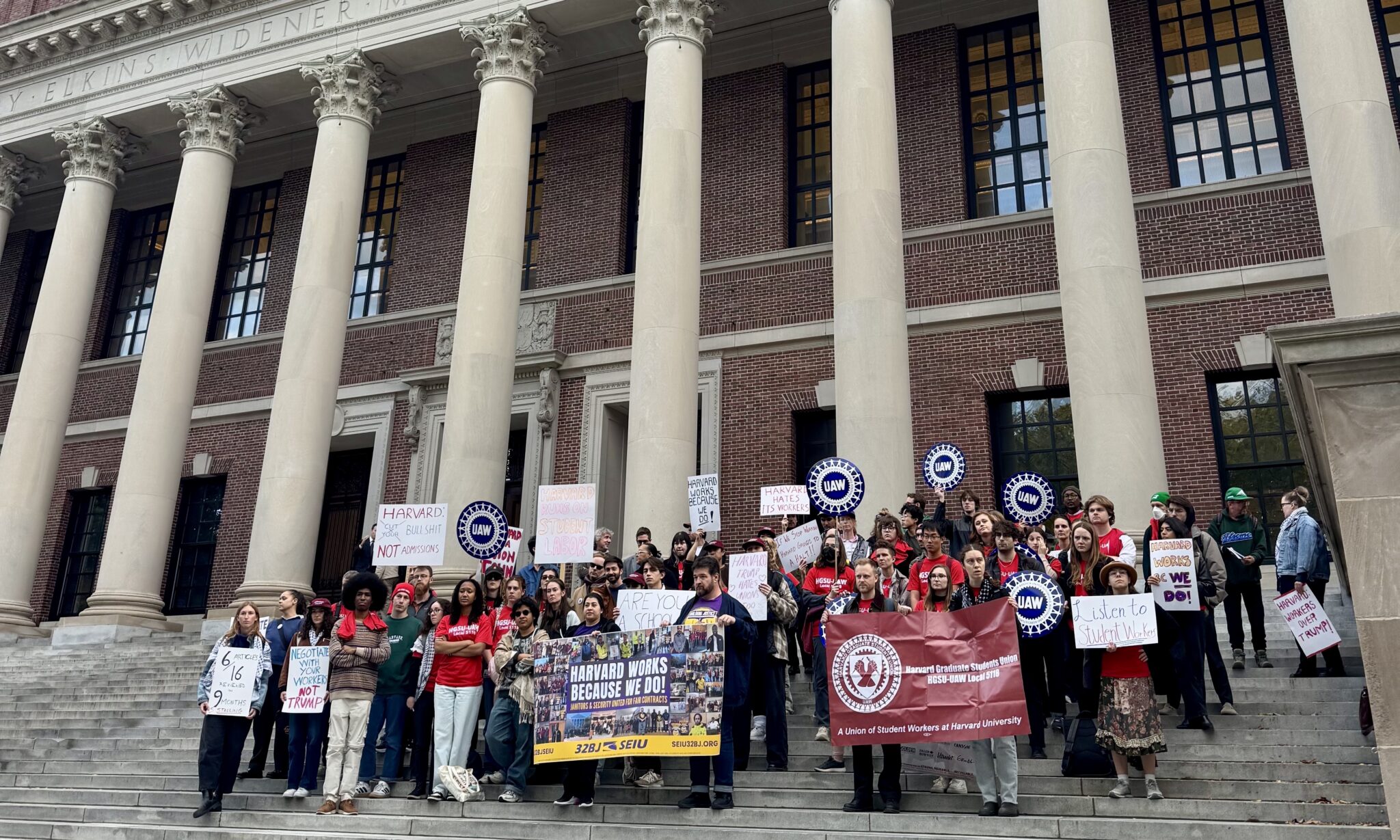
Earlier this week the Harvard Graduate Students Union (HGSU-UAW Local 5118) announced the opening of a strike authorization vote (SAV). The Union has been bargaining with the University since February 2025 but out of 23 articles proposed, only one has reached a tentative agreement. HGSU has four key demands:
First, increased compensation and benefits: PhD students on research salaries currently receive a stipend of $50k, though student workers at peer institutions including MIT, Cornell, Stanford, Princeton, and Yale receive higher pay for their research and teaching than HGSU members. HGSU is asking for a base pay of $55k, raises tied to the rate of inflation over the duration of our contract, and an increase in our benefit funds to cover needed expenses.
Second, expanded protections for non-citizen student workers: Expanded legal and financial support for immigration issues, commitments to non-collaboration with federal immigration enforcement, and paid leave for immigration appointments. HGSU’s proposal for non-citizen worker rights (submitted to the University in June 2025) still has no response
Third, enhanced harassment and discrimination protections: HGSU argues that the University’s process for investigating harassment and discrimination at work makes student workers wait for the University to investigate itself and can be prohibitively expensive. For example, some workers have paid up to $40k for legal representation in a single case. HGSU is fighting to get grievance rights that let workers choose Harvard, independent arbitration, or both to address harassment and discrimination. (This protection is standard across other student worker unions, including MIT, Yale, University of Pennsylvania, and NYU.) The University’s counterproposal on harassment and discrimination protections would weaken existing safeguards.
Lastly, a union security clause: The last two CBAs between HGSU and the University did not contain union security clauses, which means that only dues-paying members have been funding bargaining and contract enforcement since 2019 though all unit eligible student workers benefited from the CBA provisions and the union’s presence. An agency shop would give workers a choice to either join HGSU and pay dues or pay a “fair share” fee, which approximately covers the cost of union representation, bargaining, and contract administration for a single worker. A union security clause is standard in student-worker contracts at MIT, Yale, UPenn, and Cornell, and in Harvard unions representing dining hall workers and janitorial workers/security guards.
Because of little movement in bargaining over the four core concerns discussed above, the HGSU Bargaining Committee has asked members to vote yes on strike authorization. A “yes” vote would authorize the Bargaining Committee to call a strike if needed—it does not mean a strike would automatically happen, nor does it automatically commit members who vote yes to a strike. HGSU has a strike authorization vote FAQ you can read here.


Daily News & Commentary
Start your day with our roundup of the latest labor developments. See all
October 6
Protect College Sports Act dampens athlete unionization outlook; Stanford RA union decides to withdraw petition
October 5
Delaware bans captive audience meetings; EEOC settles remote work national origin discrimination claim; First Circuit stays enforcement order in VA's dispute with AFGE.
October 4
Boston nurses announce open-ended strike; federal judge restores federal prison workers' union protections; St. Louis workers form the first movie theater union in Missouri.
October 2
Gov. Newsom signs bill regulating AI in workplace; federal judge blocks Trump's $100,000 H-1B visa fee.
October 1
Senate confirms Keith Sonderling as Labor Secretary; Amazon warehouse workers launch an unfair labor practice strike.
September 30
Harvard grad union wins in First Circuit; AI data trainers initiate misclassification suits; Trader Joe’s found liable under ERISA.