
Lolita De Palma is a student at Harvard Law School.
The labor market is in good shape. Employers added 225,000 jobs in January. A New York Times article delves into the experience of black workers, whose wages are finally rising after a year of stagnation. While the unemployment rate for black workers over the past year has been the lowest recorded, established structural barriers remain. The unemployment rate for black Americans is still more than double that of whites and that figure does not even factor in the higher rates of incarceration for black Americans. The article tells the story of Mr. Mitchell who recently secured a $38,000-a-year position at JEVS Human Services in Philadelphia after a long string of odd jobs. While Mr. Mitchell has worked hard to gain certifications that will further his career, he is concerned that his lack of a college degree will put him at a disadvantage if there is another economic downturn.
In his State of the Union address, President Trump touted his administration’s economic policies as responsible for the recent increases in the wages for low-income workers. USA Today critiques the President’s statements by pointing out that minimum wage increases in the states have also played a significant role in rising wages.
The National Labor Relations Board has filed a complaint in a federal district court in Portland challenging an Oregon law that prohibits employers from disciplining workers who refuse to attend mandatory meetings on politics, religious matters, or unions. The complaint argues that Oregon’s law conflicts with Congress’ intent under the National Labor Relations Act not to regulate non-coercive employer speech about unions. The Oregon law was previously challenged when it went into effect in 2010, but the judge held that the challenge was not ripe for review until an employer actually disciplined or threatened to discipline an employee in violation of the state law.
In an unrelated case, the National Labor Relations Board found that it has jurisdiction to hear an unfair labor practice charge filed against the conservative online magazine The Federalist for its publisher’s tweet threatening to send workers “back to the salt mine” if they unionize. While the magazine argued that the Board did not have jurisdiction because the initial unfair labor practice charge was filed by a member of the public with no relationship to the publication, Supreme Court precedent has established than any person can file an initial charge with the agency.
New Jersey’s union membership has remained strong despite the loss of manufacturing jobs in the state. Public-sector and private construction unions are popular in New Jersey and construction jobs have been on the rise over the past decade. Total union membership in New Jersey has averaged about 16% over the past 10 years while it has declined from 12.4% to 10.4% in the United States as a whole.
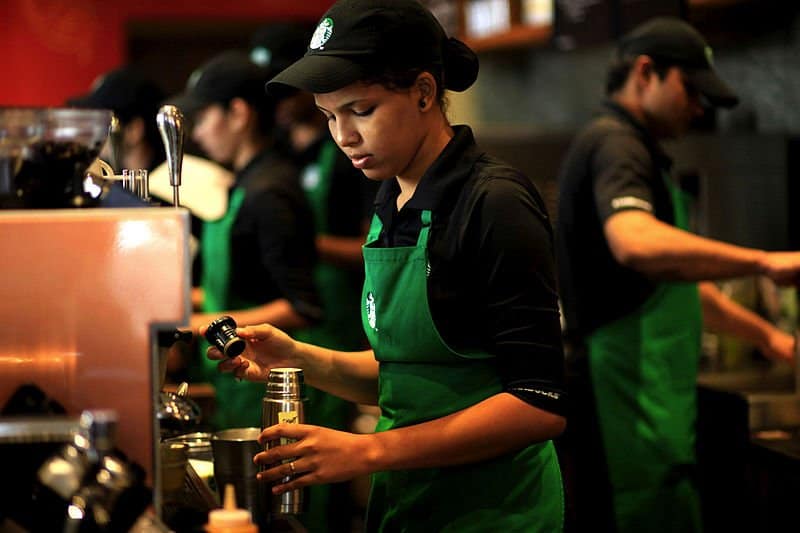
Business Insider highlights income inequality in America by calculating how many hours it takes America’s top CEOs to make what their workers earn in one year. Starbucks CEO Kevin Johnson is first on their list. It takes Mr. Johnson only five hours and 14 minutes to earn what a typical Starbucks employee earns in a year.
Coverage of the PROAct continues with a Salon article criticizing the bill for not including a provision that allows for employees to organize through card check instead of requiring an election.




Daily News & Commentary
Start your day with our roundup of the latest labor developments. See all
July 31
Legislators move to end mandatory arbitration in employment contracts; NYC tip laws result in greater pay for delivery workers; women's college basketball players seek to unionize.
July 30
Supreme Court denies Cemex's bid to pause bargaining order; employers remain exposed to Title VII suits over English-only rules; Texas judge declines to enjoin NLRB proceeding despite unconstitutional removal protections.
July 29
NYC public defender strikes spread to the Bronx; NLRB drops challenge to New York labor law after Amazon wins its case; new data shows appointments of women and minorities to S&P 500 boards at lowest level in a decade.
July 28
DOJ drops charges against SEIU California president; Massachusetts nurses file ULP against hospital; Democratic lawmakers look to remove damage caps in employment discrimination cases
July 27
NY Port Authority proceeds to trial on PUMP Act case; First Circuit denies stay in order vacating H-1B visa fee; DC Circuit panel denies First Amendment claim over disclosure of confidential emails in allegation of prison's COVID-19 mismanagement.
July 24
EEOC drops request for UPenn's Jewish staff; Starbucks defeats mail-in ballots; and Mamdani appoints Lina Khan.