
Mackenzie Bouverat is a student at Harvard Law School.
On January 29th, the House Majority leader indicated that the House would this week consider the Protecting the Right to Organize Act. While the bill passed the labor committee in September 2019, it was put on hold until early January, when House leaders received a letter signed by seventy-six House Democrats, urging them to bring the bill up for a vote.
The PROAct amends the National Labor Relations Act (NLRA), the Labor Management Relations Act, 1947 (LMRA), and the Labor-Management Reporting and Disclosure Act of 1959 (LMRDA). Whereas the proposed amendments to the NLRA substantially expand the rights of private sector workers to organize, the amendments to the LMRA and LMRDA largely seek to bring the provisions of those acts into alignment with the proposed amendments to the NLRA.
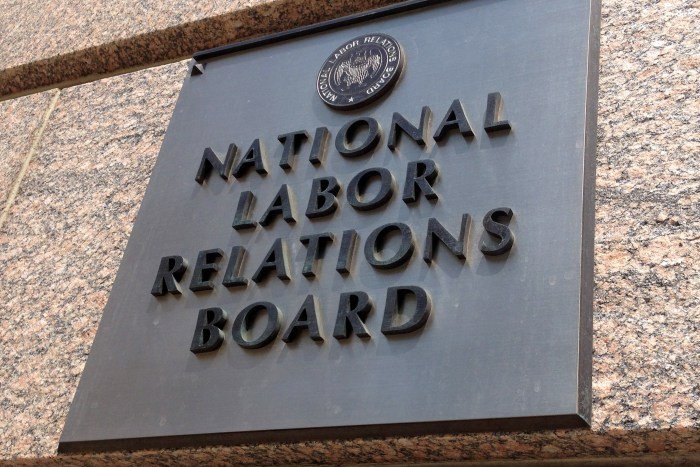
One of the PROAct’s primary aims is to address the lack of deterrence for unfair labor practices. To this end, the PROA authorizes the National Labor Relations Board (NLRB) to assess punitive damages against employers who wrongfully terminate employees. Under the current provisions of the NLRA, wrongfully terminated employees are entitled only to back pay. Further, the PROAct authorizes the imposition of liability on corporate officers or directors who participate in violations of workers rights, or fail to prevent violations of which they were aware.
Under current labor law, workers may turn only to the NLRB General Counsel to enforce their NLRA rights. The proposed bill authorizes a person who is harmed by labor law violations or unfair labor practices to bring a civil action against their employer, as an individual or as part of a class action lawsuit. The PROAct also seeks to rectify the notoriously long wait times for NLRA action against employers who violate labor rights by requiring the NLRB to issue an immediate injunction to reinstate a wrongfully terminated employee while their case is pending. Finally, the PROA empowers the NLRB to enforce its own rulings, in lieu of its current dependence on judicial enforcement by the Court of Appeals.
The bill presently has 218 sponsors–just enough votes to ensure its passage in the House–but commentators expect it will be “dead on arrival” in the Republican Senate. Nevertheless, the Act signals the direction the Democrats might take should they regain control of the Senate.





Daily News & Commentary
Start your day with our roundup of the latest labor developments. See all
October 16
Department of Labor reduces wage-and-hour enforcement at unionized workplaces; Fain's victory poses question of federal monitor's extension.
October 15
New reporting examines the rollback of child labor protections; California tries to block a strike; NLRB charges Wisconsin mental health provider with firing workers during union drive.
October 14
Eleventh Circuit overturns ERISA exhaustion rule; DHS finalizes removal of automatic renewal for work permits; AFGE challenges SSA over flexible scheduling policy.
October 13
Chicago hotel workers remain on strike; a coalition of Democratic states sues the Labor Department over canceled unemployment insurance grants; the Federal Labor Relations Authority establishes a new mediation framework for federal worker disputes.
October 12
Workers at the Obama Foundation begin organizing; MLB submits its latest collective bargaining agreement proposal; Brigham & Women's nurses postpone strike.
October 11
UAW President Shawn Fain succeeds in his reelection bid, and Spanish unions call for a general strike.