
Liana Wang is a student at Harvard Law School.
In today’s news and commentary, the American Postal Workers Union ratifies a new contract, a federal judge bars ICE agents from racial profiling in its Los Angeles raids, and the fight over the dismantling of NIOSH continues.
On Thursday, the American Postal Worker Union, AFL-CIO ratified a new three-year labor contract with the U.S. Postal Service, with 95% of voters choosing ratification. The agreement, which runs through September 2027, includes general wage increases and cost-of-living adjustments, protections against layoffs, and other measures designed to increase worker retention. APWU represents over 190,000 workers, including administrative employees, clerks, drivers, and custodians. The APWU contract comes after the National Association of Letter Carriers reached a final arbitration award that set the terms of its collective bargaining agreement in March, and after the National Rural Letter Carriers’ Association ratified its agreement with USPS in June.
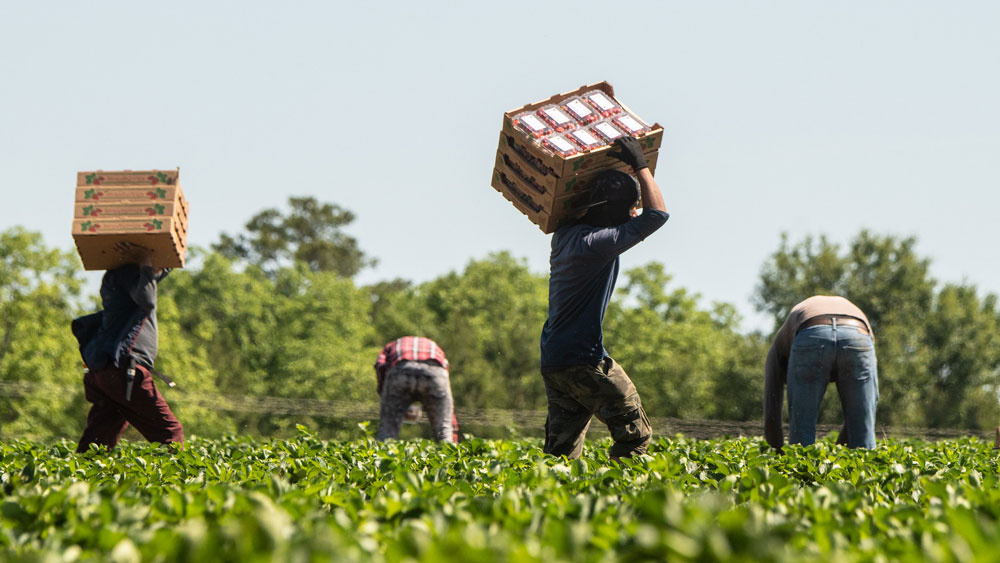
Meanwhile, in Los Angeles, U.S. District Judge Maame Ewusi-Mensah Frimpong granted a TRO against ICE agents from “conducting roving patrols without reasonable suspicion and denying access to lawyers.” The complaint in the case, Vazquez Perdomo v. Noem, alleged that ICE agents adopted a “pattern and practice of racial profiling” in raids on day laborer pickup sites, car washes, and farms and agricultural workplaces. Judge Frimpong rejected the government’s arguments that race, speaking English with an accent or speaking Spanish, presence at particular work locations, and engaging in particular kinds of work could constitute reasonable suspicion for a stop. The lawsuit was brought by multiple workers, the Los Angeles Worker Center Network, United Farm Workers, and immigrants’ rights advocates.
Finally, multiple labor unions and states have challenged the Trump administration’s efforts to dismantle the National Institute for Occupational Safety and Health. NIOSH is an agency within the U.S. Department of Health and Human Services that funds and develops research to support workplace safety regulations, including studies aimed to reduce cancer risk in firefighters and study and treat respiratory diseases in miners. NIOSH also evaluates the safety of worksite protective gear and investigates workplace disease outbreaks and health hazards. In March 2025, HHS announced a “dramatic restructuring” of its workforce, and over the course of the next few months, laid off approximately 90% of the agency’s workforce. A lawsuit brought by coal miners and inquiries by members of Congress prompted the reinstatement of a small subset of employees. On July 1, U.S. District Judge Melissa DuBose granted a preliminary injunction in New York v. Kennedy, a case brought by nineteen states and the District of Columbia broadly challenging the restructuring and layoff plans of HHS. The injunction stops HHS from “finalizing…employee terminations,” but does not reinstate already fired workers. Meanwhile, in National Nurses United et al. v. Kennedy, multiple unions continue to move forward with their own challenge specifically focused on the dismantling of NIOSH. Absent the support of NIOSH research and expertise, worker advocates fear that OSHA’s workplace safety enforcement will deteriorate. Already, the loss of NIOSH research leaves OSHA’s proposed heat stress regulations vulnerable to attack.





Daily News & Commentary
Start your day with our roundup of the latest labor developments. See all
October 16
Department of Labor reduces wage-and-hour enforcement at unionized workplaces; Fain's victory poses question of federal monitor's extension.
October 15
New reporting examines the rollback of child labor protections; California tries to block a strike; NLRB charges Wisconsin mental health provider with firing workers during union drive.
October 14
Eleventh Circuit overturns ERISA exhaustion rule; DHS finalizes removal of automatic renewal for work permits; AFGE challenges SSA over flexible scheduling policy.
October 13
Chicago hotel workers remain on strike; a coalition of Democratic states sues the Labor Department over canceled unemployment insurance grants; the Federal Labor Relations Authority establishes a new mediation framework for federal worker disputes.
October 12
Workers at the Obama Foundation begin organizing; MLB submits its latest collective bargaining agreement proposal; Brigham & Women's nurses postpone strike.
October 11
UAW President Shawn Fain succeeds in his reelection bid, and Spanish unions call for a general strike.