
Finlay Adamson is a student at Harvard Law School.
In today’s news and commentary, new documents show that federal surveillance operations targeted Minnesota labor unions during the ICE surge, and the Equal Employment Opportunity Commission denies halting federal class discrimination complaints.
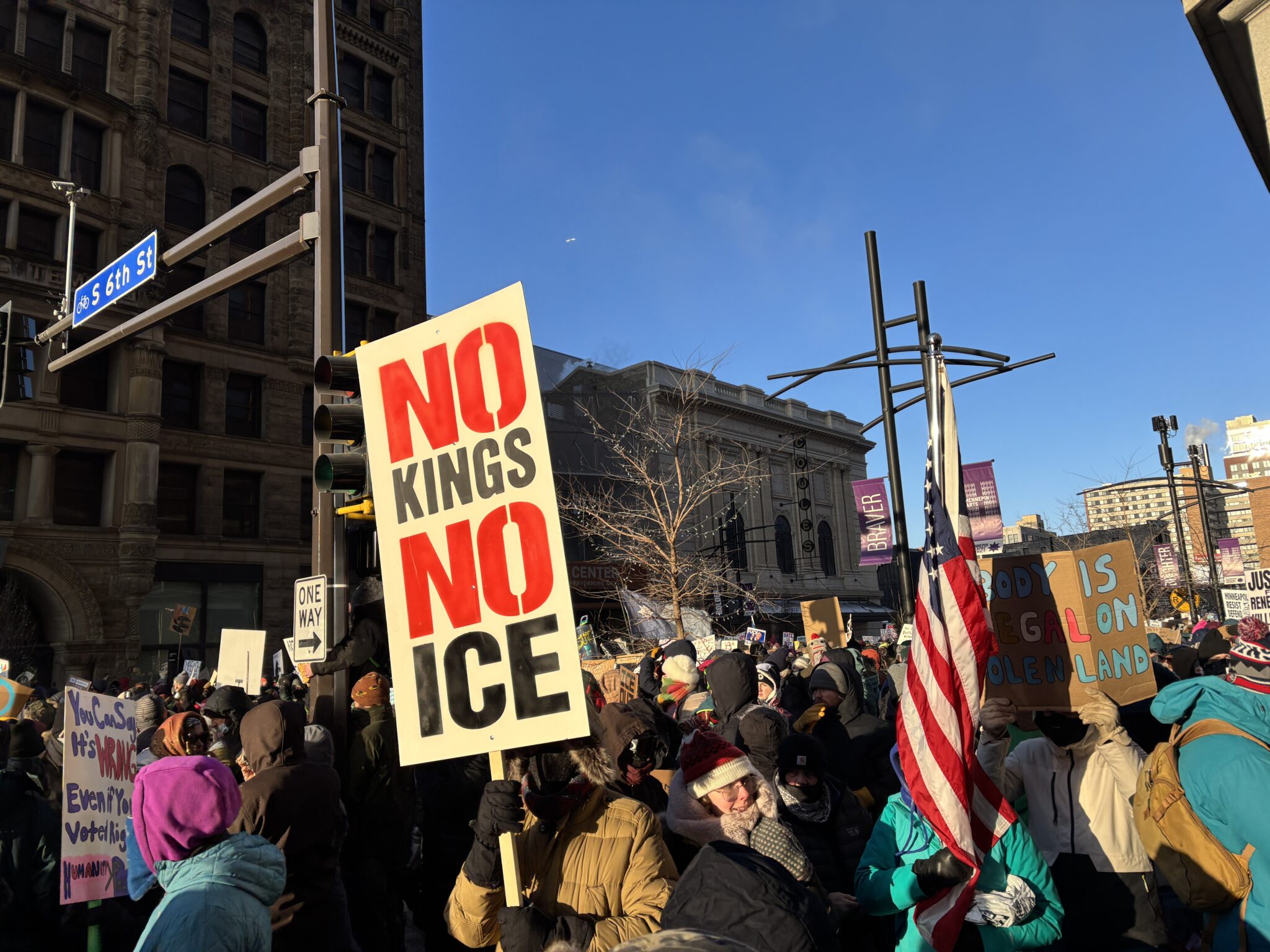
Newly released government documents show that the Department of Homeland Security (DHS) launched a widespread undercover surveillance operation against Minnesota labor unions and other progressive organizations earlier this year. Disclosed as part of an ongoing federal lawsuit against 15 protesters accused of interfering with the Minnesota ICE surge, the documents detail operations “Puppet Master” and “Whipple Shield.” These operations involved federal agents infiltrating meetings, group chats, and public gatherings associated with Direct Action Minnesota (DAMN), a broad coalition of organizations including the Minnesota Association of Professional Employees, the Minneapolis Association of Educators Local 59, the Minnesota AFL-CIO, SEIU Local 26, and other workers’ rights groups. As one of the defendant’s motion for discovery observes, the majority of the government’s surveillance focused on preparation for conduct protected by the First Amendment. Additionally, the government used administrative subpoenas to obtain years of financial records from the Communications Workers of America and Service Employees International Union to supposedly investigate “domestic terrorist financing.” The motion asks the court to compel the government to release “all reports related to surveillance of Minnesota unions, non-profit organizations, protesters and activists.”
Earlier this week, the Equal Employment Opportunity Commission (EEOC) claimed that it has not suspended its proceedings for federal class discrimination complaints. This assertion comes as part of an ongoing lawsuit, discussed by Lara earlier this week, arguing that the EEOC Chair issued a directive in December ordering administrative judges to halt proceedings for ongoing class-action discrimination complaints brought by federal workers. The EEOC now claims that this suspension never occurred and was an “isolated incident” caused by an erring administrative judge. The agency asserted this rationale in communications to the plaintiffs in the lawsuit, asking them to drop their motion for a preliminary injunction against the directive. However, plaintiffs’ counsel has refused to do so on the grounds that a number of class discrimination complaints were stayed during this period, indicating a larger policy of suspension.





Daily News & Commentary
Start your day with our roundup of the latest labor developments. See all
October 16
Department of Labor reduces wage-and-hour enforcement at unionized workplaces; Fain's victory poses question of federal monitor's extension.
October 15
New reporting examines the rollback of child labor protections; California tries to block a strike; NLRB charges Wisconsin mental health provider with firing workers during union drive.
October 14
Eleventh Circuit overturns ERISA exhaustion rule; DHS finalizes removal of automatic renewal for work permits; AFGE challenges SSA over flexible scheduling policy.
October 13
Chicago hotel workers remain on strike; a coalition of Democratic states sues the Labor Department over canceled unemployment insurance grants; the Federal Labor Relations Authority establishes a new mediation framework for federal worker disputes.
October 12
Workers at the Obama Foundation begin organizing; MLB submits its latest collective bargaining agreement proposal; Brigham & Women's nurses postpone strike.
October 11
UAW President Shawn Fain succeeds in his reelection bid, and Spanish unions call for a general strike.