
Miriam Li is a student at Harvard Law School and a member of the Labor and Employment Lab.
In today’s news and commentary, the Department of Labor announces new guidance around Occupational Safety and Health Administration penalty and debt collection procedures, a Cornell University graduate student challenges graduate student employee-status under the National Labor Relations Act, and the Supreme Court clears the way for the Trump administration to move forward with a significant staff reduction at the Department of Education.
On Monday, the Department of Labor announced new guidance around Occupational Safety and Health Administration (OSHA) penalty and debt collection procedures. Under the updated policy, employers with 25 or fewer employees can receive a 70% reduction in fines, and companies that immediately address identified workplace hazards are eligible for a 15% reduction in fines. Employers without prior OSHA violations and who haven’t undergone OSHA or state-plan inspections within the last five years are also eligible for a 20% reduction in fines. The changes, effective immediately, apply to all open investigations without yet-issued penalties, but not to penalties issued before July 14. While penalties issued before July 14 will not be eligible for reductions under the new policy, open investigations will be covered.
Meanwhile, a Cornell University graduate student has launched a challenge to the NLRB’s Obama-era Columbia decision, which granted organizing rights to student workers at private universities. Doctoral student Russell Burgett, backed by the anti-union National Right to Work Legal Defense Foundation, filed charges with the NLRB alleging that Cornell’s labor agreement unlawfully requires him to support or join the graduate student union. Central to Burgett’s case is his claim that, contrary to the 2016 Columbia precedent, graduate students are not employees under the National Labor Relations Act. Mark Meinster of United Electrical Workers, the parent union of Cornell Graduate Students United, warned that overturning the precedent would be “incredibly destabilizing,” noting that this effort is “in line with other far-right attacks on higher education.” Notably, this case arrives as the Senate prepares for hearings on Crystal Carey, President Trump’s nominee for NLRB General Counsel. If confirmed, Carey is expected to challenge several pro-union precedents, including the Columbia decision.
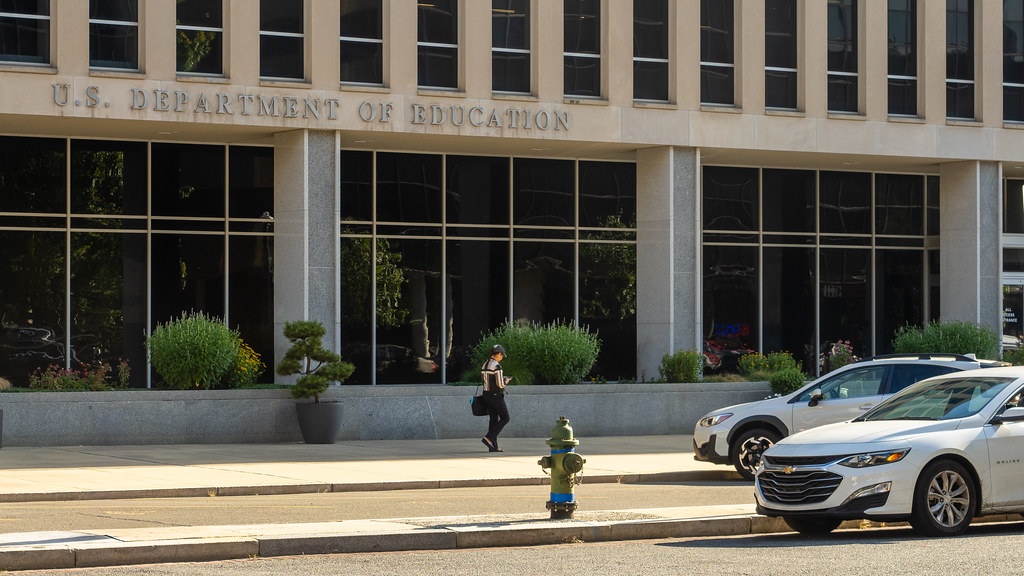
Finally, on Monday, the Supreme Court cleared the way for the Trump administration to move forward with a significant reduction in staff at the Department of Education. The administration plans to lay off more than 1,300 employees—approximately half of the department’s workforce—following a March executive order from President Trump, which directed Education Secretary Linda McMahon to begin dismantling the agency. The Education Department, established nearly 50 years ago by Congress, oversees student loan programs, tracks academic performance nationwide, and enforces civil rights protections in schools. In an unsigned emergency order, the Court allowed the layoffs to resume, overturning a lower court’s decision that temporarily blocked the terminations. In a dissent joined by Justices Elena Kagan and Ketanji Brown Jackson, Justice Sonia Sotomayor argued that Trump’s actions represented “unilateral efforts to eliminate a cabinet-level agency established by Congress.” Sotomayor warned that the decision would cause “untold harm,” impeding the department’s ability to protect students from discrimination, sexual assault, and other civil rights violations. Trump called the decision “a Major Victory to Parents and Students across the Country,” while Education Secretary McMahon described the layoffs as necessary to “promote efficiency and accountability,” adding that the move would “return education to the states” and reduce bureaucracy. The Supreme Court’s order is temporary, pending ongoing litigation over the legality of dismantling a federal agency without congressional approval. The legal battle began shortly after Trump’s March executive order, when school districts, the American Federation of Teachers, and 21 Democratic state attorneys general sued, successfully arguing in a lower court that only Congress had the authority to eliminate the department. The case will continue to work its way through the courts, but the layoffs are allowed to proceed in the interim.





Daily News & Commentary
Start your day with our roundup of the latest labor developments. See all
October 13
Chicago hotel workers remain on strike; a coalition of Democratic states sues the Labor Department over canceled unemployment insurance grants; the Federal Labor Relations Authority establishes a new mediation framework for federal worker disputes.
October 12
Workers at the Obama Foundation begin organizing; MLB submits its latest collective bargaining agreement proposal; Brigham & Women's nurses postpone strike.
October 11
UAW President Shawn Fain succeeds in his reelection bid, and Spanish unions call for a general strike.
October 9
DHS proposes a $100k fee for the foreign grad employment program; Trump suspends tech company access to green card program; and private equity perpetuates poor working conditions for home care workers.
October 8
NLRB judge finds UPS unlawfully restricted union insignia; Harvard graduate workers authorize second strike; OSHA orders Union Pacific to pay $300,000 in damages in whistleblower case.
October 7
DOL scraps plan to remove decades-old wage-and-hour guidance from federal regulations; New York enacts personnel records access law; Starbucks loses bid to dismiss Workers United trademark suit.