
Mila Rostain is a student at Harvard Law School and the Digital Director of OnLabor.
In today’s News and Commentary, Senate Democrats introduce a companion bill to nullify Trump’s executive orders ending collective bargaining rights for federal employees, the Massachusetts Teachers Association faces backlash after calling on school districts to respect union contracts following the killing of Charlie Kirk, and Loyola Marymount University claims a religious exemption and stops recognizing their faculty union after ten months of bargaining.
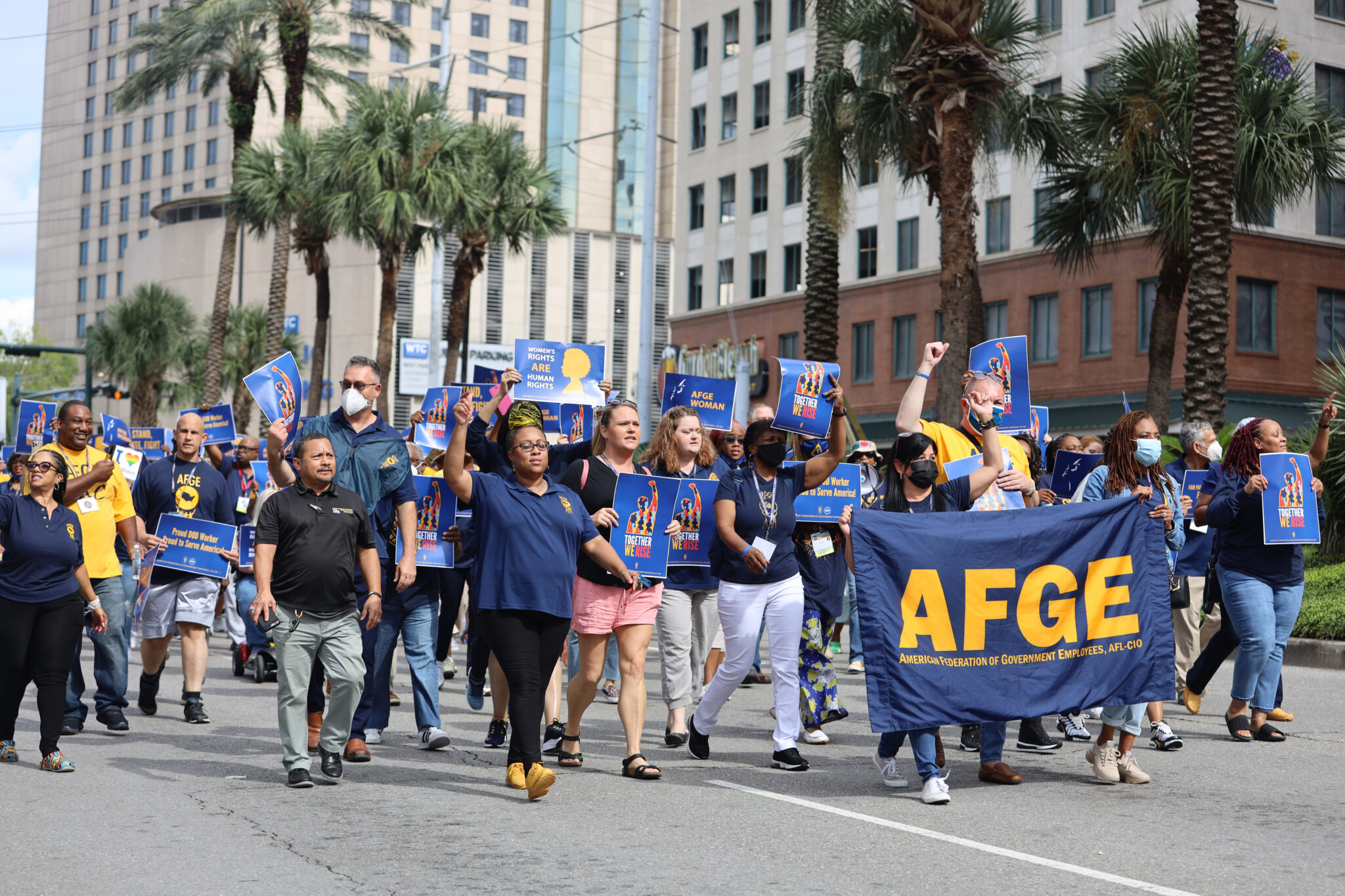
Yesterday, Senate Democrats introduced a bill that would nullify President Trump’s executive orders ending collective bargaining rights for federal employees. The House is already considering that proposal, which was introduced in April. The House version of the Protect America’s Workforce Act is two signatures away on a discharge petition to force a floor debate. In the Senate, 48 senators introduced the Protect America’s Workforce Act. Everett Kelley, president of AFGE, praised the senators and stated that the executive order “represents the single most aggressive action taken by the federal government against organized labor in U.S. history, dwarfing any previous action against public or private sector working Americans.”
On Tuesday, the Massachusetts Teachers Association (“MTA”) called on local school districts to refrain from taking “actions that would validate accusations by extremists against educators,” following the death of Charlie Kirk. Since last week, school officials have placed at least five school employees on leave who allegedly posted about Kirk online. Following MTA’s statement, state Republicans criticized the union’s position. In response to Republican pushback, union leadership reiterated its commitment to the safety and support of MTA members.
Last week, Loyola Marymount University (“LMU”) announced it will no longer recognize its faculty union and will stop bargaining. As reported in Inside Higher Ed, LMU is claiming a religious exemption with the NLRB. In explaining the decision, LMU cited financial concerns and argued that claiming the exemption would preserve autonomy while continuing to bargain would “jeopardize the university’s near-term viability and long-term sustainability.” Rather than continue bargaining, LMU implemented a series of unilateral changes. Professor William Herbert noted that schools claiming the religious exemption typically do so when a union files a representative petition, not a year later during the bargaining process. The union, which won recognition in 2024 and had been bargaining for the past ten months, filed an unfair labor practice charge in response with the NLRB.



Daily News & Commentary
Start your day with our roundup of the latest labor developments. See all
October 23
Employers increasingly shift health care costs onto workers and NYC proposes placing restrictions on fully automated customer service.
October 22
SCOTUS declines Wilcox appeal; Penn State research assistants win bargaining rights; SEIU sued over military leave firing.
October 21
DOL withdraws tipped-worker rule; Instacart settles hiring-bias claims; Phillips 66 locks out New Jersey refinery workers.
October 20
Korean unions oppose labor exemption bill; Portland city workers prepare for strike; UPenn grad student union looks to dismiss university filing
October 19
FDA reverses course on policy prohibiting off-duty union activity; FAA and NATCA reach deal to secure pay increase for air traffic controllers.
October 18
Federal judge again halts cancellation of the Bureau of Prisons’ CBA; tabletop gaming workers face roadblocks in union recognition.