
Anthony Chen is a student at Harvard Law School.
In today’s news and commentary, the California legislature passes a bill banning AI workplace surveillance of workers’ emotional states, the Labor Department repeals decades-old farmworker protection rules, and the Sixth Circuit upholds a $1.4 million verdict for farmworkers.
California’s legislature passed AB 1883, sending to Governor Gavin Newsom a bill that would prohibit employers from using AI-powered workplace surveillance tools to infer workers’ emotional states or collect their neural data. The bill defines neural data as information generated by measuring the activity of a worker’s central or peripheral nervous system, excluding inferences drawn from non-neural signals like keystroke pace or heart rate, and has a broad safety exception allowing such tools where used to ensure workplace safety. Violators would face civil penalties of up to $500 per violation, with enforcement by the state labor commissioner and a private right of action for affected workers. The bill is part of a broader wave of California AI employment legislation this session, including bills that would require employers to notify workers of mass layoffs caused by AI and bar employers from relying solely on automated systems for disciplinary or termination decisions. While Governor Newsom vetoed a broader AI personnel bill in 2025, AB 1883 is more narrow, targeting two specific capabilities rather than AI’s role in employment decisions broadly.
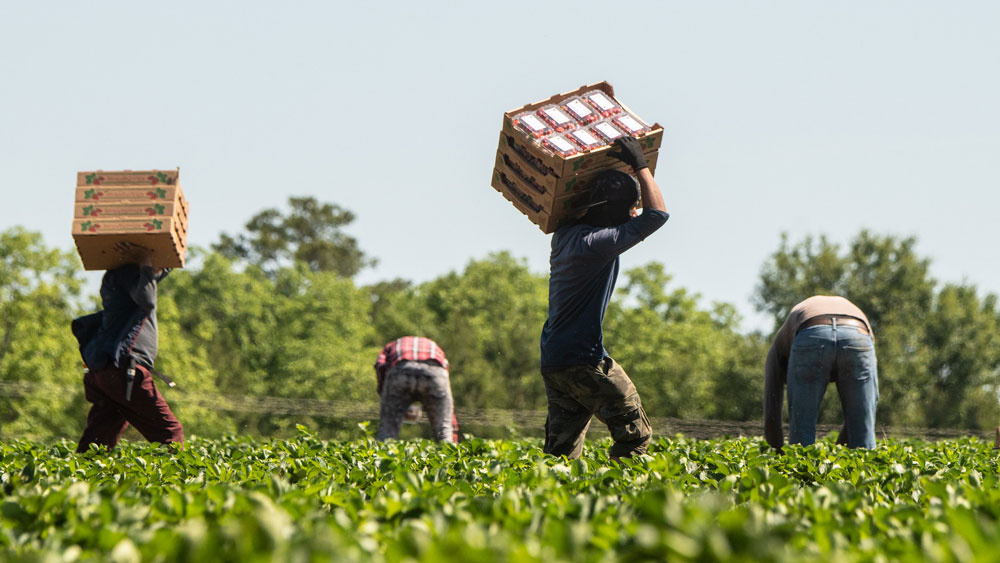
Next, the Labor Department repealed a 1980 regulation that required the Wage and Hour Division, OSHA, and the Employment and Training Administration to coordinate enforcement efforts to protect migrant and seasonal farmworkers, calling the rule “obsolete” and no longer reflective of the agency’s current operations. The regulation had required DOL to maintain national and regional farm labor coordinated enforcement committees and designate farm labor specialists. The Farm Labor Organizing Committee sued DOL in March 2024 for failing to comply with the rule. The rescission takes effect 30 days after publication.
Finally, the Sixth Circuit upheld a $1.4 million jury verdict against Purpose Point Harvesting, a Michigan farm labor contractor found liable for trafficking, wage, and labor violations against five Guatemalan H-2A farmworkers. The workers alleged that between 2017 and 2019, Purpose Point charged illegal recruitment fees, confiscated their passports, threatened them with deportation for complaining, and forced them to work up to 19 hours a day, while paying them for only 60 hours of 100-hour weeks. The Sixth Circuit rejected the company’s argument that the punitive damages award violated due process, finding ample evidence of reprehensible conduct. “[D]efendants charged illegal recruitment fees, restricted plaintiffs’ movement, destroyed records, confiscated passports, limited visitors, and repeatedly threatened plaintiffs with deportation,” wrote Judge Richard Allen Griffin. The case was brought under the Trafficking Victims Protection Reauthorization Act, the Fair Labor Standards Act, and Michigan state law.



Daily News & Commentary
Start your day with our roundup of the latest labor developments. See all
October 12
Workers at the Obama Foundation begin organizing; MLB submits its latest collective bargaining agreement proposal; Brigham & Women's nurses postpone strike.
October 11
UAW President Shawn Fain succeeds in his reelection bid, and Spanish unions call for a general strike.
October 9
DHS proposes a $100k fee for the foreign grad employment program; Trump suspends tech company access to green card program; and private equity perpetuates poor working conditions for home care workers.
October 8
NLRB judge finds UPS unlawfully restricted union insignia; Harvard graduate workers authorize second strike; OSHA orders Union Pacific to pay $300,000 in damages in whistleblower case.
October 7
DOL scraps plan to remove decades-old wage-and-hour guidance from federal regulations; New York enacts personnel records access law; Starbucks loses bid to dismiss Workers United trademark suit.
October 6
Protect College Sports Act dampens athlete unionization outlook; Stanford RA union decides to withdraw petition