
Meredith Gudesblatt is a student at Harvard Law School and a member of the Labor and Employment Lab.
In Today’s News and Commentary, the Third Circuit denies DOL’s request for a rehearing en banc about its ability to impose civil penalties for violations of the H-2A program, the Attorney General of Washington is proposing legislation to protect immigrant workers, and labor unions file a lawsuit to block social media surveillance of non-citizens.
On Wednesday, the Third Circuit denied DOL’s request for an en banc rehearing in Sun Valley Orchards, LLC v. United States Dep’t of Labor. Earlier this week, Paneez wrote about how Sun Valley imperils DOL’s ability to vindicate the rights of H-2A workers. There, a New Jersey farm that participated in the H-2A visa program—but has since ended operations—was found liable for over $500,000 in civil penalties for violating obligations under the Immigration and Nationality Act regarding no-cost housing, kitchen access, transportation, and employment. Sun Valley challenged DOL’s ability to impose civil penalties via an administrative process, arguing that DOL denied it a fair trial under Article III of the Constitution. Sun Valley argued that it was entitled to a jury trial in an Article III court because the case involved breach of an employment. The Third Circuit agreed, ruling that DOL could not impose fines in administrative proceedings because the breach of contract case affected Sun Valley’s private rights. The Third Circuit did not provide a reason for its denial of the request.
In advance of Washington’s next sixty-day legislative session beginning in January, Attorney General Nick Brown has proposed the Immigrant Worker Protection Act. This legislation would require employers to inform employees within 72 hours of being notified by U.S. Immigration and Customs Enforcement (ICE) of any plan to inspect employment eligibility paperwork. Unannounced workplace raids are often proceeded by an announced I-9 inspection. Although ICE could still conduct workplace raids, this legislation would increase transparency for workers and afford them an opportunity to get their documents in order, speak to an attorney, or implement a safety plan with their family as needed. Similar legislation already exists in states such as California, Oregon, and Illinois.
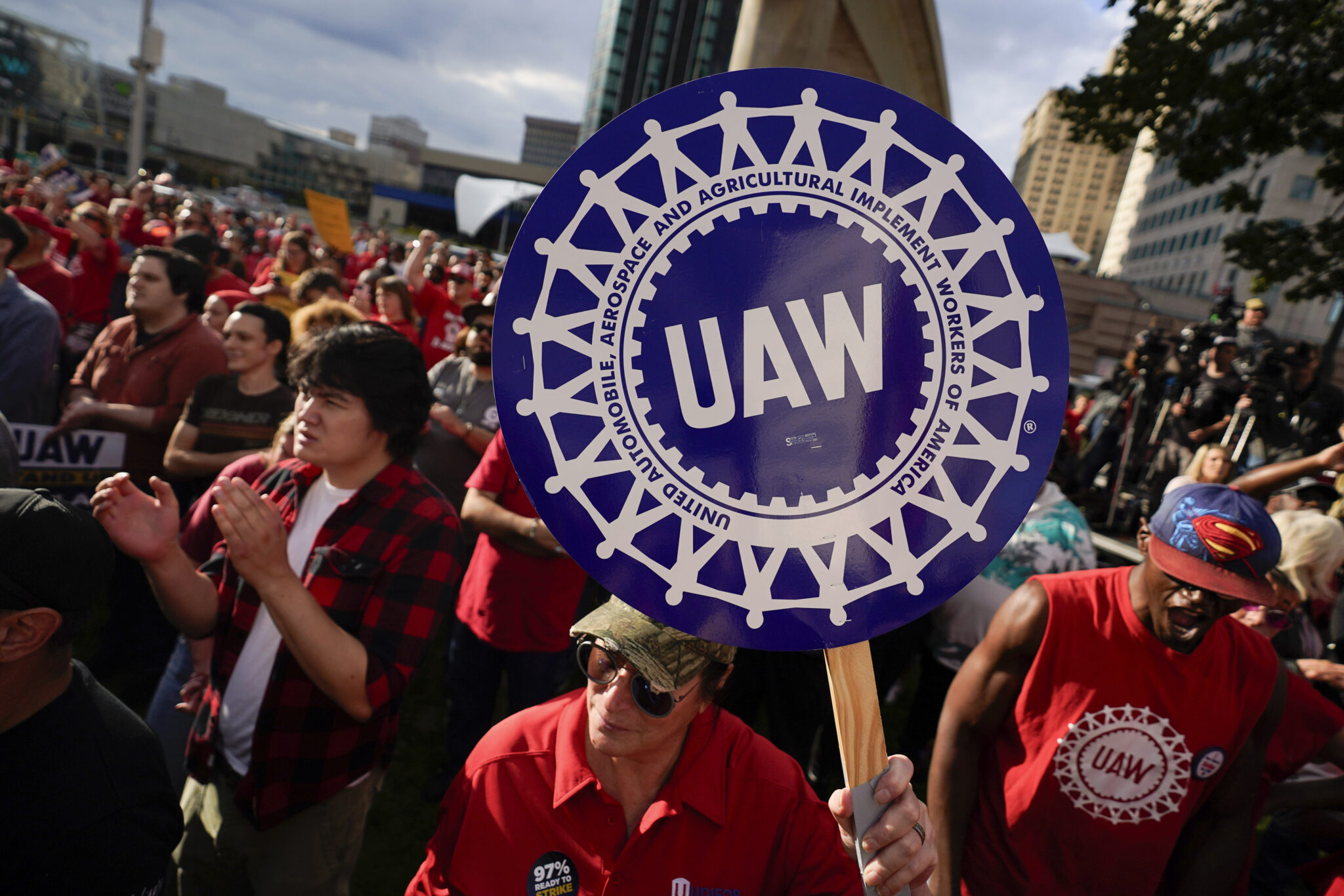
And lastly, UAW, the American Federation of Teachers, and the Communication Workers of America filed suit yesterday in the Southern District of New York to enjoin a government surveillance program targeting noncitizens who express views the government disfavors. The case is captioned UAW v. Dep’t of State, No. 1:25-cv-08566. The suit alleges the government has developed a vast surveillance apparatus “to undertake viewpoint-based surveillance of expressive activity documented online of every visa holder in the United States and other noncitizens, with a particular focus on visa holders and Legal Permanent Residents with campus affiliations.” As a consequence, members of UAW, CWA, and AFT have restricted their online and in-person speech and expressive activity, including in their interactions with the unions. Many members have opted not to join the unions in order to avoid negative immigration consequences. One UAW member reported leaving a leadership role, and another declined even to contact their union representatives about wage theft claims due to fears of further surveillance. UAW also reported that some of its supporters recently declined to vote in an NLRB-conducted election for fear of being surveilled.



Daily News & Commentary
Start your day with our roundup of the latest labor developments. See all
October 13
Chicago hotel workers remain on strike; a coalition of Democratic states sues the Labor Department over canceled unemployment insurance grants; the Federal Labor Relations Authority establishes a new mediation framework for federal worker disputes.
October 12
Workers at the Obama Foundation begin organizing; MLB submits its latest collective bargaining agreement proposal; Brigham & Women's nurses postpone strike.
October 11
UAW President Shawn Fain succeeds in his reelection bid, and Spanish unions call for a general strike.
October 9
DHS proposes a $100k fee for the foreign grad employment program; Trump suspends tech company access to green card program; and private equity perpetuates poor working conditions for home care workers.
October 8
NLRB judge finds UPS unlawfully restricted union insignia; Harvard graduate workers authorize second strike; OSHA orders Union Pacific to pay $300,000 in damages in whistleblower case.
October 7
DOL scraps plan to remove decades-old wage-and-hour guidance from federal regulations; New York enacts personnel records access law; Starbucks loses bid to dismiss Workers United trademark suit.