
Meredith Gudesblatt is a student at Harvard Law School and a member of the Labor and Employment Lab.
In Today’s News and Commentary, meatpacking workers go on strike at JBS USA facility in Colorado; SCOTUS to hear arguments on Temporary Protected Status for Haitians and Syrians; and updates regarding the Department of Labor’s ability to impose monetary penalties in adjudicatory proceedings for violations of the H-2A and H-2B programs.
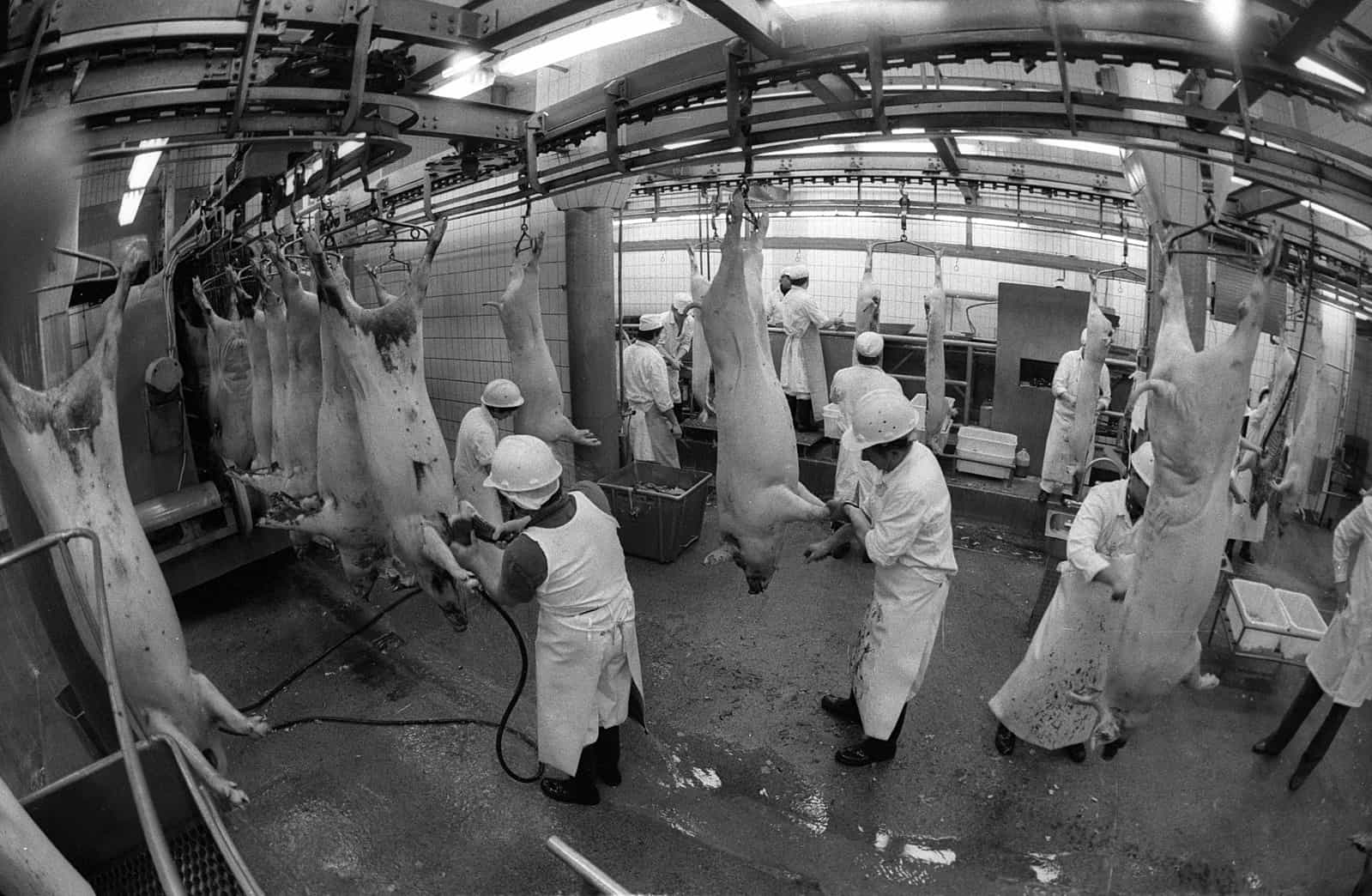
On Monday, 3,800 workers at Colorado’s JBS USA plant commenced the largest strike the industry has faced in over forty years. The workers are demanding the company negotiate fairly, stop wage theft, give raises that let the occupation match the location, ensure stable healthcare costs, and stop unlawful union busting and retaliation. The decision came after 99% of workers—many of whom are recent arrivals from Haiti facing the threat of deportation—represented by United Food and Commercial Workers Local 7 voted to authorize an unfair labor practice strike after nine months of negotiations over a new contract. The plant workers first unionized approximately thirty years ago, and the is the first strike action ever carried out at the plant. Workers have long accused JBS, the world’s largest meat processor, of unsafe working conditions. Per the Associated Press, JBS charges workers $1,100 or more for personal protective equipment. There is an ongoing lawsuit against JBS alleging discrimination against Haitian workers at the plant by increasing line speeds on Haitian employees. And a little over a year ago, JBS settled with the Department of Labor after an investigation revealed child labor violations. Recently, the U.S. Department of Agriculture has proposed a rule that would not only allow meat plants for pork and poultry to increase the speed of the kills lines but also end the requirement to publish reports on worker safety. Improving labor conditions for workers in the meatpacking industry via collective bargaining has never been more critical as it is now.
Also on Monday, the Supreme Court announced it will hear oral arguments in April on the Trump administration’s attempts to end Temporary Protected Status for both Haitian and Syrian immigrants. In January, I provided updates on litigation regarding Temporary Protected Status for Haitians, Nepalis, Hondurans, and Nicaraguans. And just last week, AJ wrote about the Trump administration request for Supreme Court intervention in support of its attempt to terminate Temporary Protected Status (TPS) for Haitians immigrants. A similar case relating to 5,600 Syrians was already pending before the Supreme Court. While the Supreme Court granted certiorari before judgment in both the Syria and Haiti Temporary Protected Status cases, it deferred the Trump administration’s stay applications in both cases. Because lower courts ruled against the administration in both cases, the Department of Homeland Security actions remain blocked for now. Steven Vladeck, the Agnes Williams Sesquicentennial Professor of Federal Courts at Georgetown University, has provided a comprehensive yet brief explanation of these critically important cases in his “One First” newsletter.
Finally, cases challenging the Department of Labor’s (DOL) ability to vindicate the rights of migrant workers continue to multiply and percolate up to the Supreme Court. In October, Paneez wrote about the aftermath of Securities and Exchange Commission v. Jarkesy as it relates to the Department of Labor’s authority to fine agricultural employers in in-house agency proceedings for H-2A program violations; in Sun Valley Orchards, LLC v. United States Dep’t of Labor, the Third Circuit was the first to release a decision on this issue, ruling that DOL could not impose fines in administrative proceedings because it essentially involved a breach of contract case that affected Sun Valley’s private rights. In October, the Third Circuit denied DOL’s request for an en banc rehearing. In February, the DOL filed a petition for a writ of certiorari in Sun Valley, and on Monday Sun Valley filed its brief in opposition. Last week, a Kentucky tobacco farm sued the DOL, mirroring the arguments advanced in Sun Valley: “Because the DOL proceeding involves an attempt to force Triple R Farms to pay money to the government, the DOL proceeding implicates private rights (without the express and voluntary consent of Triple R Farms, which it has not given[)] . . . and violates Article III.” And in South Carolina, a district court judge declined to halt administrative proceedings in which the DOL had assessed approximately $880,000 in back wages and penalties against a farm. While the employer filed suit seeking to halt the administrative proceedings, Judge Henricks denied a request for a temporary restraining order and preliminary injunction, citing a D.C. Circuit ruling, Butler Amusements Inc. v. U.S. Dep’t of Labor, that held immigration-related labor enforcement falls within the “public rights” doctrine and may be adjudicated by administrative agencies. Judge Hendricks found Butler’s analysis as more persuasive than that of Sun Valley.





Daily News & Commentary
Start your day with our roundup of the latest labor developments. See all
October 16
Department of Labor reduces wage-and-hour enforcement at unionized workplaces; Fain's victory poses question of federal monitor's extension.
October 15
New reporting examines the rollback of child labor protections; California tries to block a strike; NLRB charges Wisconsin mental health provider with firing workers during union drive.
October 14
Eleventh Circuit overturns ERISA exhaustion rule; DHS finalizes removal of automatic renewal for work permits; AFGE challenges SSA over flexible scheduling policy.
October 13
Chicago hotel workers remain on strike; a coalition of Democratic states sues the Labor Department over canceled unemployment insurance grants; the Federal Labor Relations Authority establishes a new mediation framework for federal worker disputes.
October 12
Workers at the Obama Foundation begin organizing; MLB submits its latest collective bargaining agreement proposal; Brigham & Women's nurses postpone strike.
October 11
UAW President Shawn Fain succeeds in his reelection bid, and Spanish unions call for a general strike.