
Holden Hopkins is a student at Harvard Law School.
In today’s News & Commentary, Disney tests a new free speech theory of defense in employment discrimination cases, University of California workers vote to authorize strike, and an NLRB judge rules that Starbucks illegally excluded union stores from pay cycle changes.
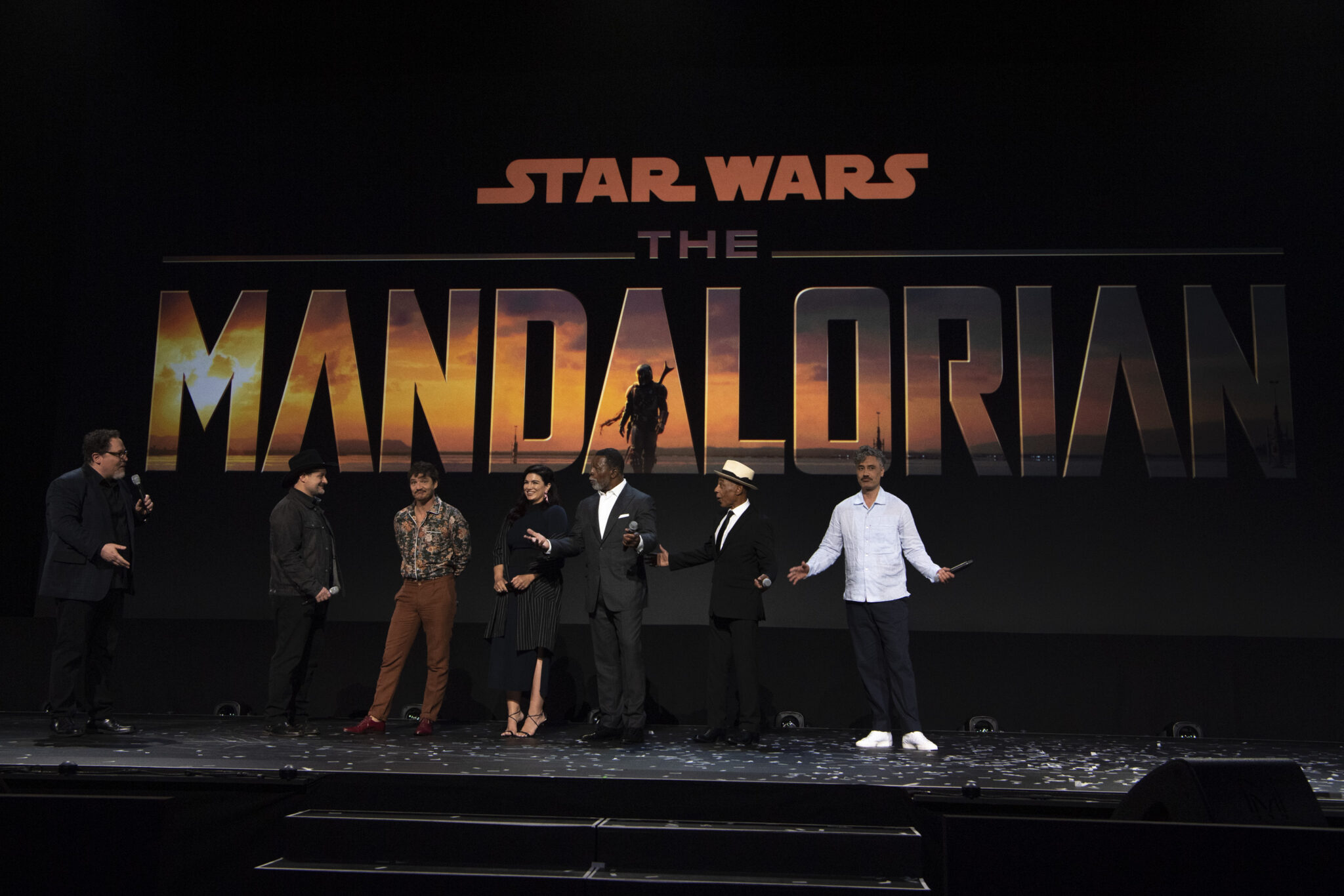
As Gil reported back in February, The Walt Disney Company has been facing an employment discrimination suit from actress Gina Carano who alleges that she was fired from her show “The Mandalorian” for her political views after a series of social media posts the company deemed to be antisemitic and transphobic. Now, Disney is advancing a defense to Carano’s claims—brought under a California statute which aims to protect employee political activity outside of the workplace—arguing that actions such as the termination of Carano are tied to the company’s right to control its brand message.
Michael Selmi, a law professor at Arizona State University with a focus on employment discrimination and civil rights law questioned the broader efficacy of this tactic. “I do not anticipate that employers more generally will receive any protection from claims of discrimination based on the First Amendment defense,” Selmi told Bloomberg Law. However, the interactions of this defense with the California state law at question, as well as Disney’s claim for special consideration as a fundamentally “expressive entity” could pose interesting questions of law for the court to resolve.
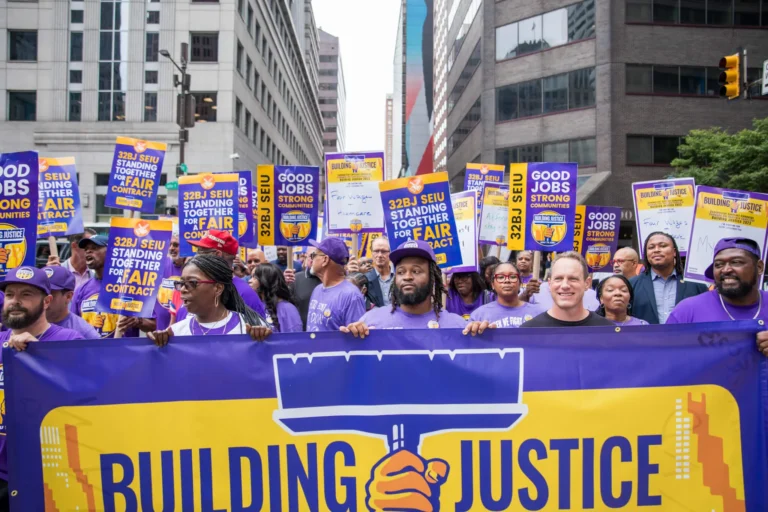
On Thursday, ninety-nine percent of AFSCME Local 3299’s 35,000 student workers at the University of California system voted to authorize a strike. This vote comes in response to what the union has described as bad-faith bargaining by the University and will impact more than ten campuses and medical clinics across the state. Of chief concern for the student workers is a crisis of housing affordability, with many workers reporting being left with no other option but to sleep in their cars. The University has reportedly failed to bargain over healthcare costs, which have increased, and refused to provide the union with financial and staffing information.
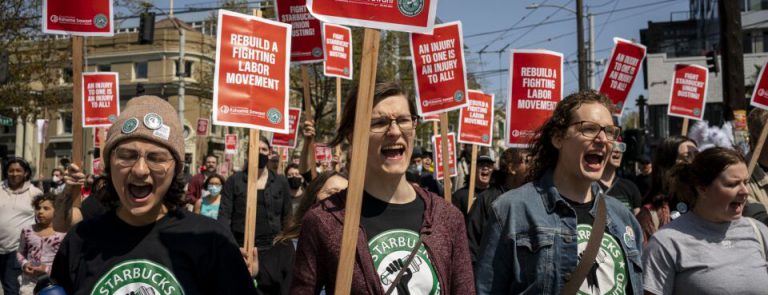
Also on Thursday, an NLRB judge ruled that Starbucks had violated labor law by excluding union stores across several states from the company’s 2022 shift to a new weekly pay cycle. The company was ordered to immediately implement the change at unionizing stores and to offer it at stores which had already unionized. The judge also issued a broad cease-and-desist order that Starbucks refrain from violating workers’ organizing rights in California, Massachusetts, Minnesota, and Maine.

Daily News & Commentary
Start your day with our roundup of the latest labor developments. See all
September 27
The Trump Administration reaches a settlement with federal unions on reduction in force actions; the United Auto Workers file an en banc petition seeking review of a Second Circuit decision regarding labor arbitrations.
September 25
Healthcare workers rally to restore legal status for TPS holders; nurses at a Maine hospital overwhelmingly vote to form their union despite alleged aggressive union busting tactics.
September 24
NLRB abandons rule for offensive conduct during protected activity; New York home care workers seek a union election; maritime deck officers endure long fight for first contracts.
September 23
DoorDash settles delivery-worker pay claims; Philadelphia school workers win new contract; stock gains spur retirements.
September 22
Judge blocks ICE raids in Alabama; Chicago hotel workers vote to strike; AutoZone workers look to create first union
September 21
In today’s News and Commentary, the Seventh Circuit raises the bar for the NLRB to obtain preliminary injunctions, the California Primary Care Association sues SEIU-UHW for racketeering, and the Seventh Circuit finds that an employer group and think tank do not have standing to challenge an Illinois law banning captive audience meetings. On Friday, the […]