
Nicholas Anway is a student at Harvard Law School.
In today’s news and commentary: auto workers at Rivian Automotive filed safety violation complaints against the electric vehicle manufacturer; members of New York’s first farm-worker union and supporters protested outside of Pindar Vinyards on Long Island; and temporary staffing agencies have ramped up lobbying efforts to stop a temp worker protection bill from passing in the New Jersey State Senate.
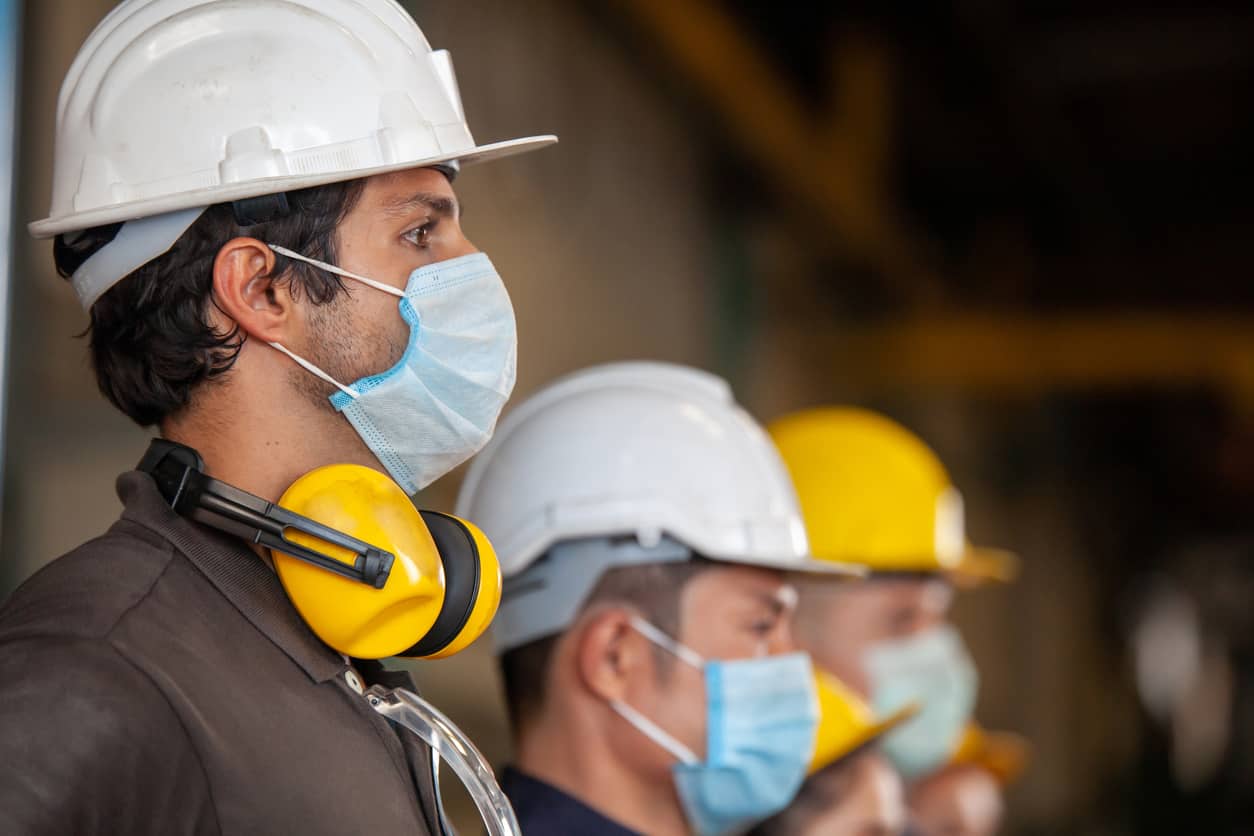
At least a dozen auto workers employed by Rivian Automotive Inc. filed complaints with federal regulators detailing safety violations at its Illinois production facility, Fortune reported yesterday. The complaints allege that the electric vehicle manufacturer ignored hazards and deprioritized safety resources, leaving some workers to “share respirators needed during the manufacturing process” and others to injury, “including a crushed hand, a broken foot, a sliced ear and broken ribs.” According to Fortune’s analysis, “the filings depict an automaker that cut corners as it scaled rapidly to keep pace in the competitive electric-vehicle space.” In statements to Bloomberg News, a Rivian spokesperson disputed workers’ allegations.
Members of New York’s first farm-worker union and supporters protested outside of Pindar Vinyards on Long Island over the weekend to pressure the winery’s owners to negotiate a contract, according to WSHU Public Radio. A year after the union was certified by the state to represent Pindar Vinyards farm workers, the winery’s owners are “not willing to come to the table[] and negotiate a fair contract for the worker,” said Noemi Berrera, an organizer with Local 338. “Unfortunately, they’re not negotiating in good faith,” another organizer explained. Union organizers are pushing for health insurance, better wages and benefits, and improved access to overtime. A third party could be assigned to mediate if the negotiations continue to stall.
Finally, the Gothamist reported that temporary staffing agencies operating in New Jersey have ramped up lobbying efforts to stop a temp worker protection bill from passing in the State Senate today. Staffing agencies are lobbying hard against the bill, which would ban temp agencies from making unitemized paycheck deductions that lower workers’ pay below minimum wage. The bill would also require temp agencies to compensate workers who are taken to job sites but sent home without work, to pay their workers the same as permanent employees at a work site, and to tell workers where they are going to work and how much they will be paid. “This legislation doesn’t push the envelope. These are very basic worker protections. I mean, who would ever think that wage theft needed to be legislated?” said Eric Richard, the legislative director for the New Jersey state AFL-CIO, which supports the bill. “This is another model by which . . . some employers seek to increase their bottom line on the backs of workers.”




Daily News & Commentary
Start your day with our roundup of the latest labor developments. See all
October 23
Employers increasingly shift health care costs onto workers and NYC proposes placing restrictions on fully automated customer service.
October 22
SCOTUS declines Wilcox appeal; Penn State research assistants win bargaining rights; SEIU sued over military leave firing.
October 21
DOL withdraws tipped-worker rule; Instacart settles hiring-bias claims; Phillips 66 locks out New Jersey refinery workers.
October 20
Korean unions oppose labor exemption bill; Portland city workers prepare for strike; UPenn grad student union looks to dismiss university filing
October 19
FDA reverses course on policy prohibiting off-duty union activity; FAA and NATCA reach deal to secure pay increase for air traffic controllers.
October 18
Federal judge again halts cancellation of the Bureau of Prisons’ CBA; tabletop gaming workers face roadblocks in union recognition.