
Gurtaran Johal is a student at Harvard Law School.
In today’s news and commentary, a federal judge blocks the Trump administration’s efforts to cancel the collective bargaining rights of workers at the U.S. Agency for Global Media; Representative Jared Golden secures 218 signatures for a bill that would repeal a Trump administration executive order stripping federal workers of their collective bargaining rights; and Dallas residents sue the City of Dallas in hopes of declaring hundreds of ordinances that ban bias against LGBTQ+ individuals void.
On November 14th, Judge Paul Friedman of the U.S. District Court for the District of Columbia blocked the Trump administration’s efforts to cancel the collective bargaining rights of workers at the U.S. Agency for Global Media, which houses the Voice of America. Judge Friedman ruled that the cancellation of the agency’s collective bargaining rights constituted unlawful retaliation against the American Federation of Government Employees (AFGE) and the American Federation of State, County, and Municipal Employees (AFSCME). The Agency for Global Media initially sued because they were included in an executive order which would have exempted them from statutory labor protections. In a statement, the AFSCME President, Lee Saunders, stated, “We’ll continue to fight for the collective bargaining rights of our members against an administration determined to strip them away.”
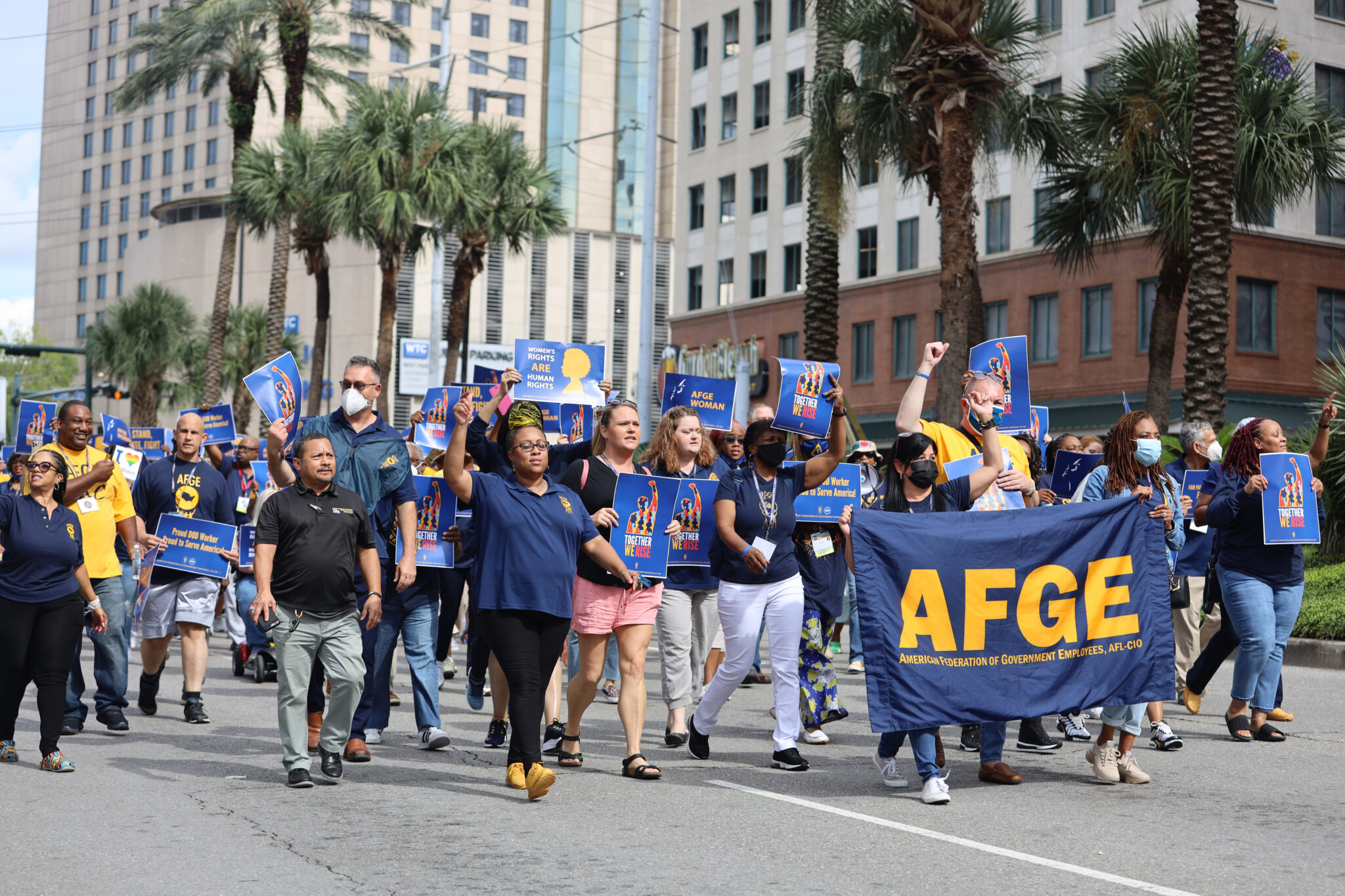
Meanwhile, Representative Jared Golden has secured 218 signatures on a bipartisan bill, The Protect America’s Workforce Act of 2025, that would repeal a Trump administration executive order that strips federal workers of their collective bargaining rights. In June, Golden launched a discharge petition for the bill, which means that if a majority of Congress signs the bill, the House is forced to vote on it. If the bill passes, it would nullify President Trump’s March 27th Executive Order would end collective bargaining rights for over one million unionized federal employees. The bill has received support from several unions, including the AFL-CIO, AFGE, SEIU, and AFT.
Lastly, three Dallas residents sued the City of Dallas in Denton County District Court, asking the court to declare nearly a hundred ordinances that ban bias against LGBTQ+ individuals in employment, housing, and public accommodations void. They argue that these ordinances violate a state law, known as the “Death Star.” The law makes it illegal for cities and counties to enact local laws that go beyond state law. State lawmakers passed the Death Star as a mechanism to undo a “patchwork” of local regulations that GOP legislators argued harmed the state’s economic growth. The question is one of preemption, as the court must determine whether the state law preempts the application of the local ordinances.





Daily News & Commentary
Start your day with our roundup of the latest labor developments. See all
October 13
Chicago hotel workers remain on strike; a coalition of Democratic states sues the Labor Department over canceled unemployment insurance grants; the Federal Labor Relations Authority establishes a new mediation framework for federal worker disputes.
October 12
Workers at the Obama Foundation begin organizing; MLB submits its latest collective bargaining agreement proposal; Brigham & Women's nurses postpone strike.
October 11
UAW President Shawn Fain succeeds in his reelection bid, and Spanish unions call for a general strike.
October 9
DHS proposes a $100k fee for the foreign grad employment program; Trump suspends tech company access to green card program; and private equity perpetuates poor working conditions for home care workers.
October 8
NLRB judge finds UPS unlawfully restricted union insignia; Harvard graduate workers authorize second strike; OSHA orders Union Pacific to pay $300,000 in damages in whistleblower case.
October 7
DOL scraps plan to remove decades-old wage-and-hour guidance from federal regulations; New York enacts personnel records access law; Starbucks loses bid to dismiss Workers United trademark suit.