
Finlay Adamson is a student at Harvard Law School.
In today’s news and commentary, the moratorium blocking the Trump Administration from implementing Reductions in Force (RIFs) against federal workers expires, and workers throughout the country protest to defund ICE.
On Friday, the moratorium that prevented the Trump Administration from engaging in the mass firings of federal workers expired. The moratorium, passed by Congress in November as part of a deal that ended the longest government shutdown in American history, lasted from mid-November until January 30th, when the stopgap funding measure expired. The spending bills passed by the Senate on Friday do not include a similar moratorium on layoffs. Instead, FEDWeek reports that the bills include language requiring that “staffing be kept at levels needed to fulfill the agency’s mission” or that the agency “notify Congress in advance of any plans for reductions below certain thresholds.” It’s unclear how quickly the Trump Administration will return to issuing RIFs. In at least one case during the moratorium, an agency reversed course; the Department of Health and Human Services rescinded the layoffs of roughly 1,000 employees in January.
As I covered in December, the moratorium did not dissuade the Trump Administration from attempting to continue mass firings. Over 500 employees, primarily at the State Department, Department of Education, and Department of Defense, received layoff notices last month before the US District Court for the Northern District of California issued a preliminary injunction against the Administration. While the government argued that the moratorium did not apply to employees who received termination notices before the freeze was passed, Judge Susan Illston held in favor of the American Federation of Government Employees and reinstated the employees.
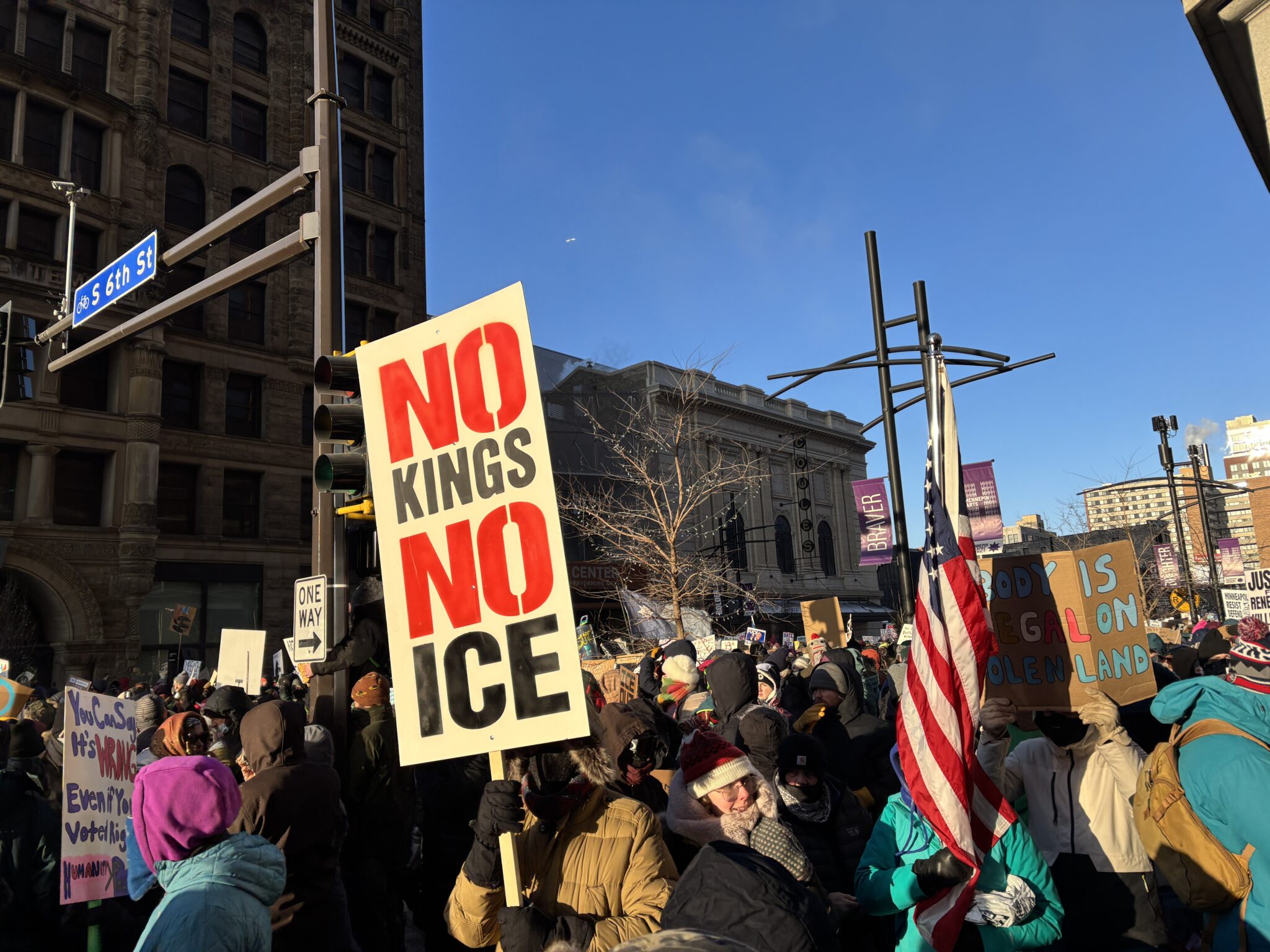
On Friday and over the weekend, protesters engaged in over 300 actions across all 50 states to protest ICE activity and demand that the agency be held responsible for the killings of Alex Pretti and Renee Good. As Sophia recently covered, hundreds of labor unions endorsed a call for a “National Shutdown” on the 30th, in which protesters participated in “a nationwide day of no school, no work and no shopping.” While Minnesota, which maintains the largest Somali population in the US, is currently the focus of federal immigration enforcement, the Administration appears to be turning next to Ohio. School officials in Springfield recently shared communications from the state government indicating that ICE may soon engage in a 30-day “surge” targeting Haitian immigrants in the city. ICE’s action is timed to coincide with the expiration of Temporary Protected Status for thousands of Haitians in the US. Many of these immigrants are employed as manufacturing and warehouse workers for companies including Amazon and McGregor Metalworks.




Daily News & Commentary
Start your day with our roundup of the latest labor developments. See all
October 9
DHS proposes a $100k fee for the foreign grad employment program; Trump suspends tech company access to green card program; and private equity perpetuates poor working conditions for home care workers.
October 8
NLRB judge finds UPS unlawfully restricted union insignia; Harvard graduate workers authorize second strike; OSHA orders Union Pacific to pay $300,000 in damages in whistleblower case.
October 7
DOL scraps plan to remove decades-old wage-and-hour guidance from federal regulations; New York enacts personnel records access law; Starbucks loses bid to dismiss Workers United trademark suit.
October 6
Protect College Sports Act dampens athlete unionization outlook; Stanford RA union decides to withdraw petition
October 5
Delaware bans captive audience meetings; EEOC settles remote work national origin discrimination claim; First Circuit stays enforcement order in VA's dispute with AFGE.
October 4
Boston nurses announce open-ended strike; federal judge restores federal prison workers' union protections; St. Louis workers form the first movie theater union in Missouri.