
Ajayan Williamson is a student at Harvard Law School.
In today’s news and commentary, UAW declares victory in contested election at Kentucky battery plant; NLRB is down to one member for now; and public approval of unions remains near record highs nationally.
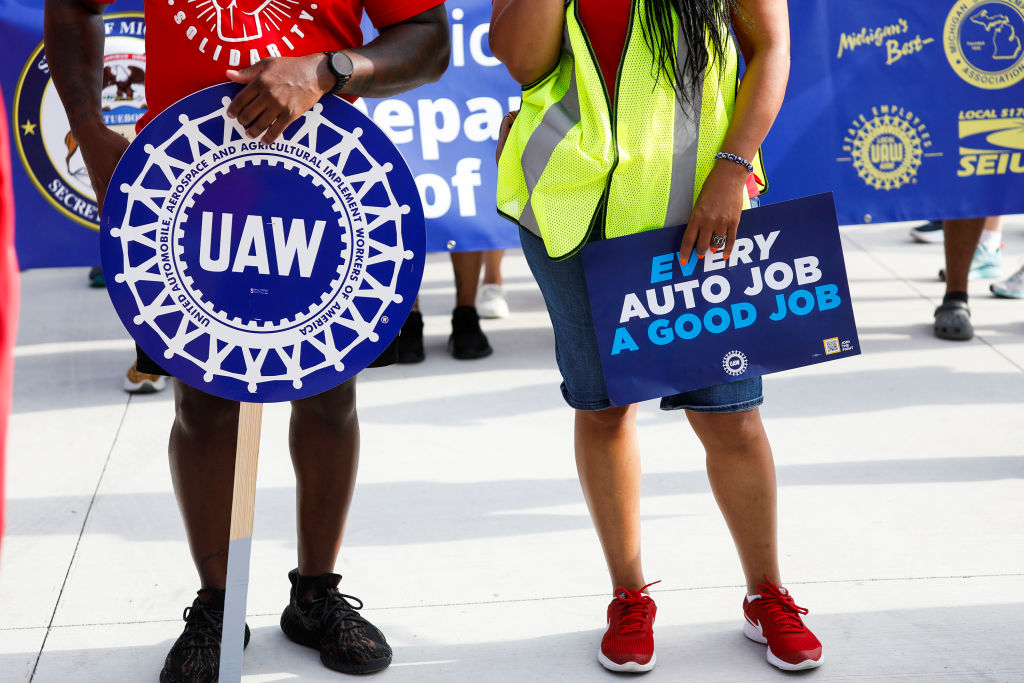
Yesterday, the United Auto Workers (UAW) claimed victory in a close election at a plant in Kentucky—but contested ballots could change the outcome. The plant was launched by BlueOval SK, a joint venture of Ford and South Korean company SK On, to produce batteries for electric vehicles. The union campaign has been underway since last November, and the UAW has accused the company of “an aggressive union-busting campaign” involving firings, retaliation, and “unlawful closed-door meetings to intimidate workers.” There is currently a 14 vote lead in favor of unionization—526 to 515—but that doesn’t include the 41 ballots the union claims were cast by ineligible workers. The eligibility of those voters could determine the final results of the election.
That dispute may be resolved by a hollowed-out NLRB. As Bloomberg Law reports, yesterday also marked the end of the term of appointment for NLRB member Marvin Kaplan. Kaplan was appointed during President Trump’s first term, and Trump elevated him to Chair after the purported firing of Gwynne Wilcox earlier this year. The expiration of Kaplan’s term leaves the NLRB down to just one member, for only the second time in the entire history of the Board. This state of affairs may be short-lived if Trump’s NLRB nominees are confirmed by the Senate when it returns from its August recess—but Kaplan’s exit gives Trump yet another opportunity to continue reshaping the Board. Regardless, as Marina explains, election disputes can still be resolved by a Hearing Officer or Regional Director before getting appealed to the Board, but BlueOvalSK might refuse to bargain while unresolved appeals are pending.
Finally, yesterday Gallup released the results from its yearly poll of public opinion on unions. This year, 68% of adults approved of labor unions. That figure reflects major changes over time. Gallup began the poll in 1936; public approval of unions hit its lowest point on record in 2009, clocking in at 48%. But public opinion steadily improved over the next decade, hitting 68% in 2021 and remaining steady at similar levels until today. Prior to the 2020s, union approval had not been this high since its peak in the 1950s and 60s. Despite multiple years of near-record approval, however, union membership has gone essentially unchanged in recent years: just 15% of respondents lived in a union household, and just 9% were members of a union themselves.





Daily News & Commentary
Start your day with our roundup of the latest labor developments. See all
October 13
Chicago hotel workers remain on strike; a coalition of Democratic states sues the Labor Department over canceled unemployment insurance grants; the Federal Labor Relations Authority establishes a new mediation framework for federal worker disputes.
October 12
Workers at the Obama Foundation begin organizing; MLB submits its latest collective bargaining agreement proposal; Brigham & Women's nurses postpone strike.
October 11
UAW President Shawn Fain succeeds in his reelection bid, and Spanish unions call for a general strike.
October 9
DHS proposes a $100k fee for the foreign grad employment program; Trump suspends tech company access to green card program; and private equity perpetuates poor working conditions for home care workers.
October 8
NLRB judge finds UPS unlawfully restricted union insignia; Harvard graduate workers authorize second strike; OSHA orders Union Pacific to pay $300,000 in damages in whistleblower case.
October 7
DOL scraps plan to remove decades-old wage-and-hour guidance from federal regulations; New York enacts personnel records access law; Starbucks loses bid to dismiss Workers United trademark suit.