
Mila Rostain is a student at Harvard Law School and the Digital Director of OnLabor.
In today’s News and Commentary, the Chicago Teachers Union (CTU) reaches a tentative agreement on a four-year contract, the Service Employees International Union (SEIU) holds rallies and brief work stoppages in major cities after the detention of SEIU members, and Representatives Golden and Fitzpatrick introduce legislation nullifying President Trump’s executive order.
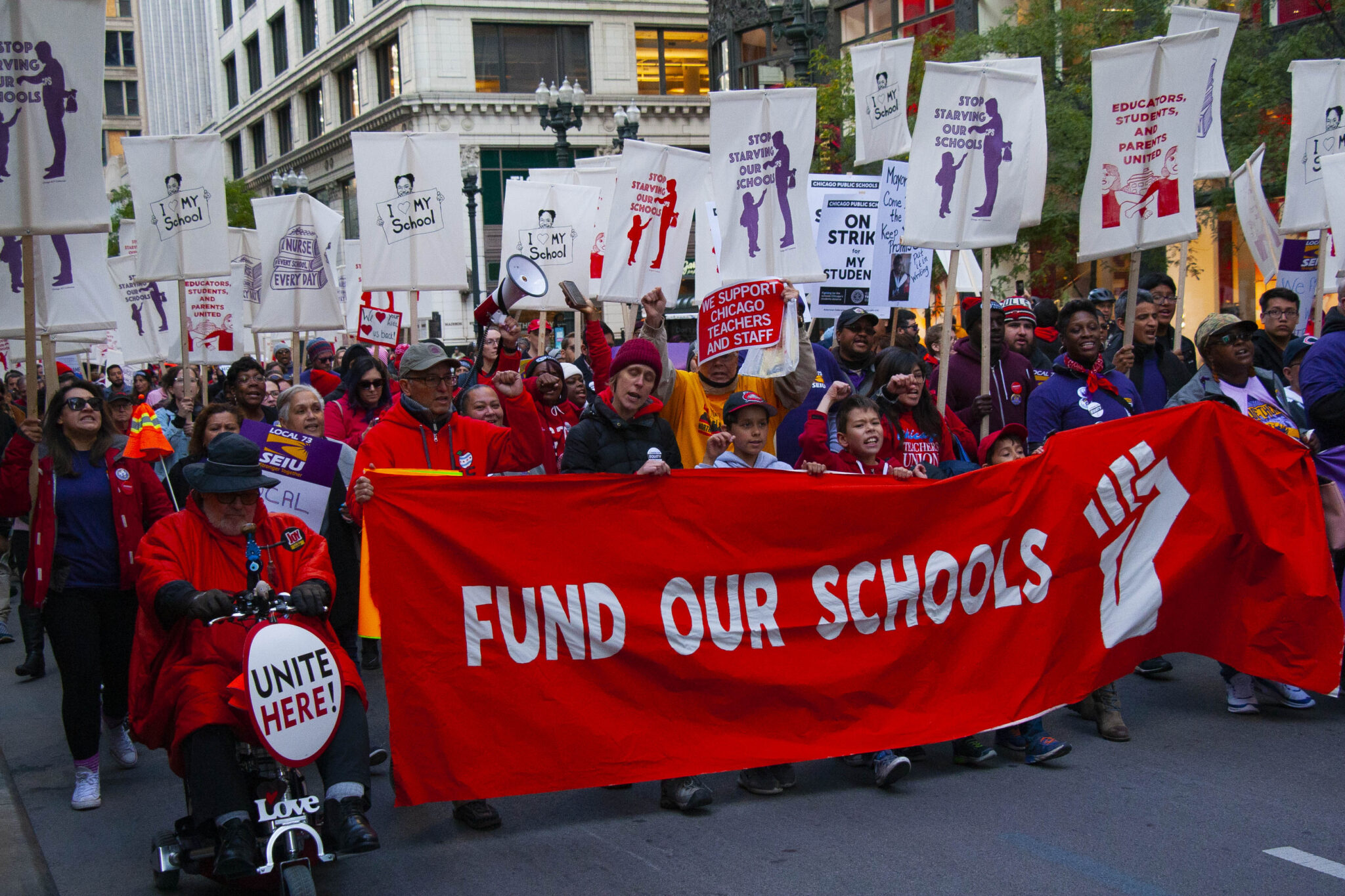
On April 1st, CTU reached a tentative agreement on a four-year contract with the Chicago Public Schools (CPS). The agreement includes average raises of 23% for teachers, including cost of living adjustments over the life of the contract. The agreement creates 90 new librarian positions and is expected to yield 400 new teacher assistant positions through improved staffing ratios. The agreement also cements sanctuary protections, gives employees leave for immigration matters, and guarantees the right to abortion coverage. In addition to terms directly impacting bargaining unit members, the agreement also includes $10 million for busses and uniforms primarily reserved for schools serving mainly low-income students. Both CTU and CPS lauded the agreement. Of the contract, CTU president Stacy Davis said, “our young people win, the people who provide their education win, the families that send them to the Chicago Public Schools win, principals win, the Board of Education wins, the CEO wins, the mayor of Chicago wins.” After passing the CTU’s House of Delegates yesterday, the contract will head to a ratification vote.
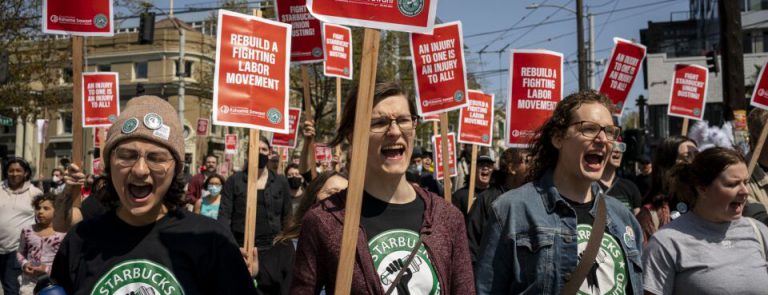
Following the detention of SEIU members Rumeysa Ozturk and Lewellyn Dixon, SEIU held rallies in more than a dozen cities calling for the protection of first amendment rights. Starbucks workers, members of Starbucks Workers United, engaged in work stoppages at locations from Iowa City to Oklahoma City in support of the day of action. In a press statement last week, April Verrett, president of SEIU, demanded that the Trump administration “respect due process, transparency, free speech, and basic decency when it wields its vast immigration powers.”
In response to President Trump’s executive order seeking to end collective bargaining for federal labor unions in agencies with national security missions, Representatives Jared Golden and Brian Fitzpatrick introduced bipartisan legislation that would overturn the order. The order impacted around 67% of the federal workforce. According to Rep. Fitzpatrick, the Protect America’s Workforce Act “restores a balanced, targeted approach—protecting bargaining rights where they pose no threat to national security and reinforcing their proven role in supporting morale, accountability, and effective governance.” Unions including AFGE, AFSCME, and SEIU all support the Act.



Daily News & Commentary
Start your day with our roundup of the latest labor developments. See all
September 21
In today’s News and Commentary, the Seventh Circuit raises the bar for the NLRB to obtain preliminary injunctions, the California Primary Care Association sues SEIU-UHW for racketeering, and the Seventh Circuit finds that an employer group and think tank do not have standing to challenge an Illinois law banning captive audience meetings. On Friday, the […]
September 20
Culinary Workers Union members protests union leadership; lawsuit against OpenAI and Microsoft reveal internal concerns about the threat of AI training to human labor.
September 17
Unions push to block Google from buying Spirit Airlines employment records; U.S. Department of Labor sues Oklahoma coffee chain over alleged wage violations.
September 16
Trump nominates Catherine Eschbach as EEOC general counsel; NLRB declines to resolve union work-assignment dispute; Allina Health physicians begin four-day strike.
September 15
Documents reveal the inner workings of Amazon's union avoidance program; Washington state public sector unions reach tentative deals amid a difficult bargaining cycle; hundreds of Nevada Culinary Union members protest their union's health care changes.
September 14
NCAA and Big Ten file motion to dismiss in former star player's NIL suit; Seventh Circuit rules against former postal worker in discrimination suit.